
Last updated October 15, 2026
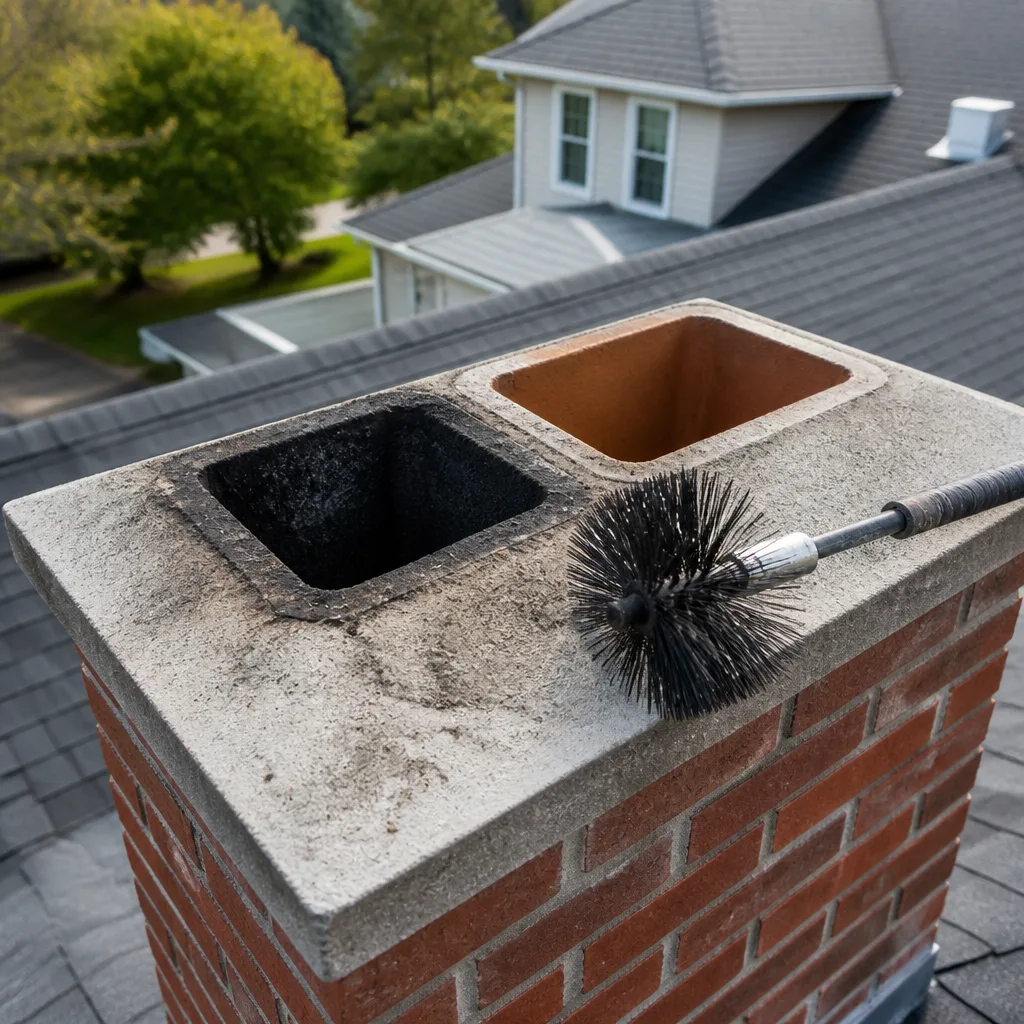 Sweep & inspection
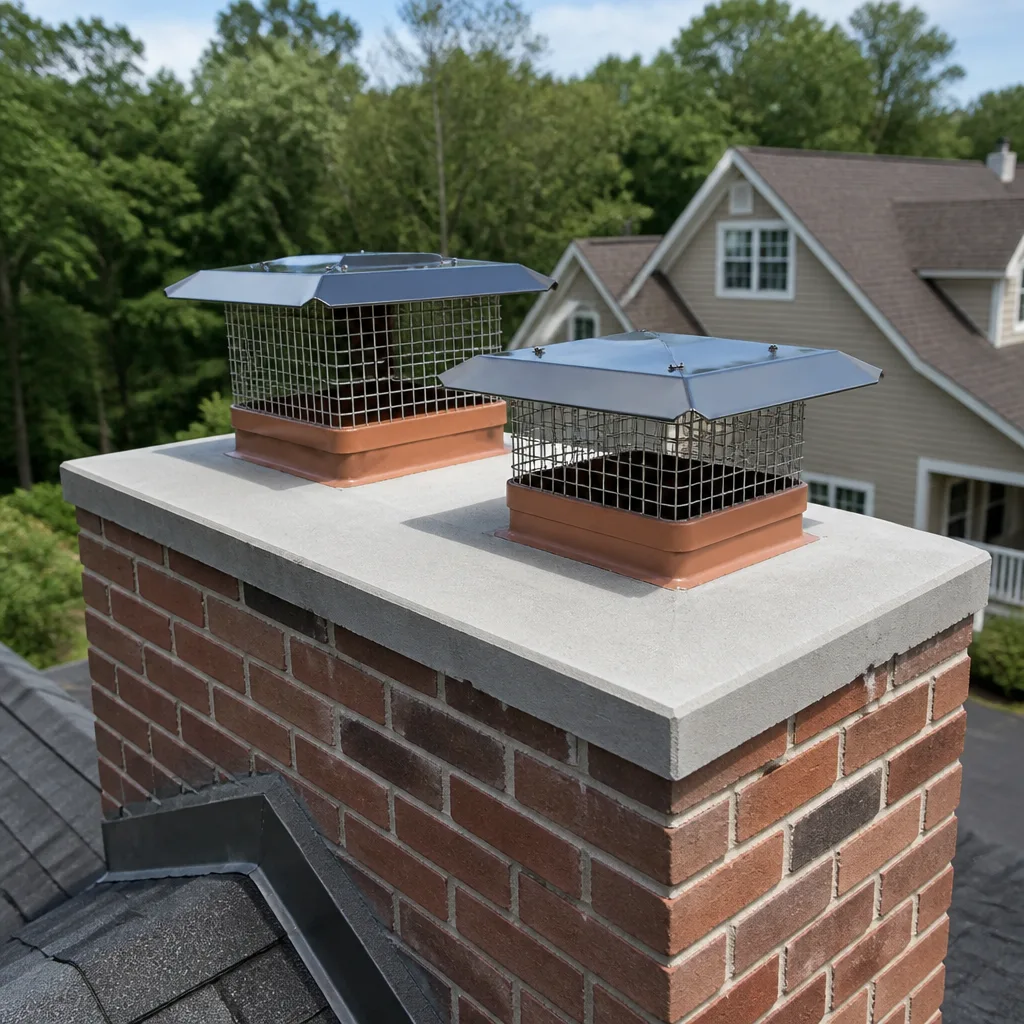 Caps & crowns
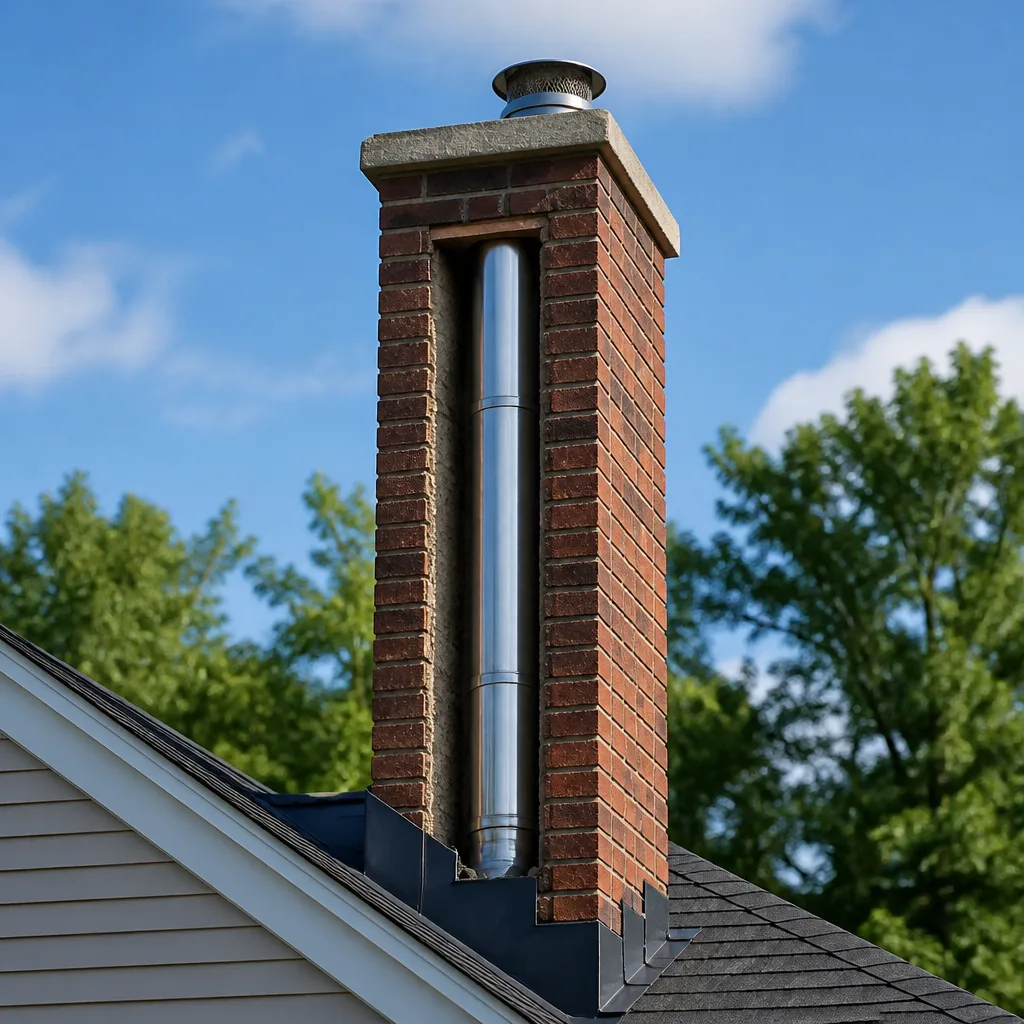 Flue relining
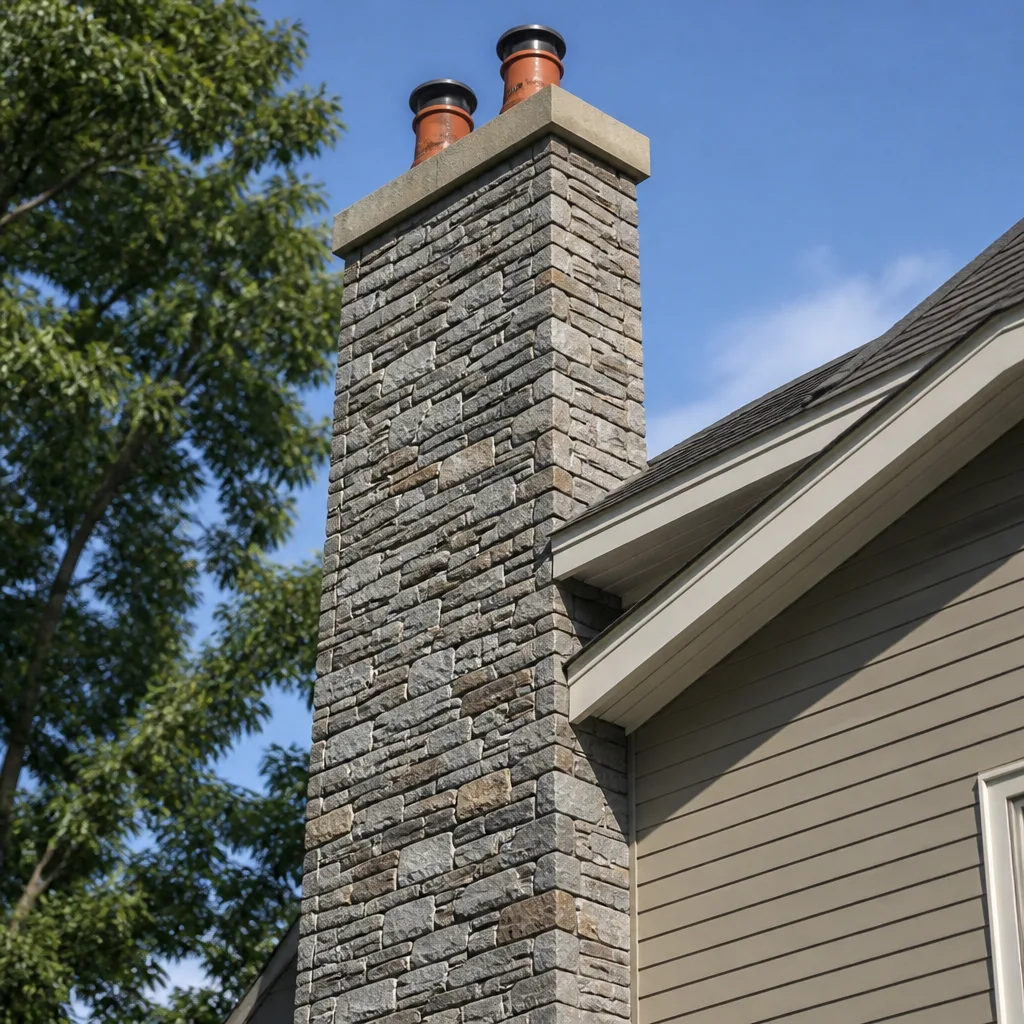 Masonry repair
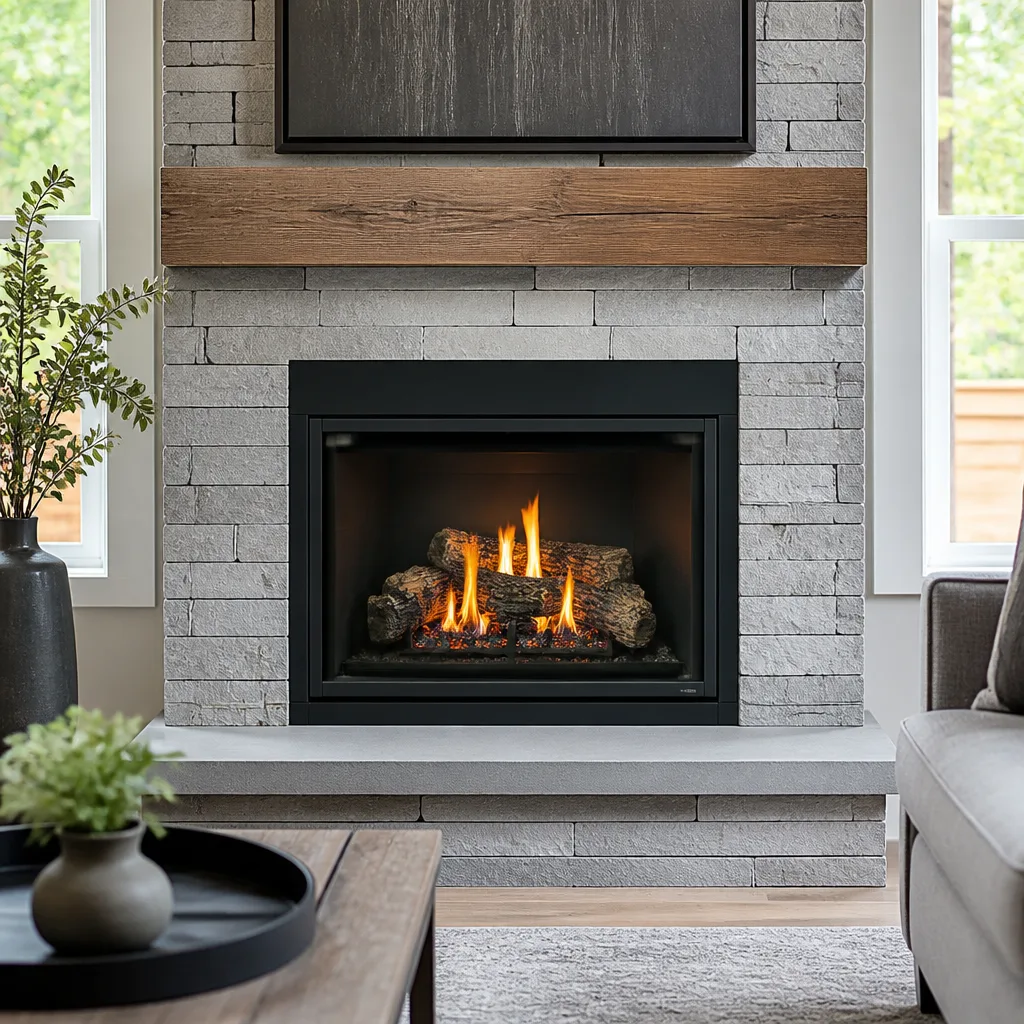 Gas fireplace service
Level 1 sweep and inspection to the NFPA 211 annual standard - flue, crown, cap, and flashing checked and photographed
Chimney sweep logs do not sweep chimneys. They loosen some creosote - which then falls where a brush and vacuum still have to collect it.
Chimney Cleaning Cost Breakdown: The Austin Homeowner’s Reference for 2026
Here’s the thing about chimney cleaning prices in Austin: an $89 advertised special and a $385 standard service are frequently the same job with different paperwork. The cheaper one isn’t a bargain if it ends with a technician suggesting $2,400 in liner work before the truck leaves your driveway. Austin’s limestone-heavy soil and blazing summers put unique stress on masonry, and homeowners who understand the full cost structure going in are far less likely to overpay for a sweep that was never going to be $89 in the first place. This guide breaks down exactly what chimney cleaning costs in Austin in 2026, what those line items actually mean, and how to compare quotes without getting taken for a ride.
Styles & brands we work with
Quick Answer
A standard chimney sweep and Level 1 inspection in Austin runs between $185 and $350 in 2026, with most single-flue homes landing around $225 to $275. The $89 to $129 deals you see advertised almost always exclude the inspection, the cap check, and any flue with more than one appliance attached. When you add a Level 2 camera inspection, expect another $150 to $300, and repair work that gets discovered during the visit sits in a completely separate pricing conversation.
Key Takeaways
- Austin market pricing for a quality sweep with inspection: $185 to $350 standard, $300 to $550 with camera inspection.
- Advertised $89 to $129 prices are door-openers, not final costs. The asterisks matter.
- Chimney height, flue count, and roof access on Austin’s hillside lots are legitimate price drivers.
- The average cost of putting off a cleaning in Austin far exceeds the annual sweep price once creosote ignites or a liner fails.
- A written, pre-service quote with line items is not a nice-to-have. It’s the single best defense against pressure upsells.
Table of Contents
- What a Standard Chimney Cleaning Actually Costs in Austin
- How to Read the $89 to $129 Advertised Deals
- The Full Line-Item Cost Table for Austin Chimney Services
- What Changes the Price: Height, Flues, and Hillside Access
- The Real Cost of Skipping Service: Austin Fire and Liner Math
- Anatomy of a Written, Pre-Service Quote That Protects You
- Level 1 vs. Level 2 vs. Level 3 Inspections, Explained in Plain Words
- Common Mistakes to Avoid When Hiring a Chimney Sweep in Austin
- When to Call a Professional
- Frequently Asked Questions
What a Standard Chimney Cleaning Actually Costs in Austin
A standard chimney sweep with a Level 1 inspection in Austin runs $185 to $350 for a single-flue fireplace in 2026. That’s the honest range we see across the Austin market, and it’s broader than most national guides suggest because Austin’s housing stock is genuinely mixed: 1970s ranch homes in Allandale, newer builds in Mueller with prefab fireplaces, and hillside properties in Westlake with steep roof pitches that slow the whole job down.
The sweep itself is the mechanical removal of creosote (the flammable tar buildup that makes chimneys a fire risk) from the flue walls. A technician runs specialized brushes through the flue, typically from the firebox upward or from the roof downward depending on the chimney design. In Austin, most sweeps run $125 to $200 as a standalone service. The rest of the standard price comes from what a legitimate company bundles in: a Level 1 inspection of the firebox, damper, and accessible flue; a chimney cap condition check; and documentation of what was found.
We’ve watched Austin homeowners call three companies and get quotes ranging from $99 to $425 for what looks like the same service on paper. The gap is almost never the brushing. It’s whether anyone actually looks at the chimney before declaring it clean, whether the cap gets checked, and whether you get a written record of the condition going in and coming out.
Here’s what a $225 to $275 Austin sweep should include in 2026:
- Full flue brushing with properly sized equipment, not a single-size brush that misses corners.
- Creosote removal and shop-vac cleanup of the firebox and hearth.
- Level 1 inspection: firebox mortar, damper function, flue integrity from the accessible ends, and chimney cap condition.
- Written condition report with before-and-after photos or at minimum a documented summary.
- A recommendation that’s honest about whether any found issue needs immediate attention or can wait a season.
If you’re deep in a decision about whether to book a cleaning or whether you even need one this year, start with our Chimney Sweep in Austin page for a plain-English walkthrough of when a sweep is actually due.
How to Read the $89 to $129 Advertised Deals
That $89 chimney cleaning you see on a postcard or a Facebook ad in Austin isn’t a loss leader. It’s a business model built on discovering problems, on that visit, that only that company can fix while the equipment is still out.
Here’s the pattern. The advertised price covers a basic brushing of a single-flue chimney, usually with a list of conditions in fine print: standard-height roof only, no more than one flue, no animals in the chimney, no cap present requiring removal, wood-burning only, no liner inspection included. Most Austin homes fail at least one of those conditions. Tanglewood Forest ranch homes from the 1980s often have two flues. Westlake properties have steep, multi-story rooflines. Steiner Ranch homes frequently have capped chimneys that need cap removal for a proper sweep. Every condition triggers an add-on.
The more important pattern: the $89 service doesn’t include an inspection, so the technician isn’t obligated to look at the liner, mortar, or crown. But the technician is standing there with a camera, and the homeowner is standing there with a $89 receipt and a vague sense of obligation. That’s when the conversation turns to a $400 camera inspection, followed by a liner recommendation that may or may not be real. We’re not saying every company that advertises low operates this way. We’re saying the math only works if a meaningful percentage of those visits convert to upsells, and that means the incentive structure is pointed in the wrong direction.
When you see a deal price in Austin, ask these questions before booking:
- Does the price include any inspection at all, or just brushing?
- What are the exclusions? Roof height, flue count, cap removal, fireplace type?
- Does the technician take photos? Will I see them?
- Is there a written quote before the brush touches the flue if any add-on gets recommended?
- What does the company say when I ask, “Can any issue you find wait until next season?” An honest answer is the first green flag.
At Hadley Chimney Austin, we publish a written price before work starts. Every time, not just when someone asks. That’s the core of what we do, and it’s the reason we built our service around the idea that a homeowner deserves the same visibility from a chimney tech that they get from a rideshare driver: live arrival times, before-and-after photos, and a number that doesn’t change once we’re on the roof. You can read more about that approach on our Hadley Chimney Austin home page.
The Full Line-Item Cost Table for Austin Chimney Services
Here’s the line-item breakdown for Austin-market chimney services in 2026. These are realistic ranges we see across the city, from Hutto to Lakeway to Sunset Valley, and they reflect pricing for professional, insured companies rather than the advertised door-buster specials.
| Service | Austin Market Range (2026) | What It Actually Involves |
|---|---|---|
| Standard sweep, single flue, no inspection | $89 to $150 | Brushing only. No cap check, no liner evaluation, no condition report. |
| Standard sweep with Level 1 inspection | $185 to $300 | Full brushing, firebox and damper check, cap condition, written summary. |
| Sweep with Level 2 camera inspection | $300 to $550 | Everything in Level 1 plus flue video scan, liner integrity check, and photo documentation. |
| Chimney cap replacement | $180 to $450 installed | New cap, often stainless or copper; includes removal of old cap and resecuring to crown. |
| Damper replacement | $200 to $600 installed | Standard throat damper replacement; top-mount dampers run higher. |
| Liner repair (sectional, no full reline) | $550 to $1,200 | Patching or section relining, usually with products like HeatShield ceramic repair compound. |
| Full stainless liner install | $2,500 to $6,500 | Complete reline with a system like DuraFlex flexible liner for wood-burning or gas applications. |
| Level 3 inspection (masonry demolition) | $5,000 to $15,000+ | Used only when significant structural failure requires opening walls or chimney sections. |
Two notes on that table. First, damper replacement and liner repair are frequently discovered during a Level 2 inspection, which is why some Austin homeowners feel like their $250 sweep “turned into” a $1,200 bill. It didn’t transform. The camera found something the Level 1 inspection can’t see. The price you paid for the sweep is still the price of the sweep. The repair is a separate job with a separate quote, and you should treat it that way.
Second, those liner numbers are wide because Austin’s housing types produce very different chimney configurations. A single-story ranch in Crestview with a straight 12-foot flue is a straightforward reline. A multi-flue chimney on a three-story Tarrytown house with a sloped roofline and clay tile in place requires more labor, more material, and more safety rigging. A two-story home in Circle C with a prefab fireplace and a corroded original liner is a different job entirely.
When we work with these repairs at Hadley, we use products like DuraFlex liner systems and HeatShield ceramic compound because they’re what chimney professionals actually trust for long-term performance, not whatever is cheapest on the truck. A written guarantee on every repair is part of how we work, including a free second visit if the repair fails. That’s not a promotional offer. It’s a standing commitment at our company, and it’s a useful question to ask any contractor you’re considering.
What Changes the Price: Height, Flues, and Hillside Access
Three factors move Austin chimney pricing more than any others: how many flues you have, how tall and how steep your roof is, and whether the chimney is easy to reach from a ladder or requires a full roof harness setup.
Flue count. A single flue means one liner, one path for the brush, one inspection. A dual-flue chimney, common in Austin homes built with both a fireplace and a separate furnace flue, means two cleanings, two inspections, and double the labor for any repair. The sweep itself usually adds $50 to $100 per additional flue. If you’re not sure how many flues your home has, look at your roof from the street. Two caps or two clay tile openings means two flues.
Roof height and pitch. Austin’s hillside neighborhoods, Westlake, Mount Bonnell, parts of Northwest Hills, and Lakeway, produce steep, multi-story rooflines that make chimney work slower and more physically demanding. A technician working on a second-story chimney with a 10/12 pitch needs harness equipment, roof brackets, and often a second person. That’s not a made-up surcharge. It’s the real cost of doing the work without falling. A single-story home in Hyde Park with a walkable roof is at the lower end of every price range. A three-story Westlake property with a chimney on the steep side of the lot is at the upper end.
Access and obstructions. Austin’s mature oak trees, protected in many neighborhoods, frequently overhang chimneys and complicate ladder placement. A chimney hidden behind a solar array or a chimney cap that’s rusted in place also adds time. These are legitimate variables to ask about when you get a quote. If the company can’t tell you what they’re accounting for, that’s a warning sign of either an overcharge or a job they’ll cut corners on.
In our experience, the best-qualified Austin sweeps ask about roof type, chimney height, flue count, and whether you’ve had any work done on the chimney before they quote anything. That’s not them being difficult. That’s them doing the basic math that determines whether your job is a $225 visit or a $375 visit. For the broader picture on what repair work looks like in Austin, see our Chimney Repair in Austin page.
The Real Cost of Skipping Service: Austin Fire and Liner Math
Let’s do the math on skipping your chimney cleaning, because it’s the math almost no Austin homeowner runs.
A standard chimney sweep with inspection in Austin costs roughly $225 per year. Or, if you burn only occasionally and the chimney passes a Level 1 inspection with minimal creosote, you might go every other year. Call it $225 to $450 over two years.
Now here’s the other side. A chimney fire in a home with significant creosote buildup can reach 2,000 degrees Fahrenheit inside the flue. That’s hot enough to crack clay liners, warp stainless liners, and ignite surrounding framing. The repair bill for the damage: liner replacement at $2,500 to $6,500, masonry repair of cracked flue tiles, and in a worst case, structural work on the chimney or nearby roof decking. Texas fire departments responded to thousands of chimney and fireplace fires over the past decade, and the average repair from a chimney fire lands in the $4,000 to $12,000 range before insurance complications even enter the conversation.
That’s the math nobody prints on the $89 postcard. Twenty years of cleanings at $225 per year is $4,500. One chimney fire can cost double that in a single repair cycle, not counting increased insurance premiums after a claim or the inconvenience of a partially demolished chimney. In Austin, where fires in the fireplace are a winter tradition but the rest of the year the chimney sits exposed to freeze-thaw cycles, regular cleaning is the lowest-cost insurance policy a homeowner has.
There’s also the carbon monoxide side of the equation, which matters more in Austin than people expect. Austin’s winter temperature swings mean furnaces tied to a shared chimney flue see heavy use from November through February. A blocked flue or a deteriorating liner doesn’t just waste heat. It can push combustion gases back into the house. Carbon monoxide is odorless, colorless, and lethal. A chimney inspection is the only way to confirm your furnace flue is actually clear enough to vent safely. If you have a gas fireplace, the same logic applies, and we cover that in depth on our Gas Fireplace Repair in Austin page.
Anatomy of a Written, Pre-Service Quote That Protects You
A written quote before work begins is not a luxury. It’s the single best defense against Austin’s most common chimney pricing problem: the verbal estimate that creeps upward once the technician has already seen your chimney, mounted your roof, and started the conversation from a position of authority.
Here’s what a legitimate, pre-service written quote for a chimney cleaning should look like:
- Service description with specificity. “Sweep and Level 1 inspection for a single-flue, single-story fireplace with standard-height roof access” is a real quote. “Chimney cleaning” is an opening offer.
- Line-item pricing. Sweep cost, inspection cost, any cap or damper check cost, total. If a company can’t break it down, they’re hiding the breakdown.
- Conditions and exclusions. What roof height, flue count, and chimney condition the price assumes. If the chimney is different when they arrive, the price can change, but only in writing, before work starts.
- Inspection scope. Level 1, Level 2, what’s included, and whether photos are taken.
- Add-on pricing transparency. If the technician finds something, what does a Level 2 upgrade cost? What does a cap replacement cost? If the company refuses to commit to any numbers before arriving, walk.
- Name, date, and company. A verbal quote from a technician who won’t put anything in writing is a future dispute waiting to happen.
At Hadley Chimney Austin, this is how every job runs. We issue a written price before any brush touches your flue, and no recommendation for additional work gets made without camera evidence you can see for yourself. If our technician can’t show you the crack, the leaking liner, or the creosote buildup on a photo, there’s no recommendation. Full stop.
The flip side of that commitment, the reason we can operate this way, is that we run on trust backed by documentation. Before-and-after photo documentation is part of the Relay Visibility Guarantee, which is our standard on every single job, not just the big ones. It means you see what the tech saw. You can pay an invoice from a link. You’re never asked to approve a repair based on a suggestion shouted down from the roof.
Level 1 vs. Level 2 vs. Level 3 Inspections, Explained in Plain Words
Chimney inspections use a three-level system defined by the National Fire Protection Association. The levels sound like marketing tiers, but they exist for specific reasons tied to what the inspector can actually see.
Level 1 Inspection. The visual check that accompanies every standard sweep. The inspector looks at the firebox, damper, and the accessible ends of the flue, top and bottom. They check the cap if one is present. They confirm the flue is clear of obstructions and looks structurally sound from whatever angle is visible. This is the right inspection when nothing has changed: no new appliance, no chimney fire, no water intrusion, no change in performance.
Level 2 Inspection. What happens when something has changed. New home purchase, new appliance attached to the flue, a chimney fire, a lightning strike, an earthquake tremor, any major weather event. A Level 2 inspection includes everything in Level 1 plus a camera scan of the full flue interior. The camera sees what the human eye can’t: hairline cracks in clay liners, separation between flue sections, pinhole leaks in metal liners, hidden blockages. In Austin, Level 2 inspections are the standard for real estate transactions and for any home where a sweep technician suspects a problem during a Level 1.
Level 3 Inspection. The invasive option. When a Level 2 camera scan reveals damage that requires opening the chimney structure to fully evaluate, that’s a Level 3. It might mean removing a section of the chimney crown, opening an interior wall, or accessing the flue from an unconventional point. Level 3 inspections are rare, expensive, and generally reserved for cases where the chimney has already failed in a visible way.
Here’s the practical takeaway. A Level 1 is included in most standard sweeps in Austin. A Level 2 adds $150 to $300. A Level 3 is not something you’ll be quoted on a routine visit unless serious problems are already evident. If a company tries to sell you a Level 3 inspection because your chimney “might” have hidden issues that a camera can’t see, get a second opinion. A Level 2 camera scan catches nearly everything. Level 3 is for confirmed structural investigation, not routine discovery.
Common Mistakes to Avoid When Hiring a Chimney Sweep in Austin
- Booking the cheapest deal without reading what’s excluded. Austin’s $89 specials exclude inspection, cap checks, and most multi-flue or steep-roof homes. You’ll pay more than a standard quote by the time the visit ends.
- Approving repairs without seeing camera evidence. If a tech says your liner is cracked but can’t show you a photo, you’re being asked to trust a stranger on your roof. Decline and get a second opinion.
- Skipping the written quote. A verbal estimate means the final price is whatever the company decides at the door. In Austin’s competitive market, there’s no reason to accept this.
- Assuming a new home doesn’t need an inspection. Austin’s hot real estate market moves fast, and home inspectors don’t all do Level 2 chimney camera scans. Plenty of new homeowners in Mueller and East Austin discover liner damage in their second winter.
- Ignoring the chimney between seasons. Austin’s freeze-thaw cycles and summer heat stress masonry year-round. A crack that starts in March is a leak by October. Annual inspection catches it early.
- Hiring uninsured technicians. Chimney work happens on your roof, above your living room, next to your chimney’s potentially failing brick. If an uninsured worker falls, that’s your liability. Verify insurance before anyone climbs a ladder.
When to Call a Professional
Call a chimney professional if you notice any of these Chimney Cleaning Warning Signs: A Austin Homeowner’s Reference Guide in Austin: a strong smoky smell in the house after the fireplace has been cleaned, visible creosote or black residue on the firebox walls, water stains on the ceiling near the chimney, rust on the damper or firebox, audible dripping inside the flue after rain, or animals nesting sounds from the chimney. Any of these signals an issue that a camera inspection can diagnose. Do not attempt to clean a steep-roof chimney yourself or inspect a damaged flue from a ladder. Chimney work involves working at height, on surfaces that fail without warning, and around masonry that can shift. A trained professional with proper equipment is the only safe option. Hadley Chimney Austin offers free estimates throughout Austin, so you can call (361) 603-5116 and get a written price on a sweep or inspection before committing to anything.
Frequently Asked Questions
A chimney sweep in Austin with a proper Level 1 inspection runs $185 to $350 for a standard single-flue fireplace. The sweep alone can cost as little as $89 to $150, but that price doesn’t include an inspection, which is the part that catches safety issues before they become repair bills. For a camera inspection added to the sweep, expect $300 to $550 total. Call (361) 603-5116 for an exact written quote; estimates are free.
An $89 chimney cleaning in Austin typically includes only basic brushing of a single-flue chimney on a standard-height roof. It usually excludes the inspection, cap removal, second flues, steep roof access, and any condition documentation. The exclusions are the business model, because the visit creates the opportunity to recommend add-ons once the technician is already there. Read the fine print before booking any deal price.
If you burn wood in your fireplace more than a dozen times per season in Austin, an annual sweep with inspection is the safe cadence; our Chimney Sweep Maintenance Checklist for Austin Homeowners can help you stay on track. Colder Austin winters, especially the January through February stretch, produce heavy burn use, and creosote builds up faster than most homeowners expect. If you use the fireplace only occasionally, a Level 1 inspection every year with a sweep every other year is often sufficient. The inspection is the safety net; the sweep is the maintenance.
Austin homeowners should have a Level 1 inspection annually if they use the fireplace at all, and a Level 2 camera inspection whenever they buy a home, change appliances, or suspect water intrusion or a chimney fire. See Chimney Cleaning Permits, Codes & Inspections in TX: What You Need to Know for regulatory details. Austin’s hot summers and occasional hard freezes stress masonry joints and liners, and small cracks open into major problems quickly. A $185 to $325 annual inspection is a cheap way to avoid a $4,000-plus repair.
Skipping a few years of chimney cleaning means creosote accumulation reaches a depth where a chimney fire becomes possible. In Austin, a chimney fire can crack a liner, damage surrounding masonry, and require $4,000 to $12,000 in repairs. There’s also the blocked-flue carbon monoxide risk for homes where the furnace shares a chimney flue. The cost of cleaning is a fraction of the cost of repair, and the inspection that comes with it is the only way to know your flue is actually clear. Call (361) 603-5116 to book a sweep and inspection and get a written quote before anyone starts work.
You know a company is trying to upsell you when the technician recommends repairs without showing you camera evidence, pushes a same-day decision because the “price is only good today,” or refuses to put a quote in writing. A legitimate Austin chimney company can show you photos of the issue, explain what can wait a season and what can’t, and issue a written price before any additional work begins. If any of those three things is missing, get a second opinion.
Written by Cory Mitchell, Owner at Hadley Chimney Austin, serving Austin since 2003.
See the difference
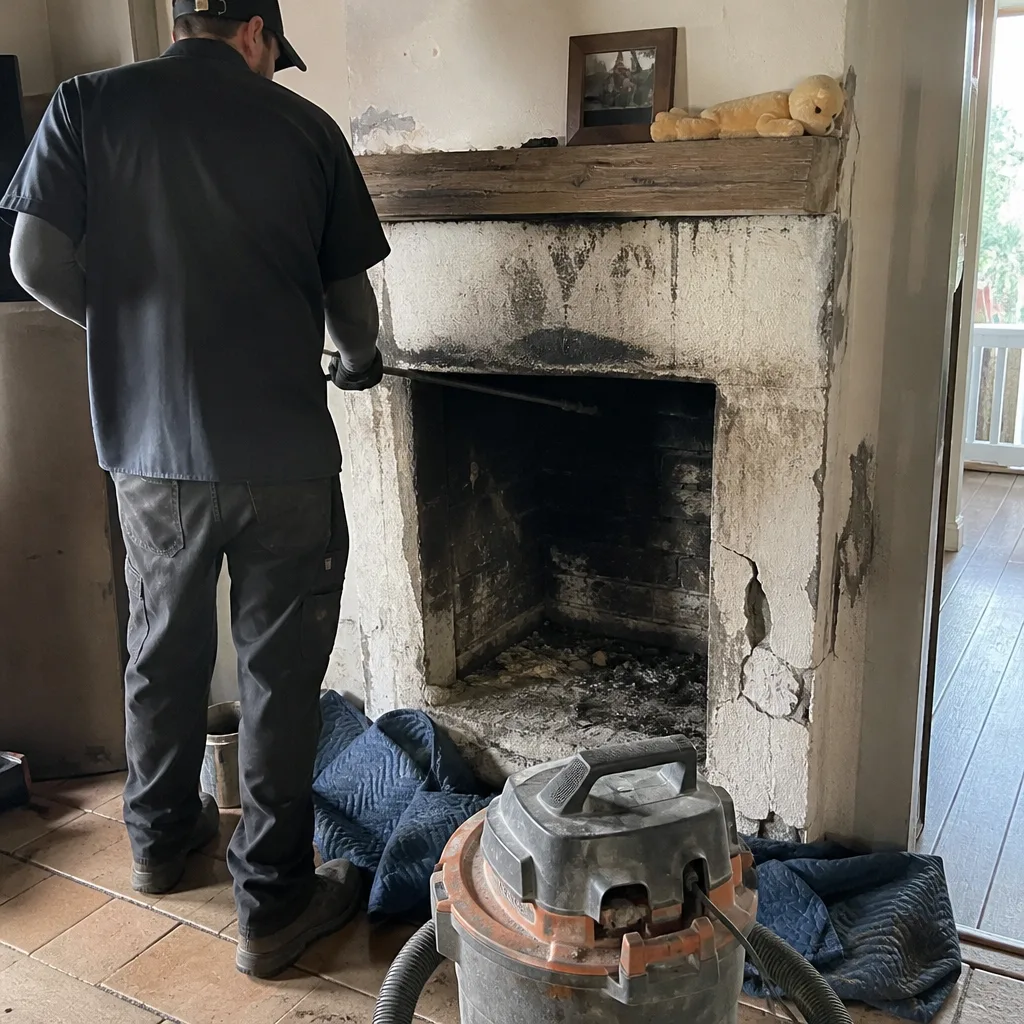 Before
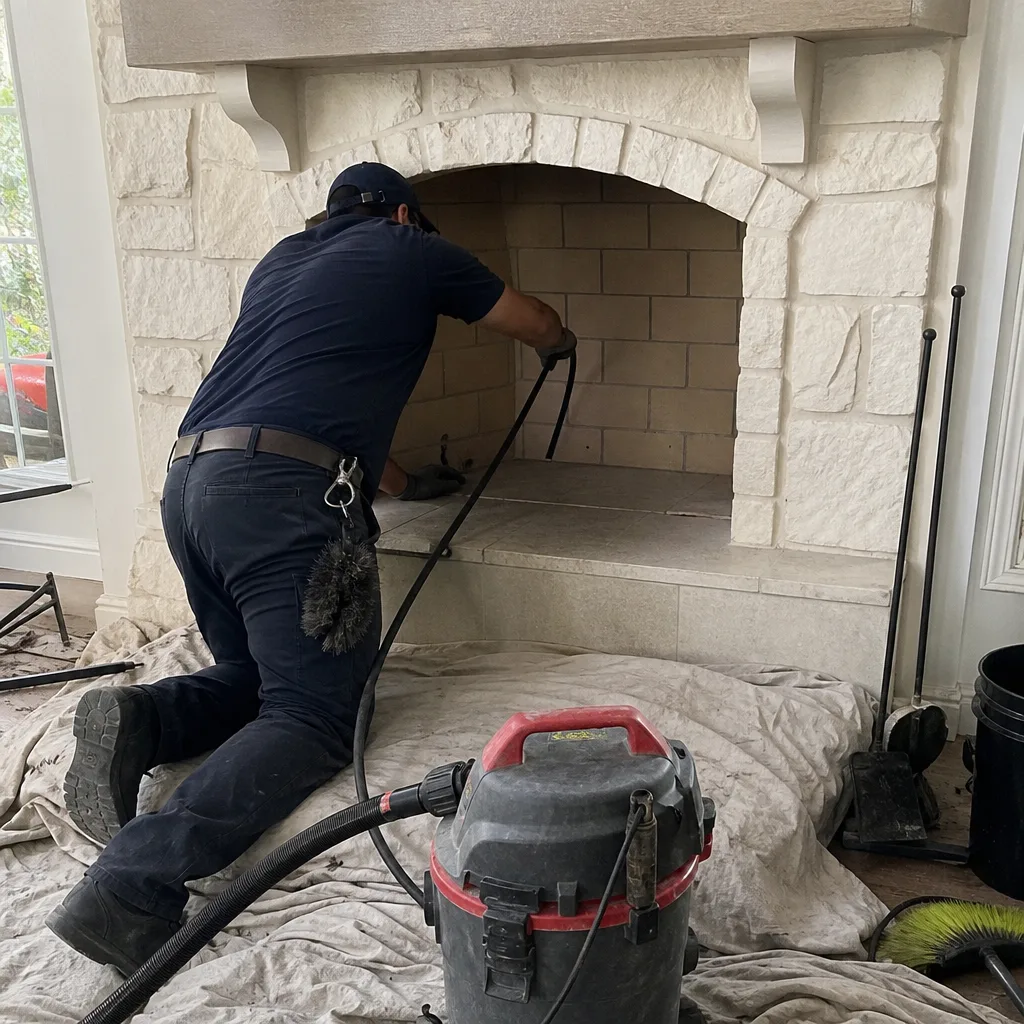 After
After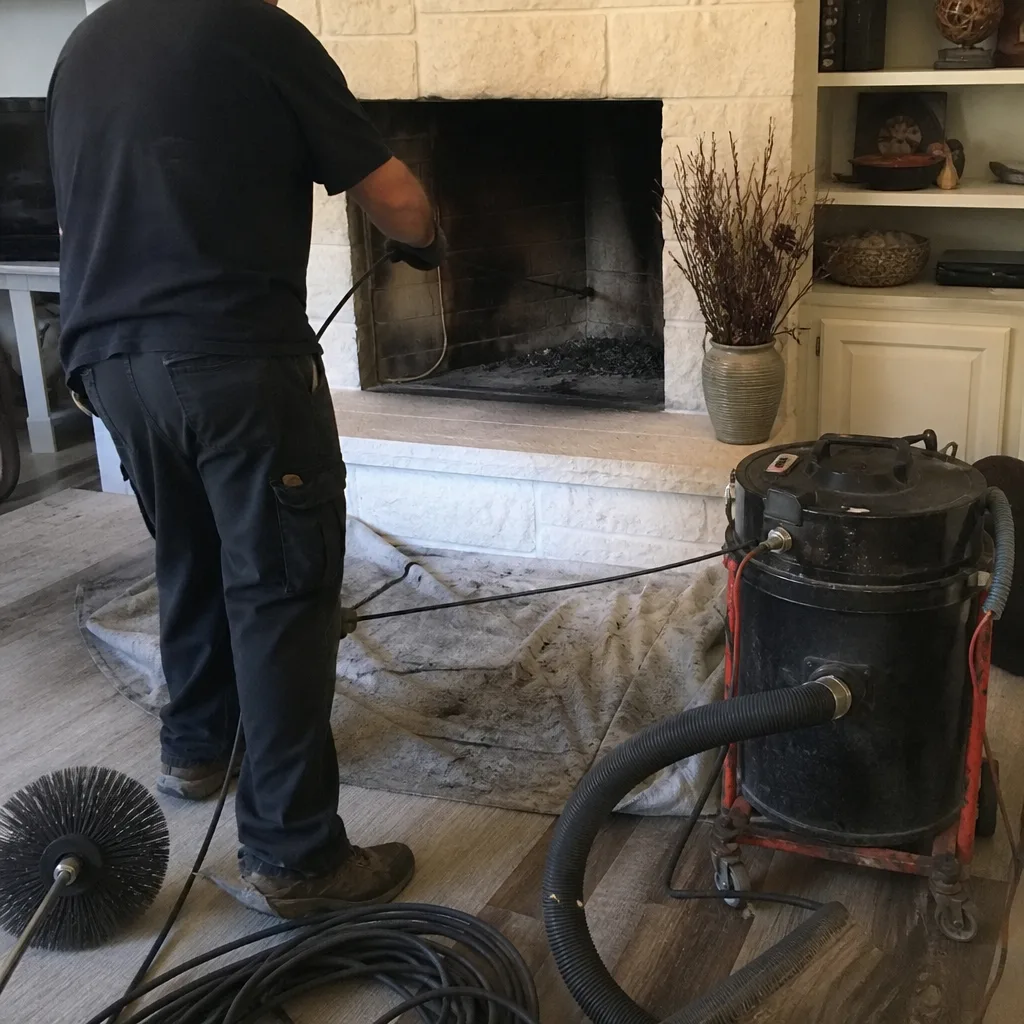 Before
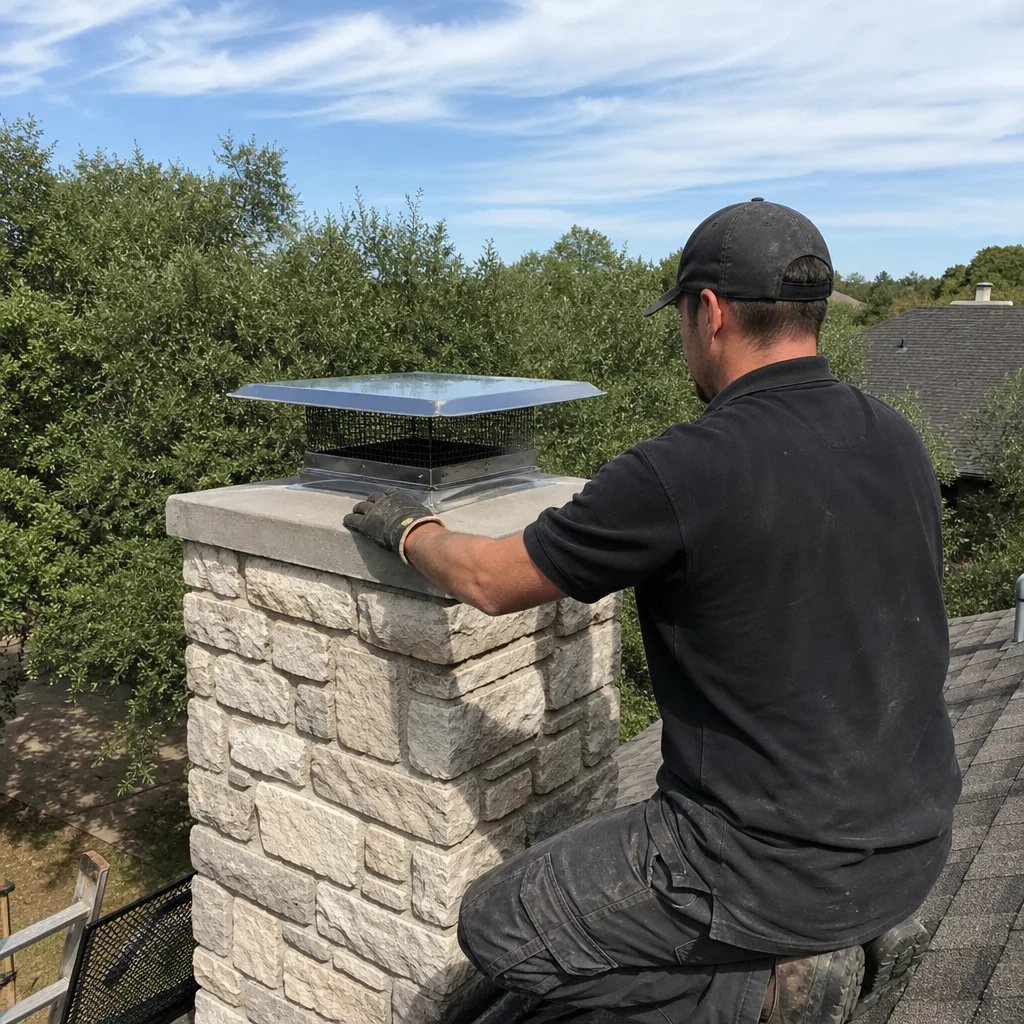 After
After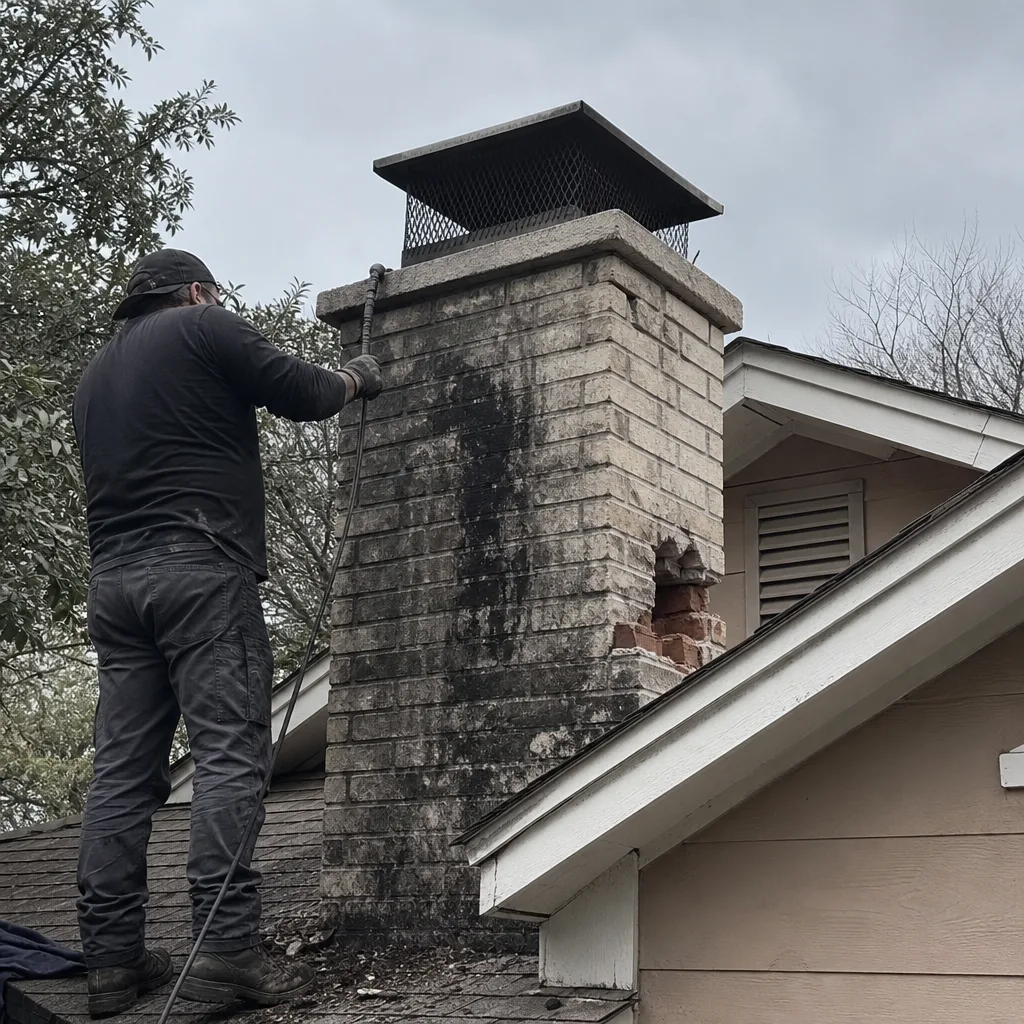 Before
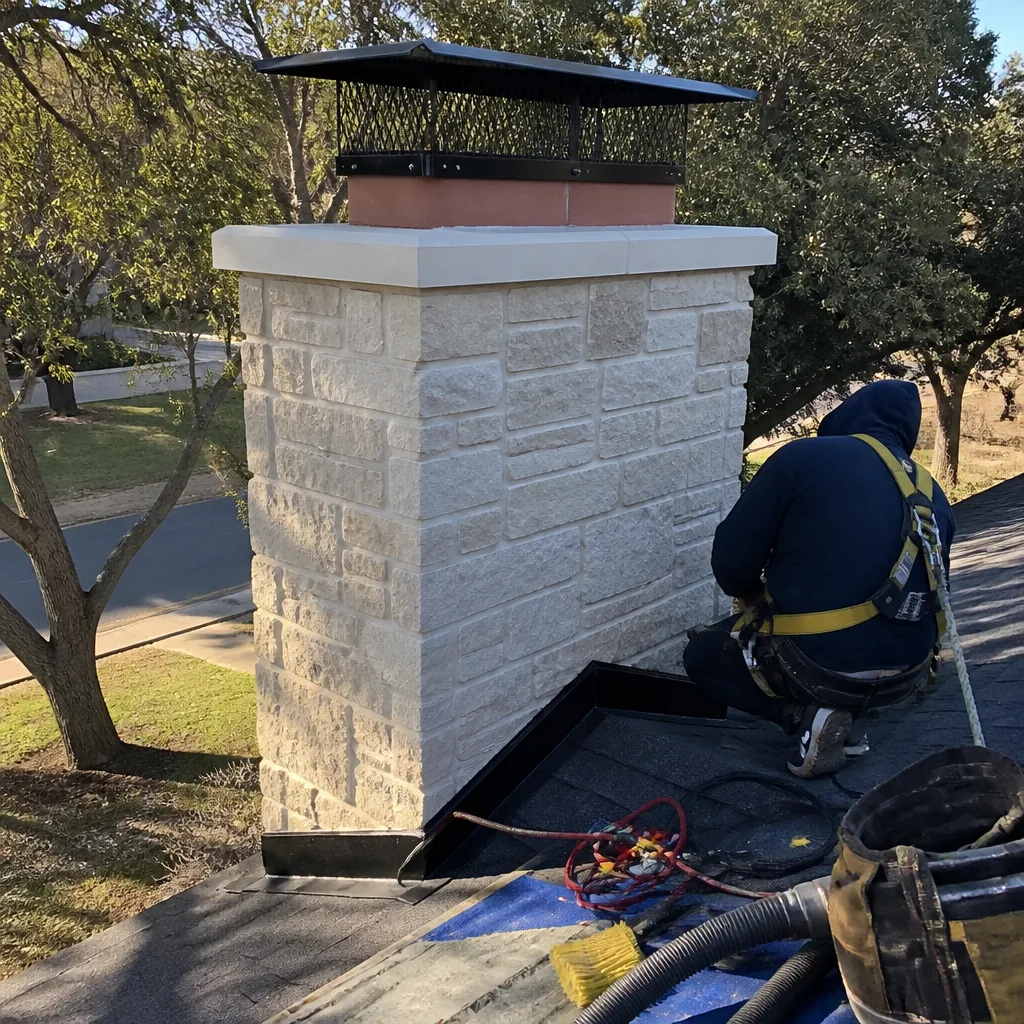 After
After