
Last updated October 15, 2026
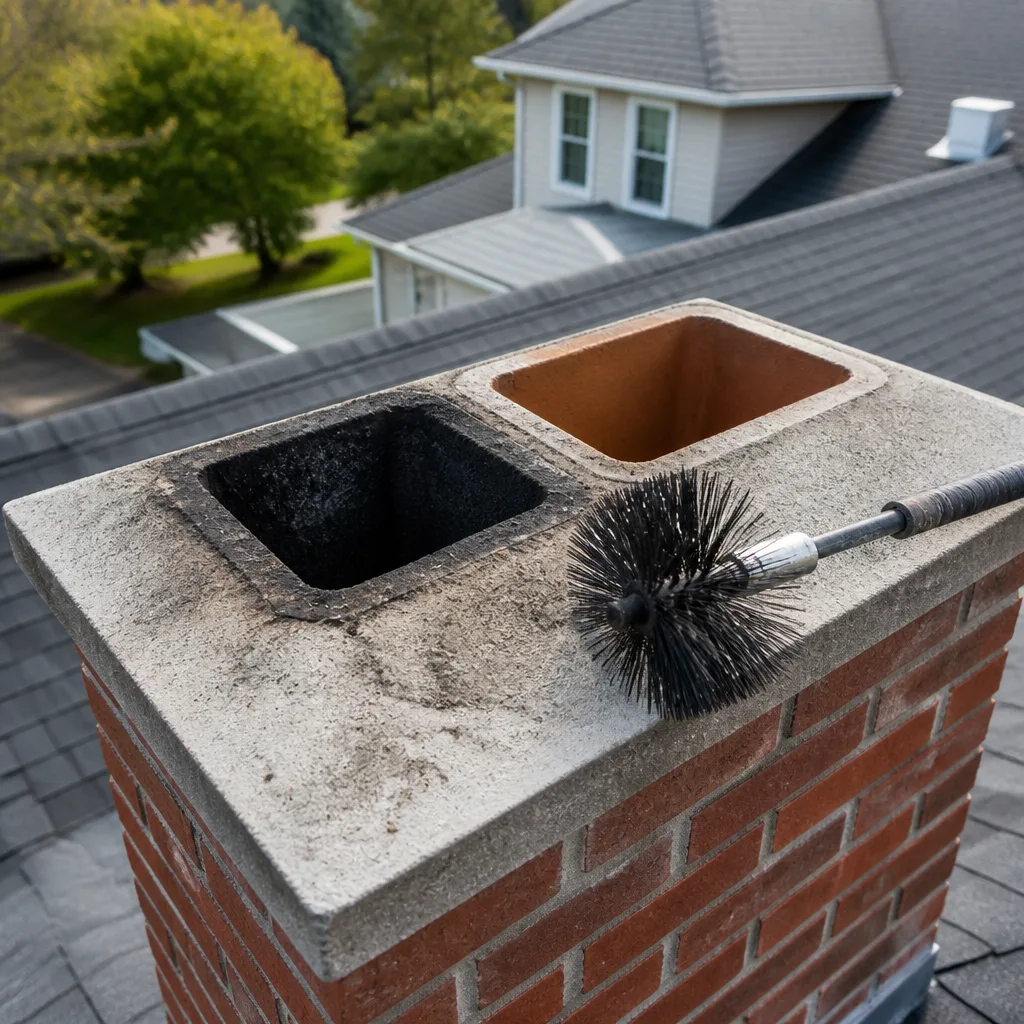 Sweep & inspection
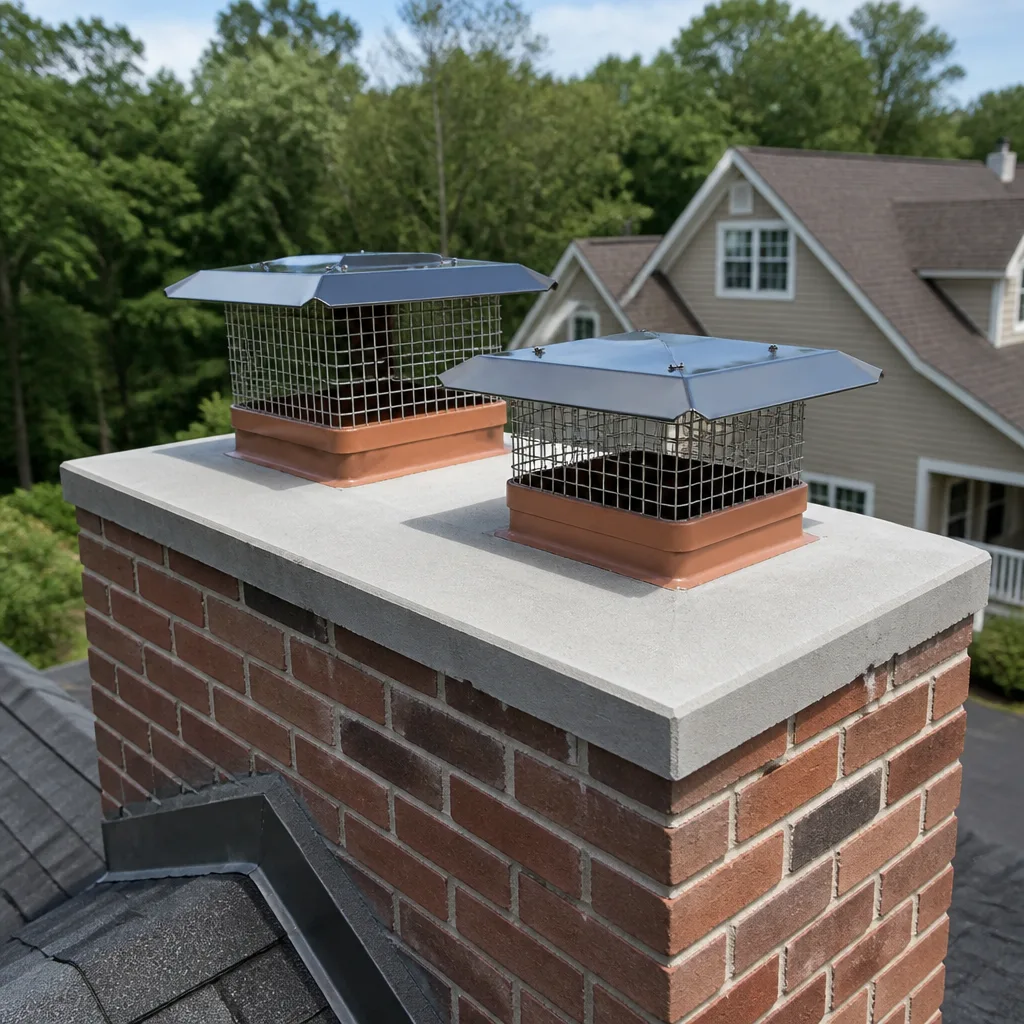 Caps & crowns
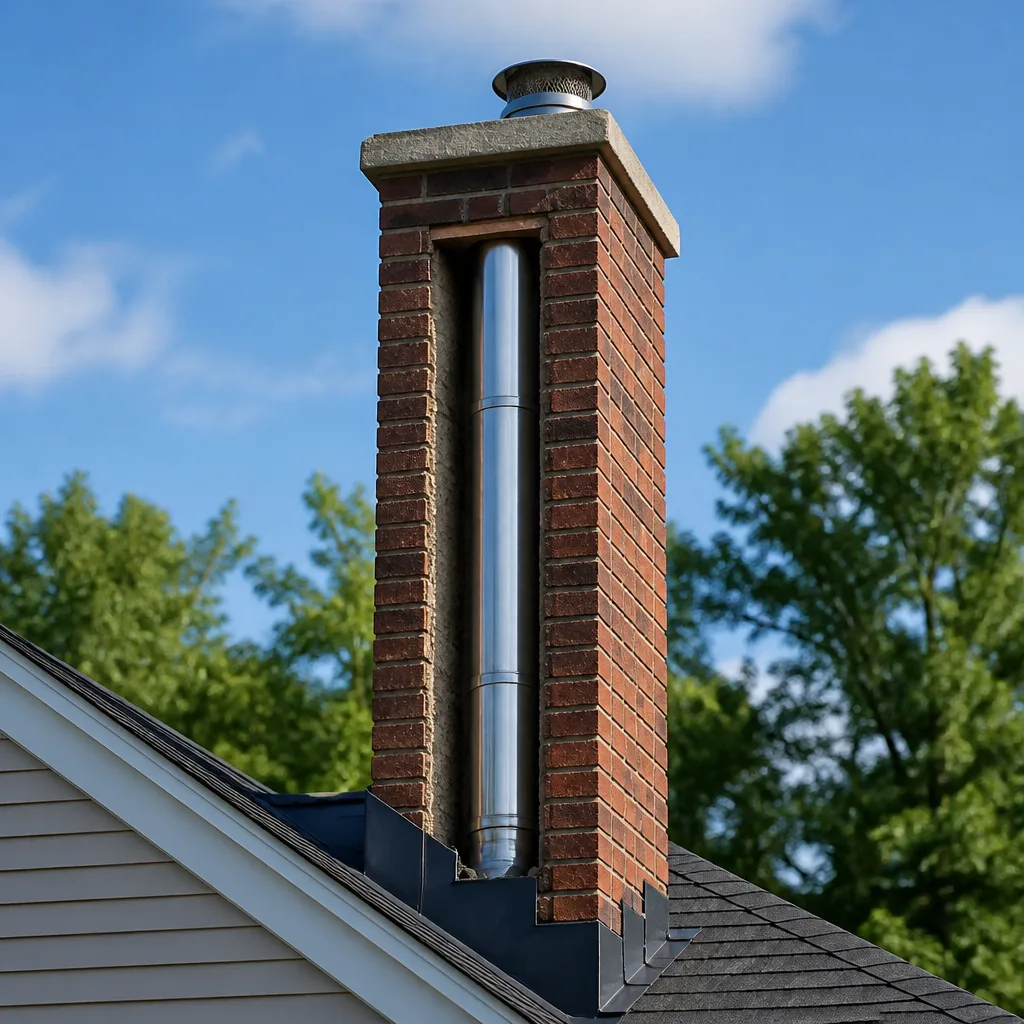 Flue relining
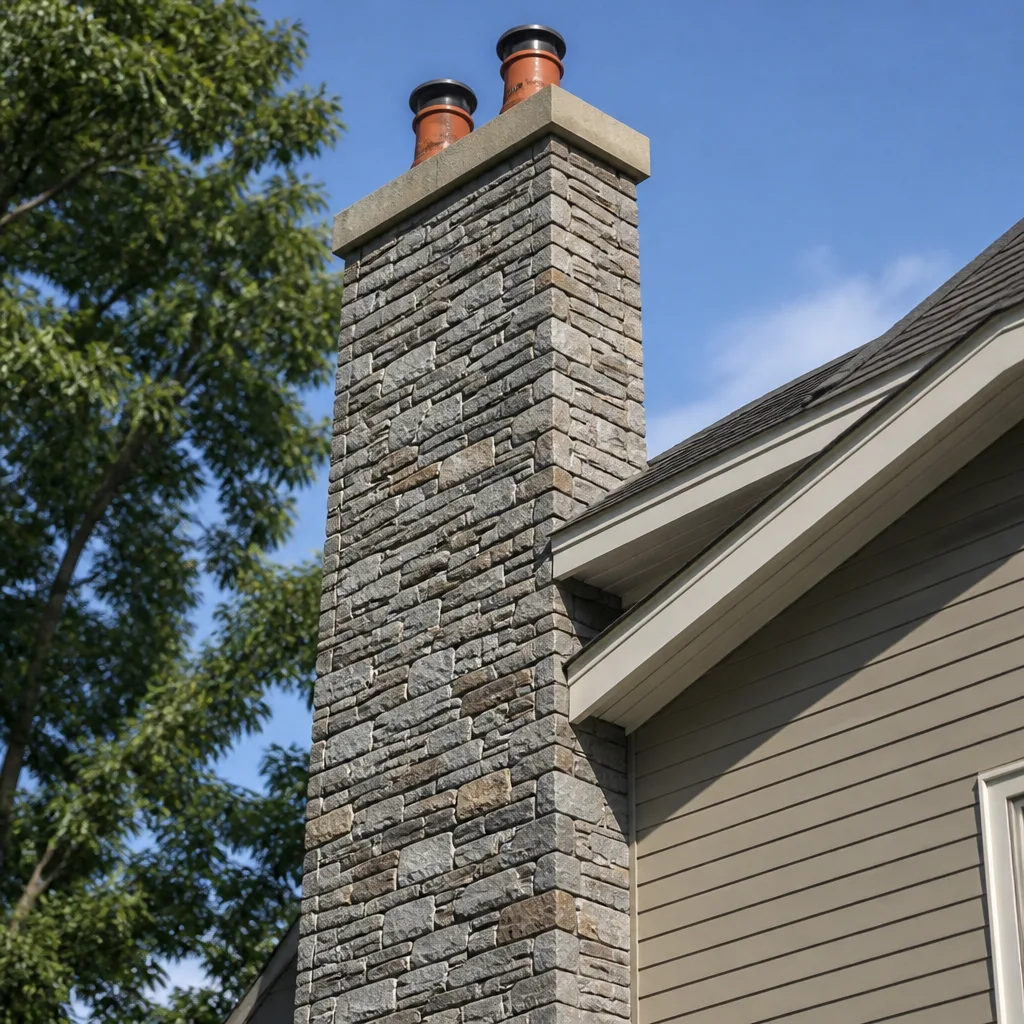 Masonry repair
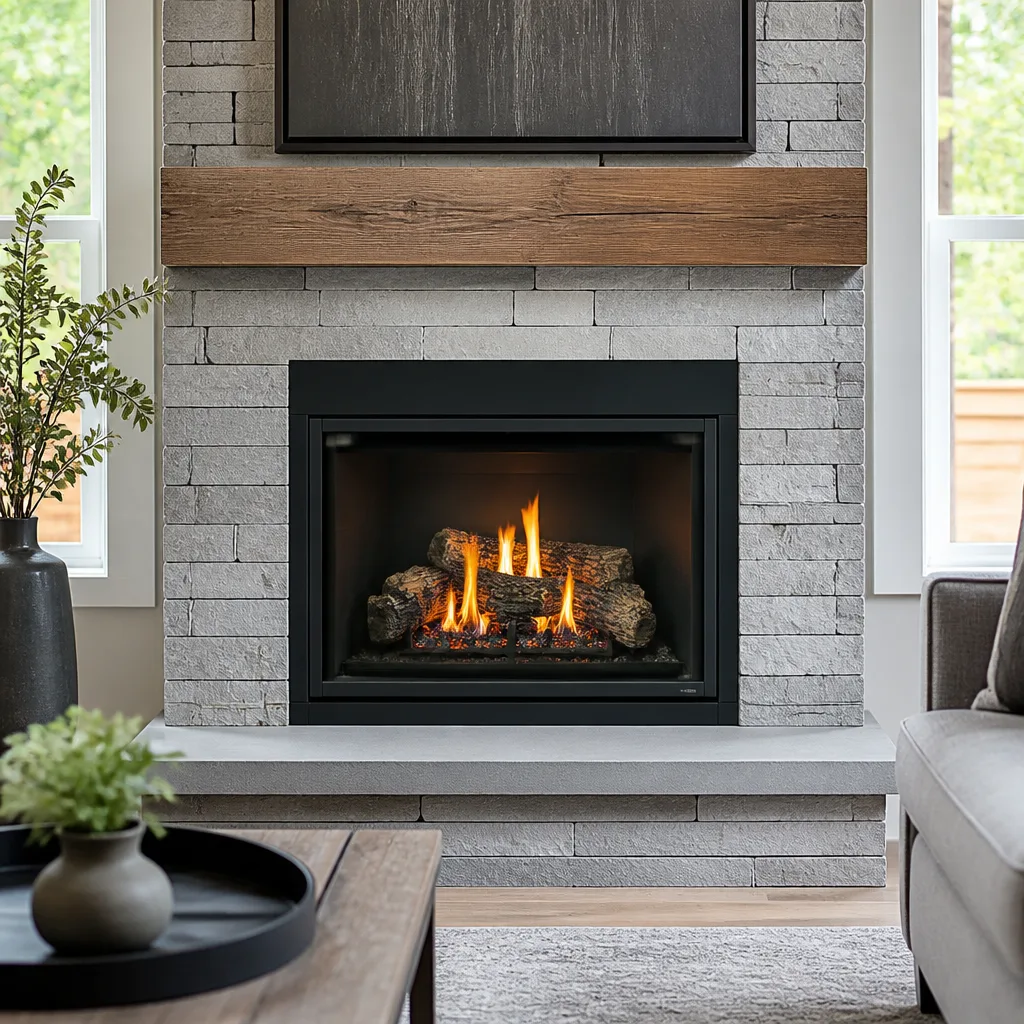 Gas fireplace service
Level 1 sweep and inspection to the NFPA 211 annual standard - flue, crown, cap, and flashing checked and photographed
Chimney sweep logs do not sweep chimneys. They loosen some creosote - which then falls where a brush and vacuum still have to collect it.
Chimney Cleaning Warning Signs: A Austin Homeowner’s Reference Guide
Most chimney guides tell you to watch for smoke pouring into the living room. By then, you’re already past cleaning and into repair territory. This guide is different. We’re focusing on the quiet signals: the white crust on your brick, the smell that lingers after a rain, the damper that fights you a little more each year. These are the signs Austin homeowners ignore for a season or two, and they’re the difference between a $200 sweep and a $2,500 masonry job. If you live in Austin, where humidity and limestone clay play havoc with masonry, you’ll want to know what to look for before the first cold snap. For a deeper dive, see The Complete Guide to Chimney Cleaning in Austin.
Quick Answer
Chimney cleaning in Austin is overdue when you see white staining (efflorescence) on exterior brick, smell a sharp acrid odor near the fireplace even when it’s cold, notice dark smoke staining above the firebox opening, or find that your damper is sticky or hard to move. Any one of these justifies a call. Two or more means you should book an inspection before your next fire.
Styles & brands we work with
Table of Contents
- Efflorescence: The White Staining Austin Chimneys Can’t Hide
- The Three Smell Profiles Every Austin Homeowner Should Know
- Smoke Staining Above the Firebox: What It Actually Means
- The Rusty or Sticky Damper: Why Austin Humidity Makes It Worse
- Spalling Brick and Flaking Mortar: When the Face of Your Chimney Starts Falling Off
- Warning Signs Visible Only During a Fire vs. Year-Round
- Call for a Cleaning or an Inspection First? A Decision Guide
Efflorescence: The White Staining Austin Chimneys Can’t Hide
Efflorescence is the white, chalky staining that appears on exterior brick and mortar. It’s not mold, and it’s not paint overspray. It’s salt. Here’s what’s happening: water has entered the masonry, traveled through the brick, and dissolved naturally occurring salts inside the material. When that water reaches the surface and evaporates, it leaves the salt behind. The stain is a receipt for moisture that has already come and gone.
In Austin, efflorescence is common because our freeze-thaw cycle, while mild compared to northern states, still exists. Winter nights dip below freezing just often enough to push moisture deeper into brick. Then spring rain and summer humidity keep the cycle going. A chimney with visible efflorescence has likely been absorbing water for at least one full season.
Why it matters for cleaning specifically: efflorescence itself doesn’t mean your flue is dirty. But the same water entry that causes it also accelerates creosote buildup inside the chimney. Wet creosote is denser, stickier, and harder to remove than dry creosote. If you see white staining outside, assume the interior conditions are worse than they’d otherwise be.
We’ve worked on chimneys in Barton Hills, Tarrytown, and Hyde Park where homeowners had been looking at efflorescence for two or three years before calling. By the time we arrived, the water intrusion had begun to deteriorate the mortar joints behind the brick face. What started as a cosmetic question became a crown rebuild and partial repointing.
If you see white staining, do this: take a photo. Note whether it’s spreading. If the staining covers more than a few bricks or appears on multiple sides of the chimney, book a chimney inspection. A Chimney Sweep in Austin can determine whether the staining is surface-level or a sign of deeper water entry. Either way, don’t ignore it for another season.
The Three Smell Profiles Every Austin Homeowner Should Know
Smell is the most underrated diagnostic tool you have. Chimney odors fall into three categories, and each one points to a different problem. Learn these, and you’ll know what you’re dealing with before anyone climbs on the roof.
1. Musty or Damp: Moisture Is Inside
A musty smell near your fireplace, especially after rain or during humid stretches, means water is getting into the chimney system. In Austin, this often comes from a cracked chimney crown, failed flashing at the roofline, or a damaged cap. The smell is usually strongest in summer and fall because heat pulls the damp odor down into the house. It may also be accompanied by visible water staining on the ceiling near the fireplace.
2. Sharp, Acrid, or Smoky: Creosote Is Building Up
This is the most important smell for cleaning. Creosote, the flammable tar residue produced when wood smoke cools and condenses inside the flue, has a distinct smell that lingers even when there’s no fire. It’s sharp, almost chemical, and it gets stronger on humid days because moisture activates the compounds in the creosote. If you smell it in a cold fireplace, you have enough buildup that it’s off-gassing into the room. That’s a cleaning signal, not something to wait on.
3. Sulfur or Rotting: Something Died or Is Living In There
Animal intrusion produces a specific smell. Birds, squirrels, and raccoons all find their way into chimneys in the Austin area, especially in spring nesting season. The smell varies: a sulfurous, rotten-egg odor suggests a dead animal. A musky, barnyard smell suggests a live one. Either way, you need a cleaning and likely a new cap with proper screening. Animal debris is not something to burn out; it creates a different kind of smoke hazard and can worsen creosote adhesion.
What to do with a smell you can’t categorize: call and describe it. Hadley Chimney Austin answers calls with a live person 24/7, and a technician can usually narrow the cause over the phone. If the smell is strong enough to notice in the room, the problem is strong enough to investigate.
Smoke Staining Above the Firebox: What It Actually Means
Dark staining above the firebox opening, on the brick or stone face, is one of the clearest signs of drafting problems. When smoke rolls into the room instead of going up the flue, it deposits soot and tar on the coolest surface it can find, which is usually the masonry above the opening.
But many Austin homeowners see this staining and think it’s normal wear from years of fires. It isn’t. It means the chimney isn’t drafting properly during at least part of the burn. The causes, in order of frequency, are:
- Creosote buildup narrowing the flue and restricting airflow
- A flue that’s too cold, which is common in our mild winters when a fire is started in a chimney that hasn’t been pre-warmed
- A damper that isn’t fully opening, often due to rust or debris on the mechanism
- A flue sized incorrectly for the firebox, something we see in older homes in central Austin neighborhoods like Travis Heights and Bouldin Creek
Smoke staining is one of the warning signs that justifies moving from “sweep” to “inspect.” If the chimney is drafting poorly, a cleaning will help but may not solve the problem. The photos a technician takes during the visit will show whether the flue has restorable space or whether the issue is structural.
You should also note when the staining appeared. Staining that gets worse with each fire is an active problem. Staining that’s been stable for years is a historical one, but it still signals a system that worked poorly at some point.
The Rusty or Sticky Damper: Why Austin Humidity Makes It Worse
A damper that’s hard to open, sticky, or rusted at the edges may seem like a minor annoyance. In Austin’s climate, it’s a warning sign we take seriously, and here’s why: our humidity accelerates rust on exposed metal parts. A damper that’s becoming difficult to operate is rusting from the underside, and that rust tells you water is getting down the flue.
In dryer climates, a stiff damper might just be a mechanical issue. In Austin, where summer mornings leave condensation on metal surfaces and winter rains soak chimney crowns, rust on the damper almost always means moisture intrusion from above. The question is how much.
What the rust is masking below the damper plate is often worse. The damper sits just above the firebox. If it’s rusted, the throat area below it may also be deteriorating. The firebox itself may have cracks that you can’t see without a proper light. And the flue liner above the damper may have sections of cracked tile or missing mortar joints.
We tell Austin homeowners to test their damper in spring, not fall. Open it fully, close it fully, and feel for resistance at any point. If it grinds, sticks, or leaves rust flakes on your hand, book a chimney inspection before the burning season. The repair may be as simple as a new damper assembly, but you want a technician to see what’s above it before you light another fire.
A sticky damper paired with a smoky smell is a two-signal situation. Don’t wait.
Spalling Brick and Flaking Mortar: When the Face of Your Chimney Starts Falling Off
Spalling is what happens when water inside brick freezes and expands, causing the surface layer of the brick to flake off or break away. You’ll see pieces of brick on the roof, in the gutter, or on the ground near the chimney base. The brick face itself may look pitted or scraped. Mortar joints may have gaps or crumbling edges.
In Austin, spalling is a slow-motion problem. Our freeze-thaw cycles are not dramatic, so the damage accumulates over several winters rather than one. But that means spalling chimneys in our area have been wet for a long time before the damage becomes visible. The water has been working on the masonry for years.
Spalling matters to cleaning because water entry changes the interior flue conditions. A chimney with spalled exterior brick almost always has creosote that’s denser and more difficult to remove, because wet creosote adheres to the flue walls differently than dry creosote. The cleaning may take longer and may reveal that sections of the flue liner need repair.
This is a situation where the thermal expansion of the flue during a fire can also stress the already-damaged brick around it. A fire in a spalling chimney heats the flue liner, which expands, which presses against the surrounding masonry, which is already compromised. We don’t recommend using a fireplace with spalling brick until a professional has evaluated the structure.
If you see spalling, take it as a message: the chimney has been getting wet, the brick is failing, and the inside conditions are likely affected. A Chimney Repair in Austin is the next call, and it’s often addressed with a crown repair, waterproofing, and repointing rather than a full rebuild.
Warning Signs Visible Only During a Fire vs. Year-Round
Some chimney problems show themselves when a fire is burning. Others are visible any time you look. Knowing the difference helps you decide when to inspect and what to photograph.
Visible Only During a Fire
- Rolling smoke: Smoke that spills into the room, especially in the first ten minutes of a fire, often signals a cold flue or a restricted one. Opening a window a crack can sometimes correct the cold-flue version, but if it persists, the flue needs attention.
- Pulsing or fluttering flames: A flame that visibly pulses or dips when the wind blows outside means the chimney top isn’t managing air pressure properly. It could be a cap issue or a flue-height issue.
- Rushing or roaring sounds: An unusually loud draft can indicate an oversized flue pulling too much air, which actually reduces heating efficiency and can overheat the liner.
- Smoke exiting from multiple points: If you see smoke from the chimney top and also from cracks in the masonry or around the damper, stop the fire. That’s a structural breach.
Visible Year-Round
- Efflorescence on exterior brick, as described above
- Rust stains on the exterior brick face or the damper handle
- Crumbling mortar along the roofline or crown
- Dark staining above the firebox
- Water stains on the ceiling near the chimney chase
- Animal droppings or nesting material visible at the base of the fireplace
Year-round signs are the more serious ones, because they indicate chronic conditions. Fire-only signs are often performance issues that can be corrected with cleaning or minor adjustments. If you have one fire-only sign and one year-round sign, book the inspection. Two signals from either category tell you the system is talking to you. Listen.
Call for a Cleaning or an Inspection First? A Decision Guide
Here’s how we tell Austin homeowners to think about it. A cleaning is what you book when the chimney is functioning normally and you’re maintaining it. An inspection is what you book when you’ve seen something that concerns you. Most inspection findings are “clean it and keep using it,” but the inspection gives you the baseline so you’re not guessing. For a full rundown of what to check, grab our Chimney Sweep Maintenance Checklist for Austin Homeowners.
Book a cleaning if:
- You’ve used the fireplace more than 20 times since the last cleaning
- It’s been two years or more since anyone looked at the flue
- You smell creosote only after a fire, not when the fireplace is cold
- You see light cosmetic soot on the firebox walls but no staining above the opening
Book an inspection first if:
- You have efflorescence, spalling, or crumbling mortar
- The damper is rusty, sticky, or has visible flaking
- There’s smoke staining above the firebox
- You smell musty or sulfurous odors when the fireplace is not in use
- You’ve had water in the firebox after rain
If you fall in the inspection category, don’t worry about landing on the “right” service. Call Hadley Chimney Austin and describe what you see. The person on the phone will schedule the right visit. You’ll get a written price before any work starts, and the technician’s before-and-after photos will show you exactly what was found and what was done. No guesswork, no surprises at the door.
Common Mistakes to Avoid
- Ignoring efflorescence because it’s “just cosmetic.” That white staining is a water intrusion receipt. The same water is changing the creosote inside your flue. Efflorescence in a Austin chimney is a call-this-season signal, not a watch-it-for-another-year one.
- Burning a fire with a sticky damper. A damper that won’t fully open restricts the draft and can push smoke and carbon monoxide into the room. If the handle fights you, get it looked at before you light the next fire.
- Assuming a smoky smell in summer is just “old fireplace smell.” In Austin’s humidity, creosote off-gassing is more noticeable when the air is thick. If the smell is strong, the buildup is significant.
- Waiting until fall to inspect. Every Austin chimney company gets slammed in October. Booking in spring or summer means you’ll be ready for the first cold night instead of waiting on a backlog while you’d rather be burning wood.
- DIY cleaning with store-bought logs. Creosote-sweeping logs can reduce some light stage-one residue, but they don’t remove glazed or stage-three creosote, and they don’t address the underlying reason the buildup got there. They also do nothing for wildlife, rusted dampers, or water intrusion.
- Calling a repair company that can’t show you photos. The Relay Visibility Guarantee exists because we believe you should see what the technician sees. If a company won’t show you the inside of your own flue, that’s a warning sign about the service, not just the chimney.
- Burning wood with visible smoke staining above the firebox. The staining says the draft is failing. Another fire adds more deposits and more strain on a system that’s already underperforming.
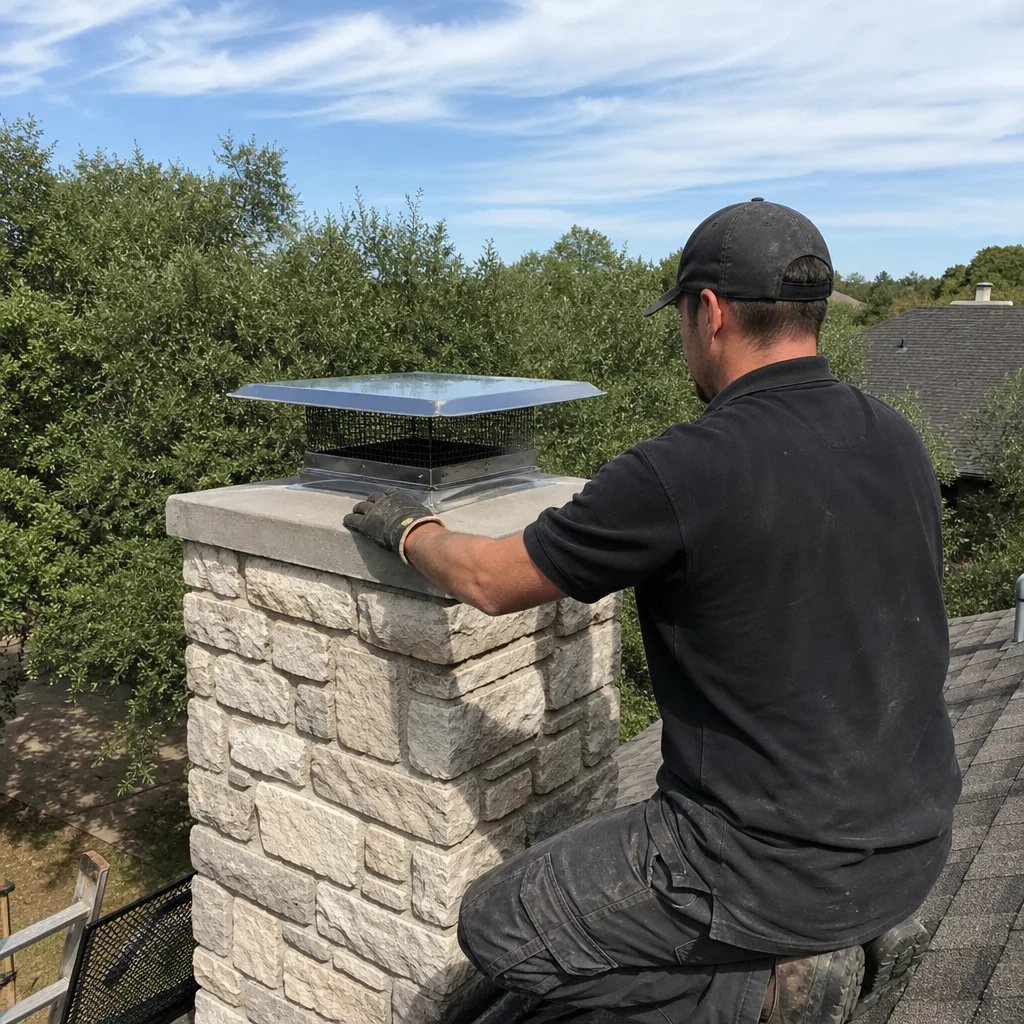
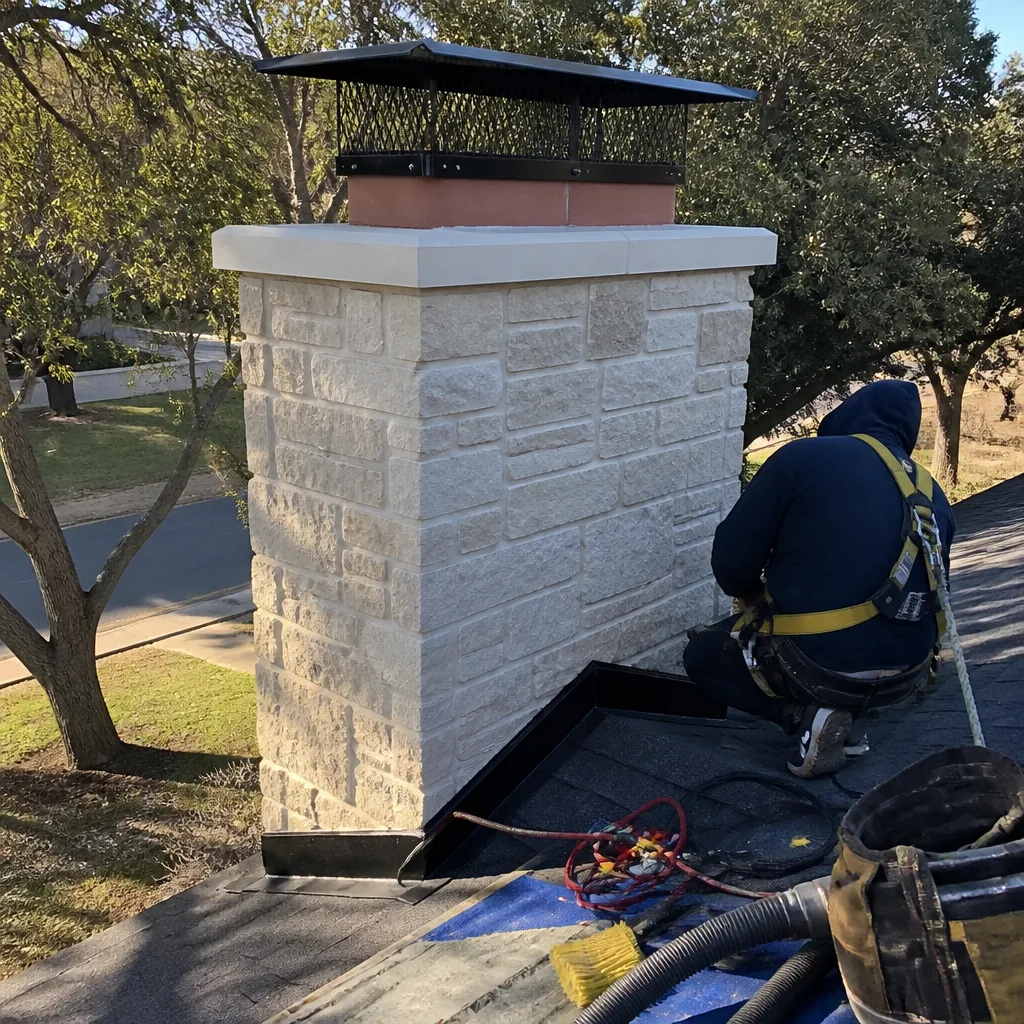
See the difference
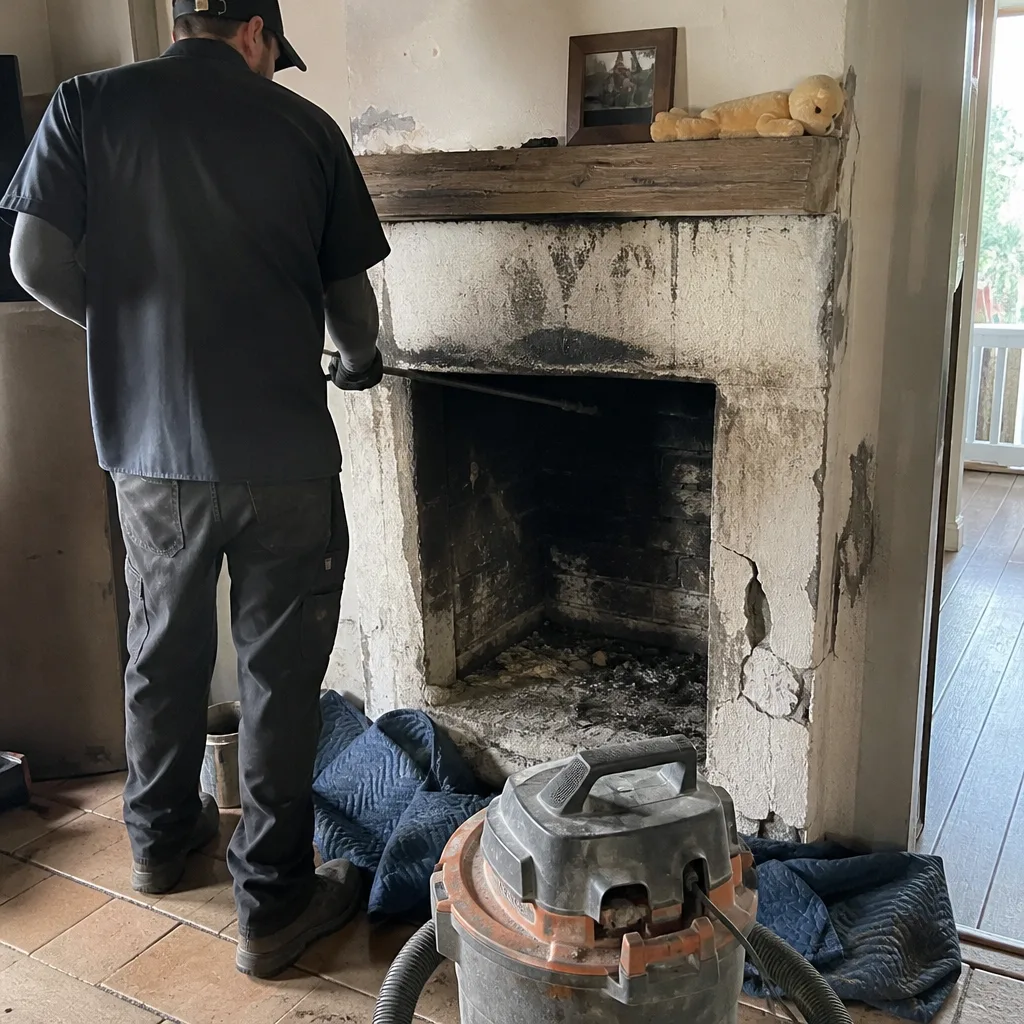 Before
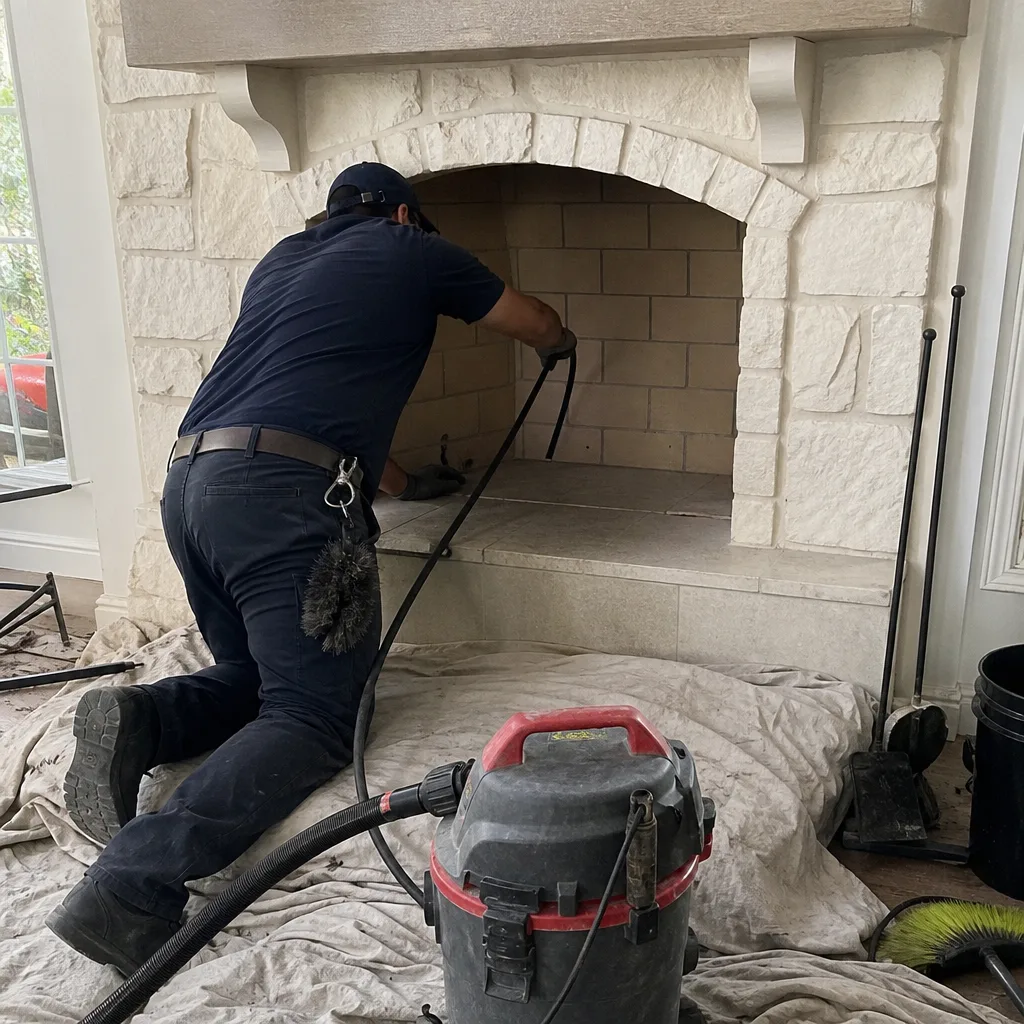 After
After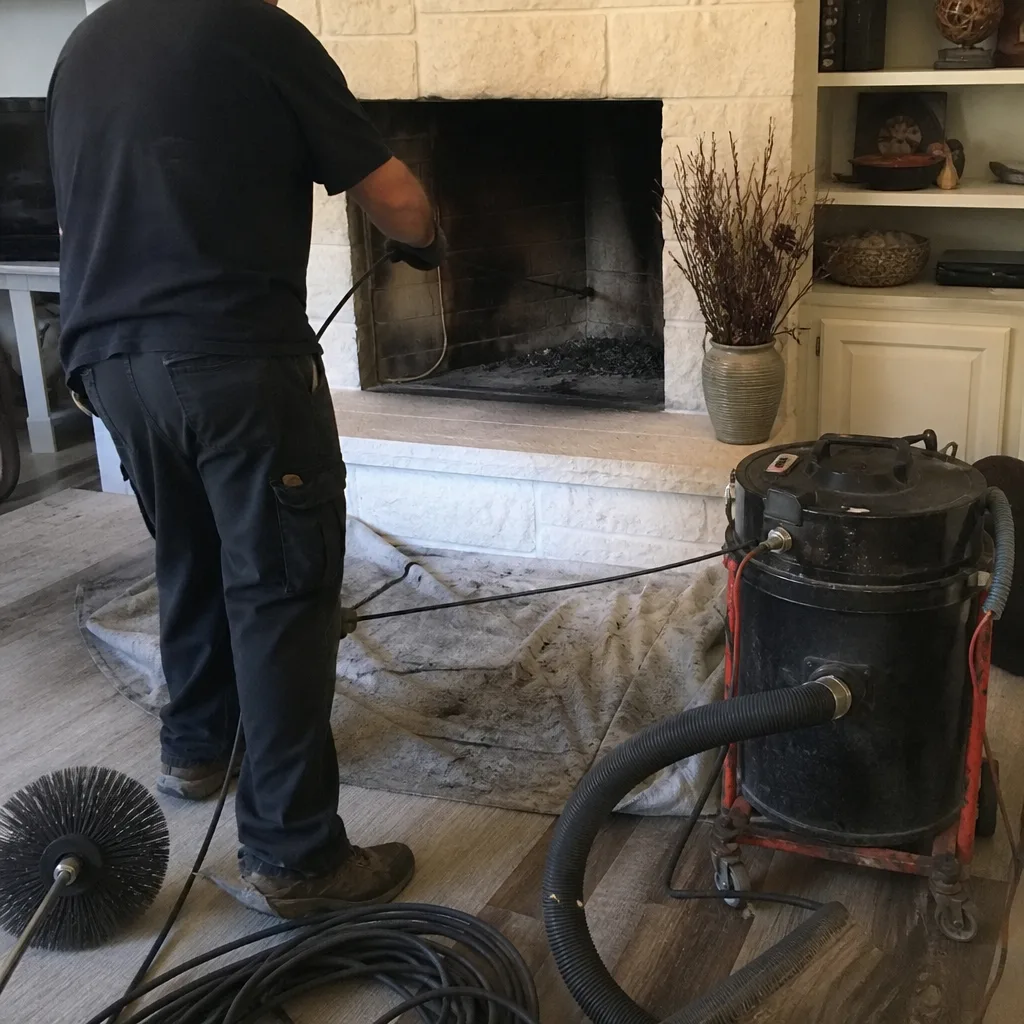 Before
 After
After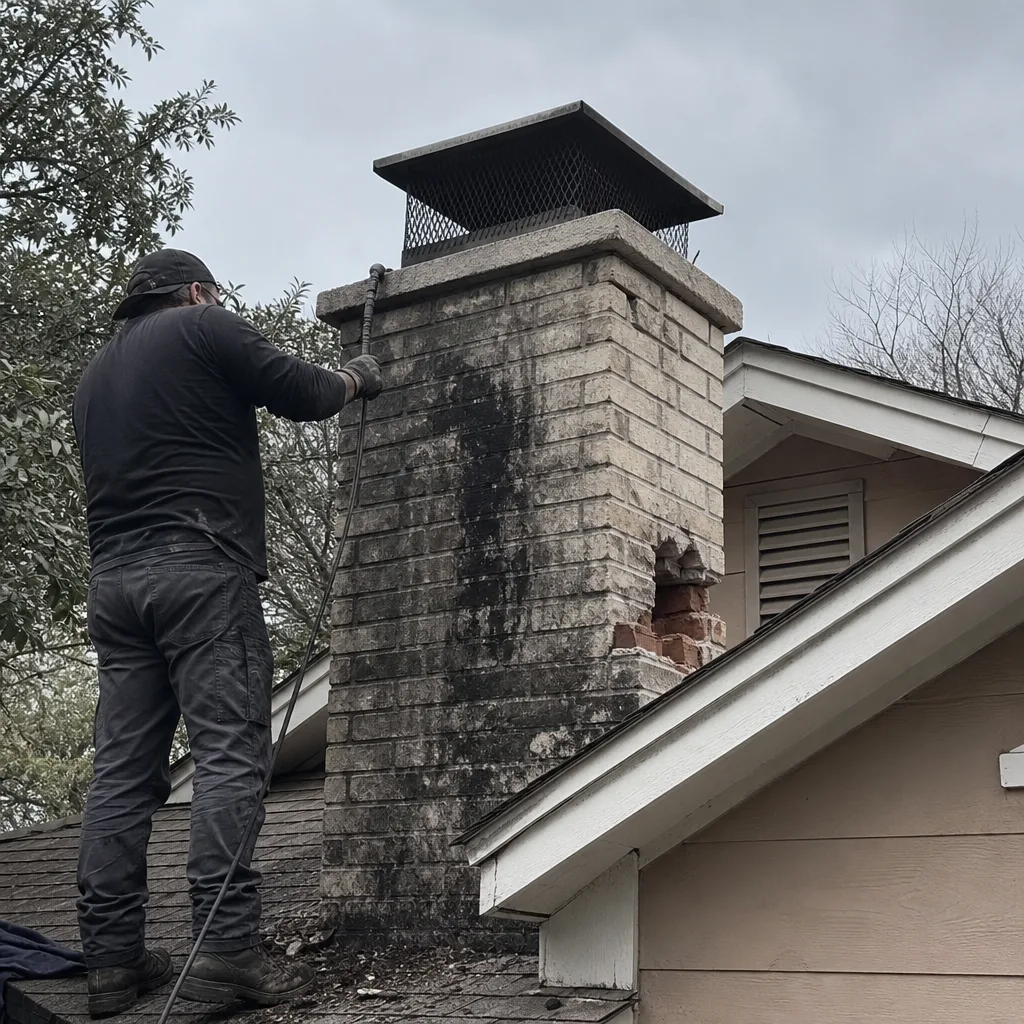 Before
 After
AfterWhen to Call a Professional
Call if you see efflorescence that’s spreading, spalled brick on the ground or roof, smoke staining above the firebox, or a damper that won’t move smoothly. Call if you smell creosote in the house when the fireplace is cold, if you’ve found dead birds or nesting material in the firebox, or if water has appeared inside the fireplace after rain. These are not “schedule it when you get around to it” scenarios. A chimney with any of these conditions is either already compromised or on the way there. Hadley Chimney Austin offers free estimates throughout the Austin area. Call (361) 603-5116 and a live person will answer, any time of day, and help you decide whether a cleaning or inspection is the right next step.
Frequently Asked Questions
A standard chimney sweep in Austin typically runs between $180 and $300, depending on the chimney’s condition, height, and accessibility. When the flue has heavy creosote, animal debris, or hasn’t been cleaned in years, the price can go up because the job takes longer and may require rotary cleaning tools. Some companies also charge separately for an inspection. Hadley Chimney Austin gives you a written price before any work starts, so you know the number before anyone climbs on the roof. Call (361) 603-5116 for a free estimate.
Once a year if you burn wood regularly, and at least once every two years if you use the fireplace only occasionally. Austin’s humidity means creosote absorbs moisture and becomes harder to remove over time, so even light seasonal use can justify an annual sweep. Gas fireplaces need less frequent cleaning but still benefit from an inspection every two to three years.
Creosote builds up in layers. Stage one is flaky and soft. Stage two is crystallized. Stage three is glazed, tar-like, and concentrated fuel. A chimney fire burns at temperatures that can crack the flue liner, warp the damper, and transfer heat to nearby framing. Chimney fires often burn without obvious drama from inside the house. The first sign can be a damaged flue you don’t know about. A $200 cleaning is cheaper than the liner repair that follows a chimney fire. Call (361) 603-5116 to schedule and get a written quote before anything begins.
No, not always. A dirty chimney needs cleaning. A liner replacement is recommended when the old liner is cracked, spalling, or missing sections, which a camera inspection will show clearly. At Hadley, we don’t recommend liner work without photo evidence you can see yourself. If the flue is intact and just coated with creosote, a sweep is the fix. If the photos show breached clay tiles, we’ll walk you through options like a DuraFlex stainless liner, with a written price before any work begins.
That white powder is efflorescence, salt deposits left behind when water evaporates from the brick surface. It means water has been entering the masonry, and it’s been happening long enough for the salt to dissolve out. In Austin, this is usually caused by a cracked crown or failed flashing. It’s a sign that the chimney is wet, and a wet chimney means denser, harder-to-clean creosote inside. Book an inspection to find the water entry point.
No, gas fireplaces don’t produce creosote, but they produce other residues including sulfur-based deposits and, in some cases, a fine white powder from the heat exchanger. The bigger concerns with gas fireplaces are ventilation issues and carbon monoxide safety. A Gas Fireplace Repair in Austin visit includes checking the venting, the logs, and the safety shutoff. Gas units still benefit from an annual check, even if they don’t need sweeping in the traditional sense.
The Bottom Line
Most chimney disasters in Austin start as small, visible signals that got ignored. Efflorescence on brick, a damper that’s getting stiff, a smell that lingers after the fire is out, staining above the firebox. None of these are normal, and none of them improve with time. The difference between a cleaning and a repair is often just which season you call. If you’ve seen any of the warning signs in this guide, the next step is simple: call (361) 603-5116 for a free estimate, get a written price before work starts, and see the before-and-after photos that prove the job was done right. That’s how we do it at Hadley, and it’s the standard every Austin homeowner should expect. For more guides & resources, visit our blog.
Written by Cory Mitchell, Owner at Hadley Chimney Austin, serving Austin since 2003.