
Last updated October 15, 2026
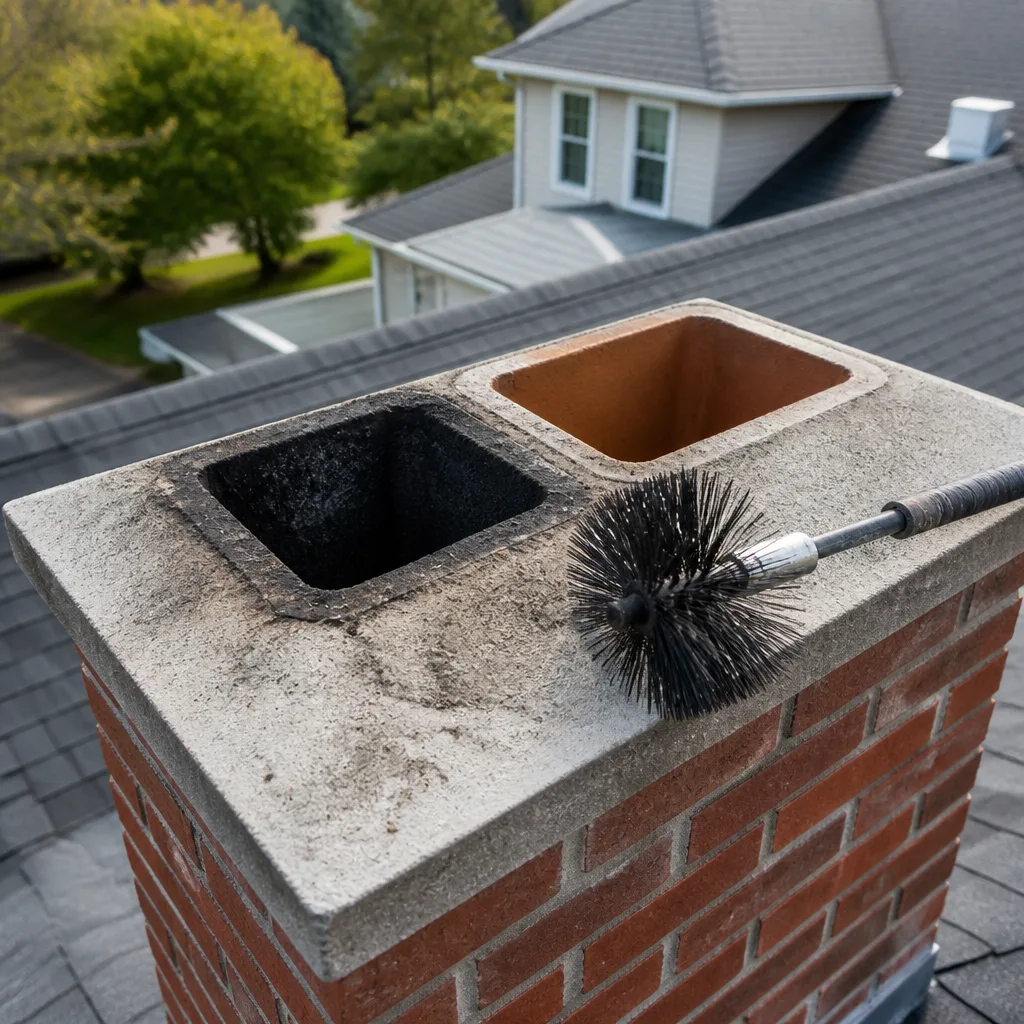 Sweep & inspection
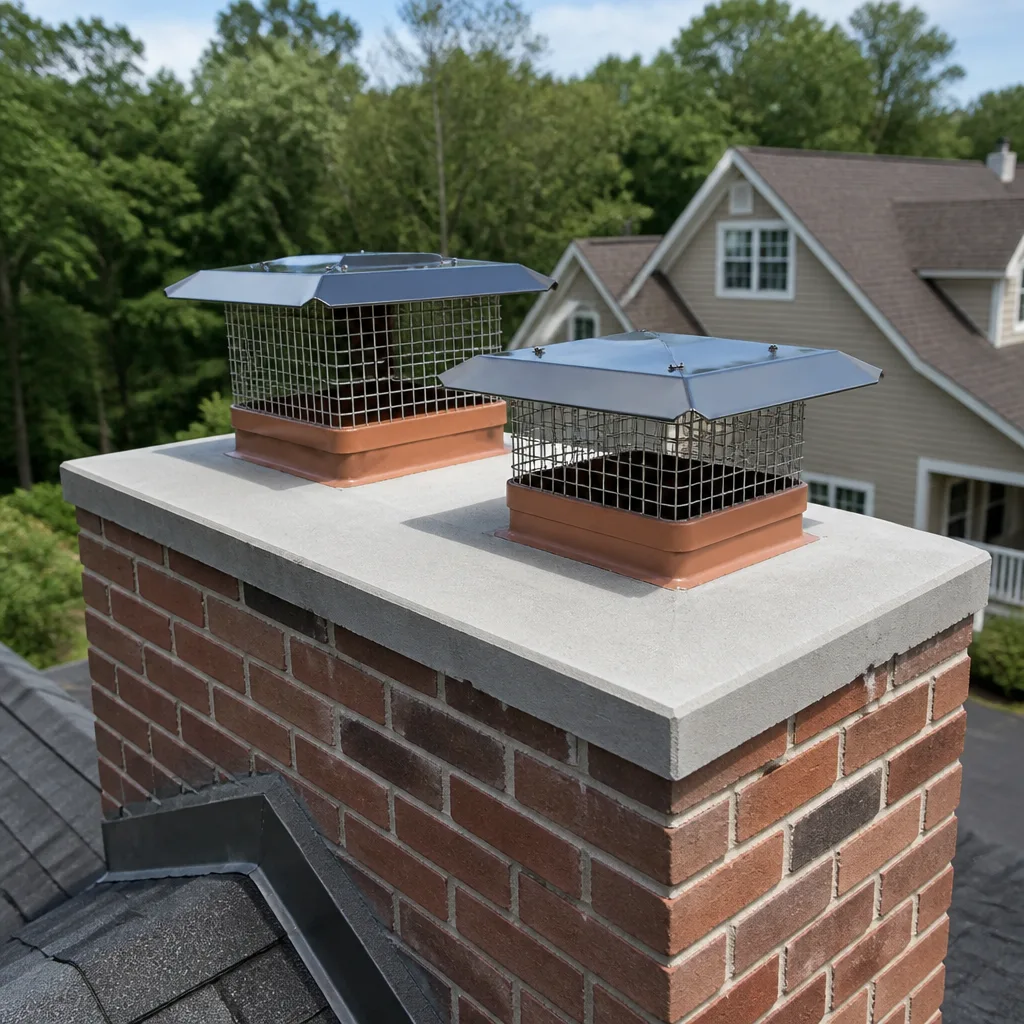 Caps & crowns
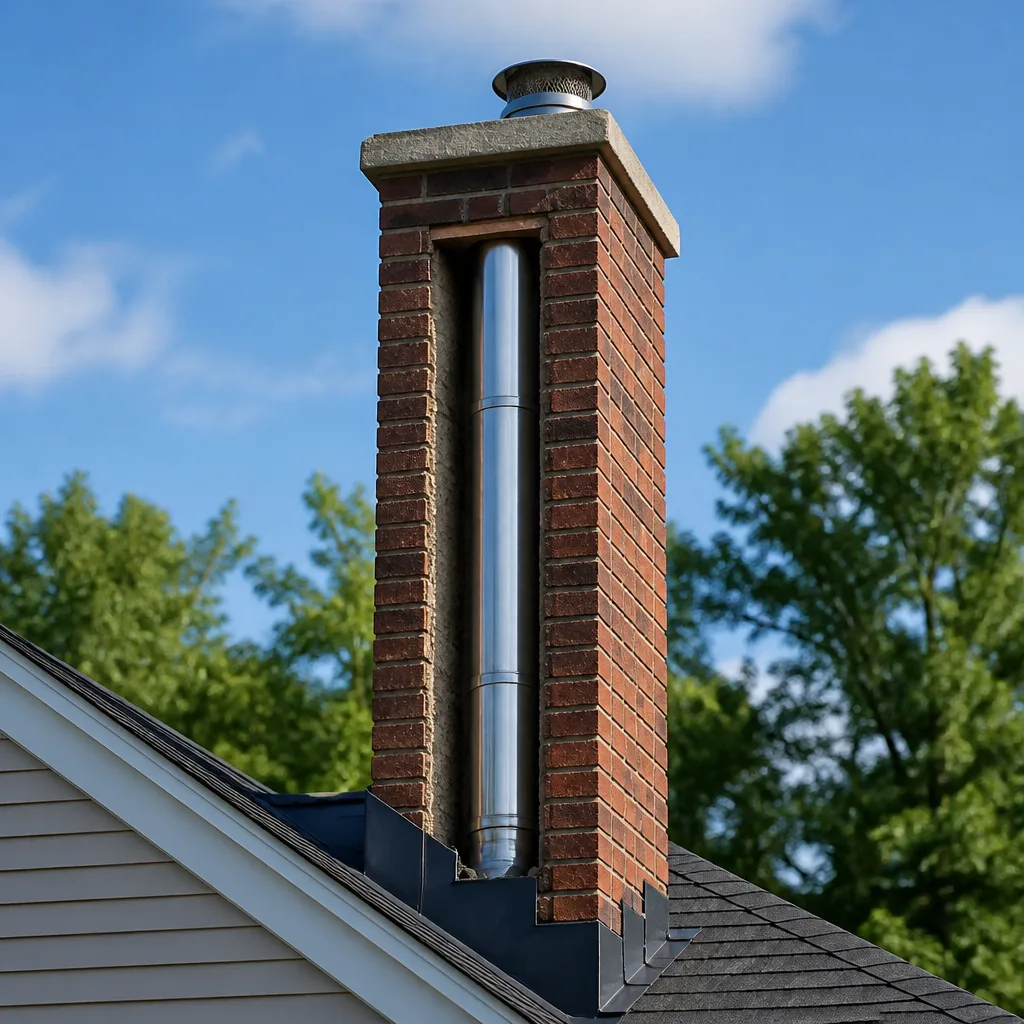 Flue relining
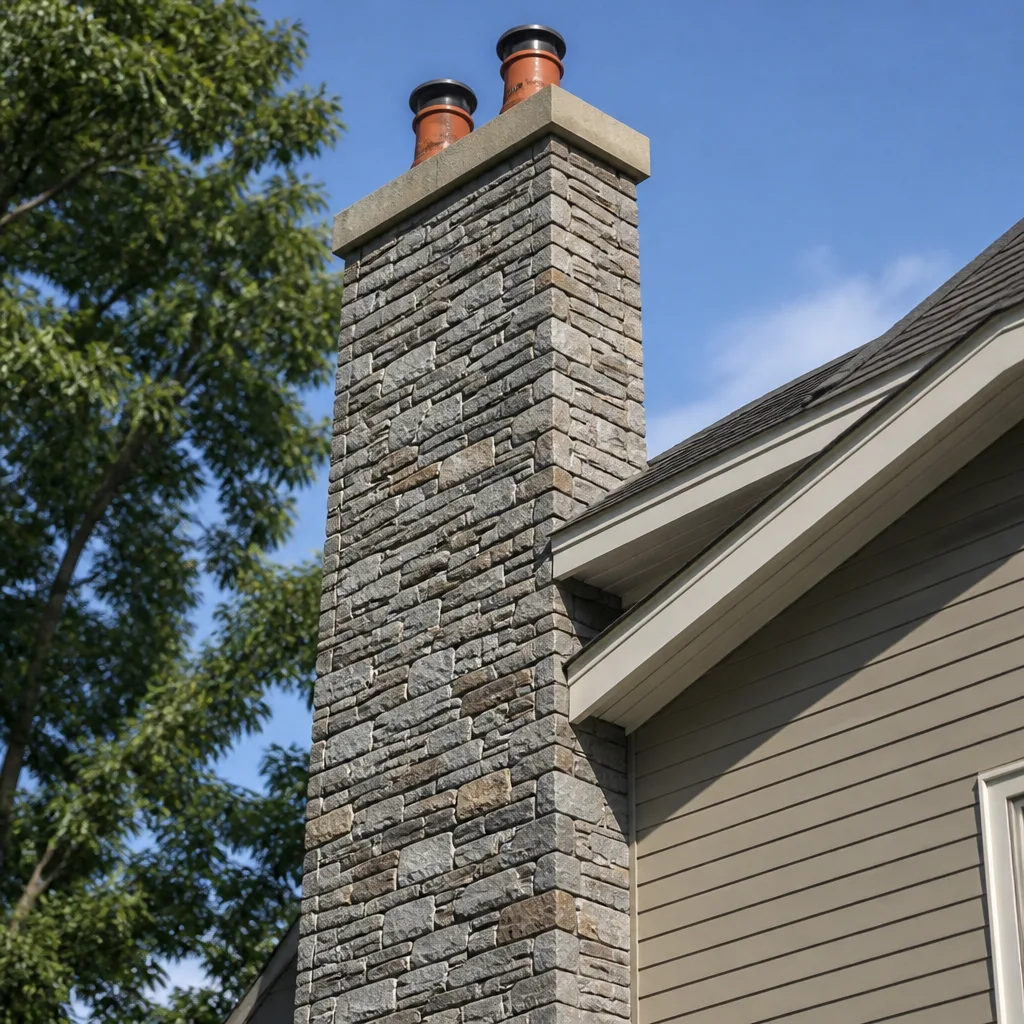 Masonry repair
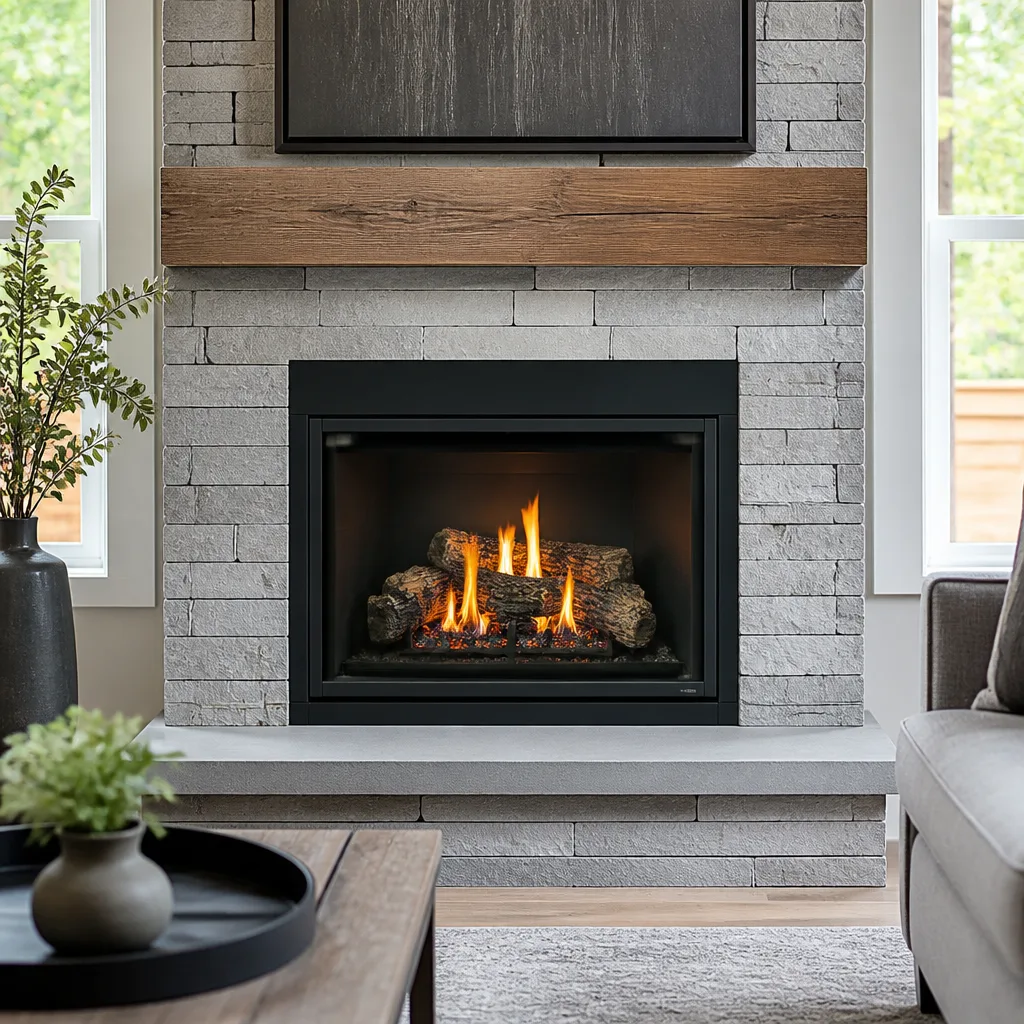 Gas fireplace service
Level 1 sweep and inspection to the NFPA 211 annual standard - flue, crown, cap, and flashing checked and photographed
Chimney sweep logs do not sweep chimneys. They loosen some creosote - which then falls where a brush and vacuum still have to collect it.
DIY vs Professional Chimney Cleaning: The Austin Homeowner’s Decision Guide
A chimney brush and 30 minutes on YouTube will remove visible creosote from your flue, and leave you with a cleaner-looking chimney that still has a cracked liner, a compromised smoke chamber, or a nesting blockage you can’t see without a camera. The DIY versus professional debate in Austin usually gets framed as cost versus safety, but the real issue is that consumer-grade tools can clean a flue while missing the structural and combustion conditions that make a cleaned chimney actually safe to use. Here’s what actually matters when you’re deciding whether to climb up there yourself or pick up the phone.
Styles & brands we work with
Quick Answer
For a lightly used wood-burning fireplace in Austin that you burn fewer than 10 times a season, a careful DIY sweep with the right brush can handle basic creosote removal if the chimney is straight and accessible. But for any home where the fireplace gets regular use, the chimney is older than 15 years, or you’ve never had a camera inspection, a professional cleaning in Austin typically runs $149 to $289-see our Chimney Cleaning Cost Breakdown: The Austin Homeowner’s Reference for 2026 for full pricing details-and includes the structural evaluation that a brush alone cannot provide. Most Austin homes fall into that second category.
Table of Contents
- What a DIY Chimney Cleaning Can Actually Accomplish
- What Professional Tools Find That DIY Misses
- How Austin’s Climate Affects Your Chimney
- The Real Cost Comparison: DIY vs Professional
- The Insurance Dimension Nobody Talks About
- Austin-Specific Scenarios: When DIY Is Fine, When It Isn’t
- Common Mistakes to Avoid
- When to Call a Professional
- Frequently Asked Questions
- The Bottom Line
What a DIY Chimney Cleaning Can Actually Accomplish
Let’s be honest about what a homeowner with a brush kit, a ladder, and a Saturday afternoon can reasonably do. There are legitimate tasks that fall within DIY territory, and doing them well gives you useful information even if you ultimately decide to bring in a professional. We’ve seen plenty of Austin homeowners handle these tasks competently, and we’d rather you know how to do them properly than skip them entirely.
Here’s what a careful homeowner can genuinely accomplish:
- Cap inspection from the ground: Binoculars work. Look for a missing or shifted cap, visible rust, or a cap that’s been knocked askew by a storm. Austin’s spring hail season is hard on chimney caps, and a quick visual check after a storm costs nothing.
- Damper function test: Open and close the damper a few times. It should move smoothly and seat fully. A damper that sticks or won’t close all the way means you’re losing conditioned air into the chimney all summer, which matters when Austin hits 105 degrees in August and your AC is already working hard.
- Firebox visual inspection: Shine a flashlight around the firebox and look for obvious cracks in the refractory panels, gaps in the mortar joints, or white staining that suggests water intrusion. You’re looking for problems you can see without a camera, not a definitive assessment.
- Exterior mortar scan: Walk around the chimney’s exterior and look for spalling brick, crumbling mortar, or a visible lean. Austin’s clay soil expands and contracts with moisture changes, which stresses chimney masonry over time. Hairline cracks in the crown are worth noting, even if you can’t fix them yourself.
Notice what’s missing from that list: anything that happens inside the flue. And that’s where the real conversation starts.
What Professional Tools Find That DIY Misses
The core limitation of DIY chimney cleaning is not effort or intelligence. It’s optics. A brush removes what it touches, but it doesn’t show you what it touched. Professional equipment exists specifically to reveal what brushing alone leaves behind, and that’s the gap that matters for safety.
Here’s what professional-grade tools bring to the table that a $40 brush kit from a big box store cannot:
Rotary Cleaning Systems for Stage 2+ Creosote
Creosote (the flammable tar buildup that makes chimneys a fire risk) comes in stages. Stage 1 is a flaky, dusty substance that brushes off easily. Stage 2 is a hardened, tar-like glaze that a standard wire brush skips over. Stage 3 is a thick, candied coating that requires chemical treatment or rotary removal. Most DIYers can handle Stage 1. Stage 2 and Stage 3 creosote require rotary systems with chains or specialized whip heads attached to a drill, and those systems typically run $300 to $800 for a homeowner to buy, which defeats the purpose of DIY economics. If you’re burning pine or any unseasoned wood, you’re likely building Stage 2 creosote without realizing it.
Chimney Cameras
A professional chimney camera is a flexible-borescope system that feeds a real-time view of the entire flue to a monitor. It shows hairline cracks in the clay liner, gaps in the mortar joints, signs of past chimney fire damage, and the telltale glossy sheen of Stage 3 glazed creosote. The camera also confirms whether a sweep actually got everything. Without one, you’re cleaning blind. That’s not a criticism; it’s a physical limitation of the task.
Smoke Pencil Draft Testing
A smoke pencil emits a thin stream of visible smoke that shows how air moves through the chimney. You hold it near the damper and watch whether smoke rises smoothly, stalls, or back-puffs into the room. A functioning draft isn’t just about the flue being open. Negative pressure inside the house, competing exhaust from HVAC systems, or a chimney that’s too short for its roof line can all disrupt draft. Austin homes built with tight building envelopes and modern weatherstripping often experience draft problems that have nothing to do with creosote, and a smoke pencil reveals them in about 60 seconds.
None of this requires exotic technology. But it does require tools that a homeowner will realistically never buy for once-a-year or once-every-two-years use.
How Austin’s Climate Affects Your Chimney
Austin’s climate does specific things to chimneys, and the DIY conversation in Austin has to account for them. Our heat, our humidity swings, and our seasonal temperature ranges create conditions that other parts of Texas simply don’t experience.
Summer temperatures routinely exceed 100 degrees for weeks at a time. That heat expands masonry, brick, and the clay liners inside older chimneys. When temperatures drop at night, or when a rare cold front rolls through in winter, the materials contract. Over a decade of that cycle, hairline cracks form and widen. Central Texas gets occasional freeze-thaw cycles during winter months, and when moisture gets into those cracks and freezes, it pries them wider. What starts as a cosmetic crack becomes a vertical split in the liner, and a vertical split in the liner is exactly what allows heat and carbon monoxide to escape into wall cavities rather than venting outside.
Then there’s the humidity. Austin’s average morning humidity hovers above 80% for much of the year. That moisture interacts with creosote differently than in a dry climate, creating a denser, stickier residue that’s harder to remove with a standard wire brush. Homeowners in Colorado or Arizona may find DIY sweeps genuinely effective because their creosote is drier and flakier. Austin homeowners are often dealing with a semi-hardened layer that resists basic brushing.
We also see a meaningful number of chimney fires in the Austin area that start with creosote buildup from burning unseasoned oak or cedar. Live oak, which is abundant in Central Texas, takes a full two years to season properly, and many homeowners burn it after six months because that’s what they can find stacked in the yard. Green oak produces more creosote than almost any other common firewood, and it produces it faster.
The Real Cost Comparison: DIY vs Professional
The DIY pitch usually sounds like this: why pay a professional $200 when a $40 brush kit does the same job? Let’s break down what the DIY route actually costs when you buy everything you need to do it correctly, and compare it honestly to what a professional sweep in Austin includes.
DIY Costs, Itemized
- Chimney brush kit with rods: $40 to $90, depending on flue size and rod length. Most Austin chimneys are 8-inch or 12-inch flues, so you need the right diameter brush to actually make contact with the walls.
- Ladder adequate for roof access: You may already own one, but if you don’t, figure $120 to $300 for a properly rated extension ladder. Austin roof pitches vary widely, and a two-story home in the Hill Country is a different access problem than a one-story in Hyde Park.
- Drop cloths and plastic sheeting: $15 to $30. Creosote dust is fine, black, and sticks to everything it lands on. It will get on your hearth, your floors, and possibly your furniture if you don’t seal the firebox opening properly.
- N95 or P100 respirator: $15 to $40 depending on cartridge filtration. This is non-negotiable. Creosote dust is a respiratory irritant and a known carcinogen. You’re not being cautious by buying a respirator; you’re doing the bare minimum.
- Shop vac with HEPA filter: $80 to $250 if you don’t already own one. A standard household vacuum will kick fine creosote dust right back into your living room, and your kids will breathe it.
- Creosote disposal bags: $10 to $20. You can’t put creosote in your regular trash in most Texas municipalities without it being double-bagged, and you absolutely should not scatter it in the yard.
Total realistic DIY investment for a first-time self-sweeper: $280 to $730. Now, on subsequent sweeps, you already own the gear, so your marginal cost drops to maybe $30 for replacement brushes and disposal bags. But you still don’t have a camera, a rotary system, or a smoke pencil.
A professional chimney sweep in Austin typically runs $149 to $289 for a standard open-face wood-burning fireplace. That price generally includes the sweep itself, a visual inspection of the firebox and smoke chamber, a cap check, and, with companies that operate the way we do, camera documentation and a written guarantee. The savings from DIY are real on paper, but they’re smaller than most people assume, and they disappear entirely if you end up calling a professional anyway because the brush didn’t get the Stage 2 creosote you didn’t know you had.
The Insurance Dimension Nobody Talks About
Here’s a fact that almost no DIY guide mentions: your homeowner’s insurance policy likely has language about chimney maintenance, and that language becomes very relevant if you ever have a chimney fire.
Most policies require the homeowner to maintain the chimney in a reasonably safe condition and to keep records of professional inspection and cleaning where applicable. If a chimney fire occurs and the insurer discovers the chimney hadn’t been professionally inspected in years, or that the homeowner self-serviced without any documentation of the flue’s condition, the claim can be denied or reduced. Insurers don’t automatically deny claims because you used a brush kit. But they do ask questions. And a homeowner who can point to a documented professional sweep with camera footage and a written report is in a materially stronger position than one who says, “I cleaned it myself last fall.”
In Austin specifically, we’ve seen insurance companies become more diligent about chimney claims after the region’s growth brought a wave of older homes into the market with fireplaces that hadn’t been used in years and hadn’t been inspected in decades. A $249 professional sweep with a written report is a very cheap form of insurance against a denied claim that could run $20,000 or more in fire damage restoration.
Beyond insurance, there’s the liability dimension if you ever sell the home. Austin real estate transactions are competitive, and a buyer’s inspector will flag a chimney that hasn’t been professionally maintained. Having a record of professional service makes the sale cleaner. Having no record at all makes the chimney a negotiation point, and in this market, buyers have the leverage to ask for a lot.
Austin-Specific Scenarios: When DIY Is Fine, When It Isn’t
Let’s be specific instead of generic, because the right answer depends on your actual situation. Here are the four scenarios we see most often across Austin.
Scenario 1: Gas Fireplace with a Sealed Glass Front
If you have a gas fireplace in Austin, especially one of the direct-vent units common in newer construction across neighborhoods like Mueller, Circle C, and Avery Ranch, you should not be DIYing anything inside the chimney. Gas fireplaces produce different combustion byproducts than wood, and the venting systems are smaller, more finicky, and easier to damage with the wrong brush. A sealed glass front also means the firebox area is not designed for homeowner access. This is a professional job, full stop. The good news is that Gas Fireplace Repair in Austin typically runs less than a wood-burning sweep because the systems are simpler to service.
Scenario 2: Wood-Burning Fireplace Used 5-10 Times Per Season
This is the only scenario where DIY genuinely makes sense, and only if you have a straight chimney with no offset, you’re comfortable on a roof, and you buy the right diameter brush. Used fewer than 10 times a season, your creosote buildup is likely Stage 1, which brushes off easily. Do the cap check, do the damper test, sweep what you can reach, and schedule a professional Chimney Sweep in Austin every three years for the camera inspection and the deeper clean. Your DIY sweeps bridge the gap.
Scenario 3: Wood-Burning Fireplace Used 20+ Times Per Season
Now you’re in professional territory. Twenty burns per season in Austin, especially if you’re using oak that hasn’t fully seasoned, means Stage 2 creosote is almost certainly present. A wire brush will glide over it. You’ll finish your DIY sweep thinking the job looks complete, and you’ll be wrong in a way that matters. Homes in older Austin neighborhoods like Allandale, Crestview, and Travis Heights tend to fall into this category because the fireplaces are original to the structure and get real use during the cooler months.
Scenario 4: Chimney Older Than 15 Years with Unknown Service History
If you bought an Austin home with a chimney and no record of professional service, the chimney is a question mark. Clay liners crack over time, and Austin’s heat cycles accelerate the process. Without a camera inspection, you have no idea whether the liner is intact, whether the smoke chamber is parged correctly, or whether a previous owner’s “fix” is actually functional. This is the most common scenario we see, and it’s the one where skipping professional service carries the highest risk. Chimney Repair in Austin is often more straightforward than homeowners expect, but you can’t know what needs repair until someone looks with a camera.
Common Mistakes to Avoid
- Using the wrong diameter brush. A brush that’s too small won’t make contact with the flue walls. A brush that’s too large can jam. Measure the flue opening, buy the right size, and if you’re unsure, stop.
- Skipping the firebox seal. If you don’t tape plastic sheeting over the firebox opening before you sweep, creosote dust will coat your living room. We’ve seen Austin homes where this cleanup cost more than the professional sweep would have in the first place.
- Burning the wrong wood. Austin has an abundance of live oak, and live oak needs two full years to season. Burning it after six months builds creosote faster than almost anything else you could put in the fireplace. If you’re committed to DIY, commit to properly seasoned wood first.
- Assuming one sweep handles everything. A brush removes creosote. It does not inspect, it does not diagnose, and it does not document. Treat a DIY sweep as interim maintenance, not a comprehensive service.
- Ignoring the smoke chamber. The area above the damper and below the flue is called the smoke chamber, and it’s a common place for creosote to accumulate. Most DIY brush kits can’t effectively clean this area. A professional uses specialized tools to address it.
- Deferring the cap repair. Austin’s hail season is real, and a damaged cap lets rain into the chimney. Water plus creosote plus Austin’s freeze cycles equals accelerated deterioration. If the cap is damaged, that’s a repair you shouldn’t defer, and it’s not a job for a homeowner with a caulk gun.
When to Call a Professional
Call a professional if any of these apply: your chimney is older than 15 years and you have no service history, you burn more than 20 fires per season, you smell smoke in the house when the fireplace isn’t running, you see white staining on the exterior brick, you hear animals in the chimney, or you’ve noticed flaky black deposits falling into the firebox. These are symptoms, not mysteries. If you’re in Austin and you’re unsure whether your chimney needs attention, Hadley Chimney Austin offers free estimates. Call (361) 603-5116 and a real person will answer, even at midnight if that’s when you’re reading this. We’ll tell you honestly whether a sweep is enough or whether there’s more going on, and you’ll get a written price before anyone touches a brush.
Frequently Asked Questions
A professional chimney sweep in Austin typically runs $149 to $289 for a standard wood-burning fireplace, depending on the condition of the flue and the amount of creosote present. That price normally includes the sweep, a firebox and damper inspection, a cap check, and, with companies that offer documented service, camera footage of the flue before and after. Call (361) 603-5116 for an exact quote on your specific fireplace. Estimates are free.
The National Fire Protection Association recommends a professional inspection and cleaning at least once per year for any chimney in regular use. In Austin, where the burning season is shorter but the creosote created by unseasoned live oak can be aggressive, the same annual cadence applies. If you burn fewer than 10 fires a season, you can reasonably extend the interval to every other year with a professional inspection in between.
You can clean your own chimney if you have a straight flue, a properly sized brush, roof access you’re comfortable with, and a respirator. What you cannot do yourself is inspect the liner for cracks, identify Stage 2 or Stage 3 creosote, or test the draft with anything approaching professional accuracy. A self-sweep is real maintenance, but it is not a substitute for periodic professional evaluation.
Your claim may still be covered, but you’ll be asked to demonstrate that the chimney was properly maintained. If you have no professional documentation and no camera evidence of the flue’s condition, the insurer has grounds to argue negligence or deferred maintenance. A documented professional sweep strengthens your position significantly if a claim ever happens.
No. Gas fireplace venting systems are different from wood-burning flues, and the cleaning process is different too. A gas fireplace should be serviced by a professional who understands direct-vent and B-vent systems. Trying to sweep it yourself with wood-burning tools is a fast route to damaging the vent and creating a carbon monoxide hazard you won’t be able to see.
Neglect combined with moisture. Austin’s heat cycles crack clay liners and mortar over time, and once water gets in, deterioration accelerates quickly. Most of the expensive repairs we see are not the result of a single event. They’re the cumulative result of years without an inspection. A $249 sweep with a camera inspection catches the small problem before it becomes a $4,000 rebuild. Call (361) 603-5116 and we’ll walk you through what your chimney actually needs.
The Bottom Line
DIY chimney cleaning is a legitimate maintenance task for a specific homeowner: the one with a straight flue, a properly sized brush, a comfortable relationship with a ladder, and a fireplace used lightly. For everyone else in Austin, the honest math says professional service is not dramatically more expensive once you account for the full cost of proper DIY equipment, and it’s dramatically more informative because it actually shows you what’s happening inside the flue. The brush cleans. The camera sees. And in a city where heat cycles crack clay and unseasoned oak builds Stage 2 creosote faster than you’d expect, seeing is what keeps your home safe. If you’re ready to know what’s actually happening in your chimney, Hadley Chimney Austin home is a good place to start. Call (361) 603-5116 for a free estimate, and you’ll get a written price before anyone touches your roof.
Written by Cory Mitchell, Owner at Hadley Chimney Austin, serving Austin since 2003.
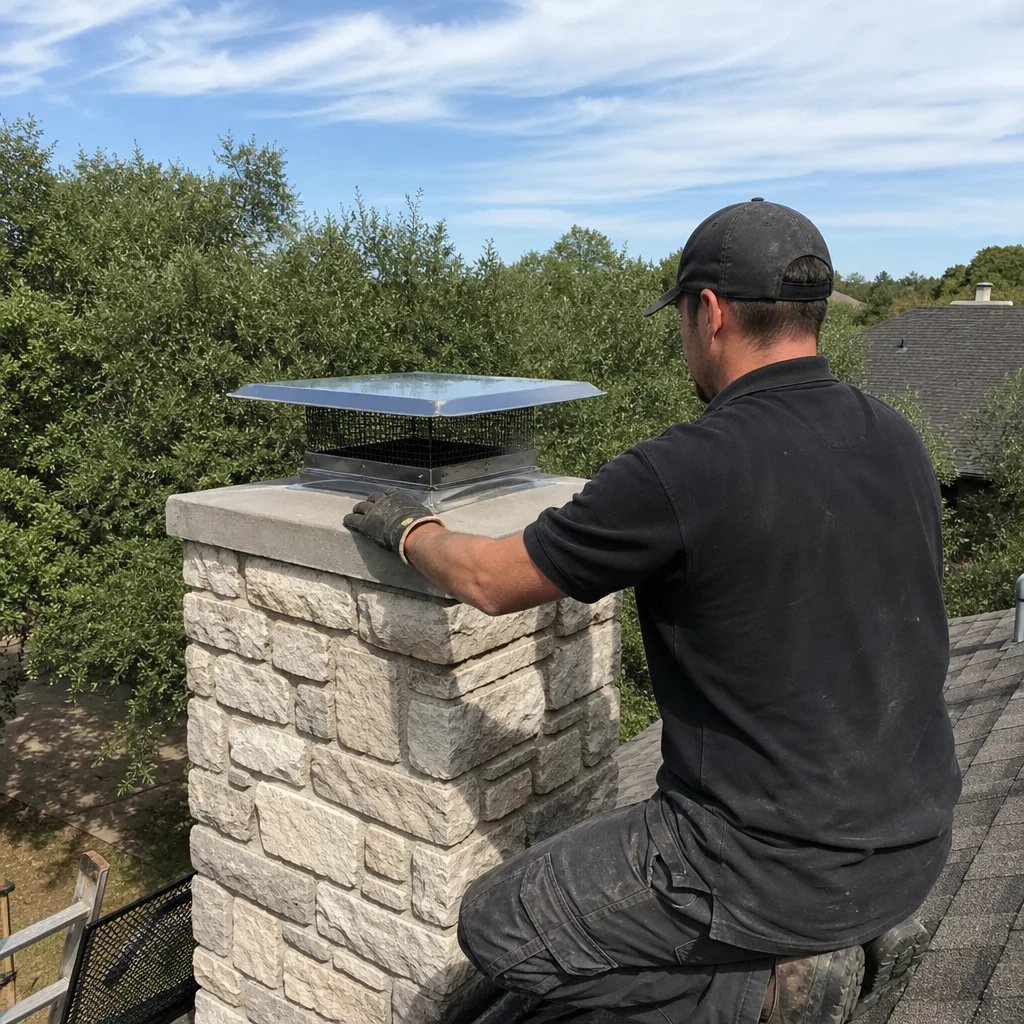
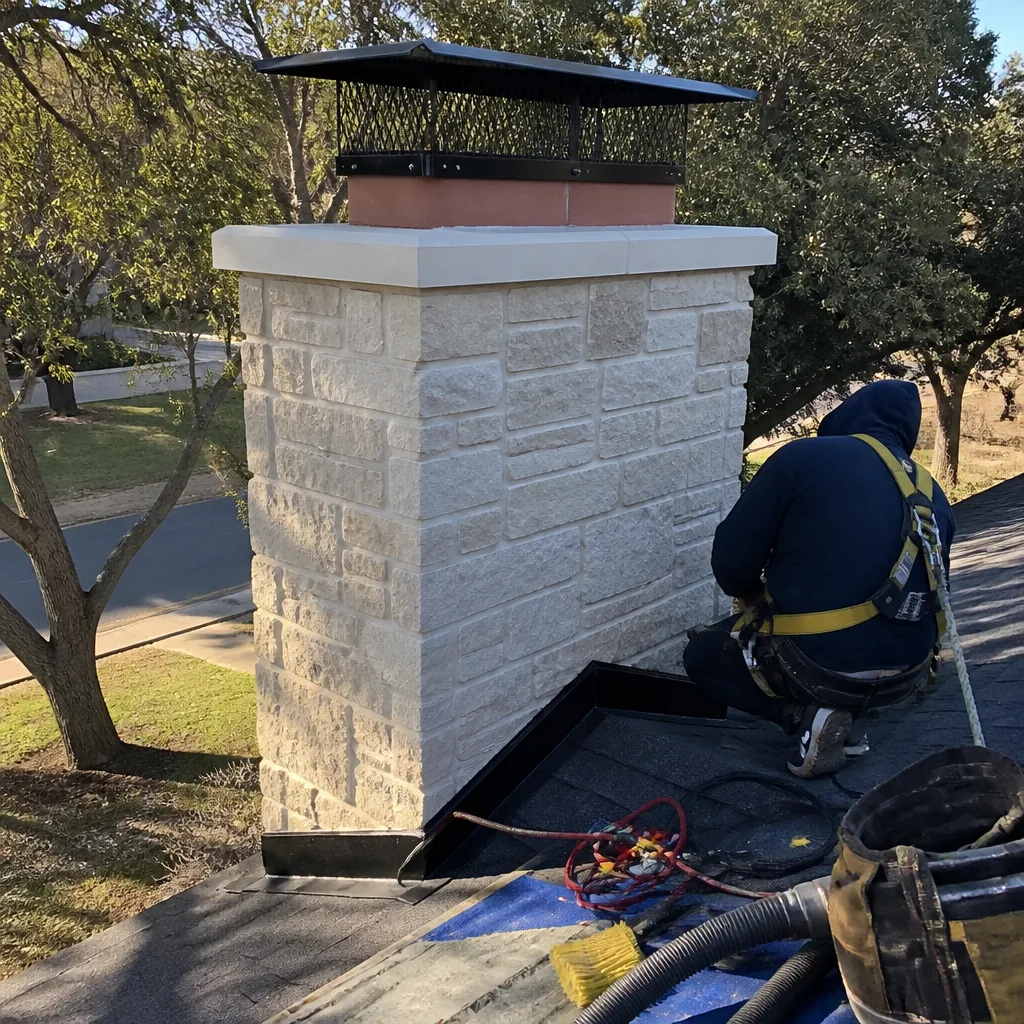
See the difference
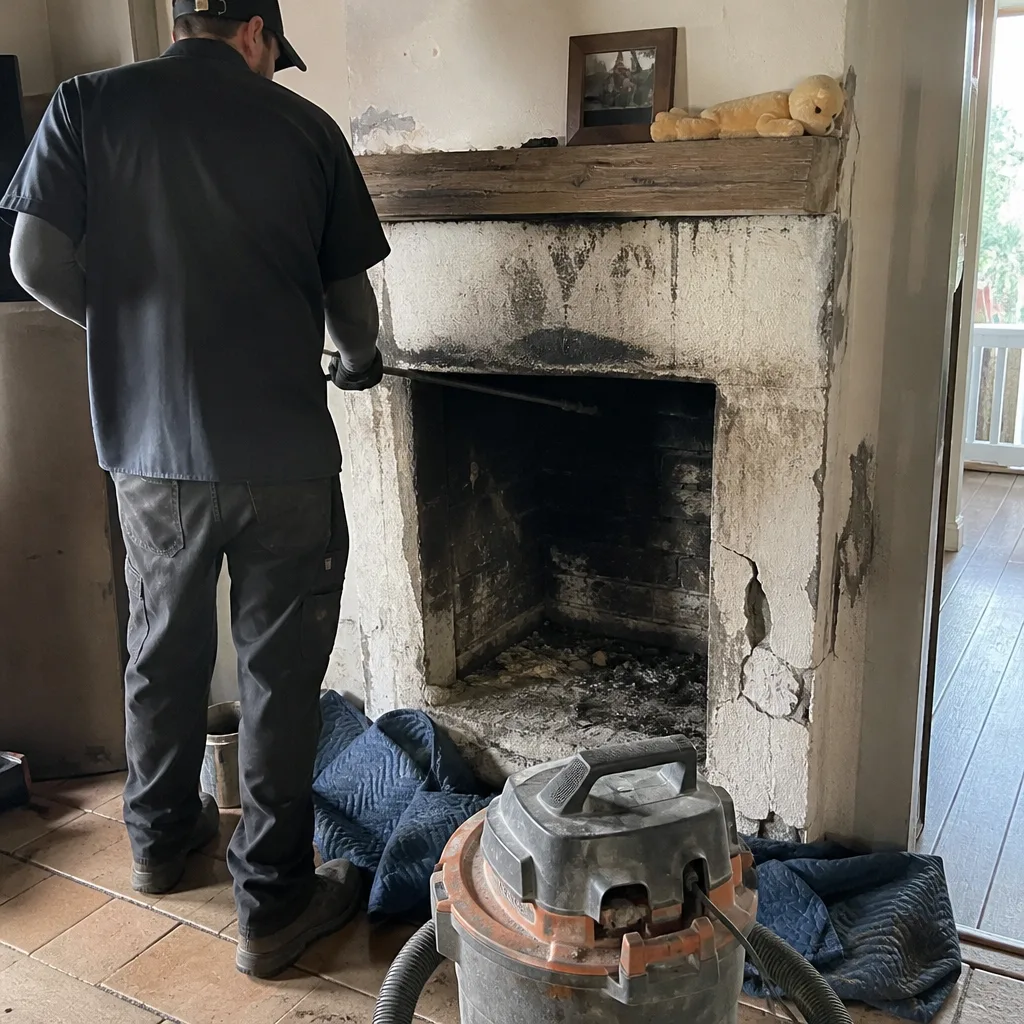 Before
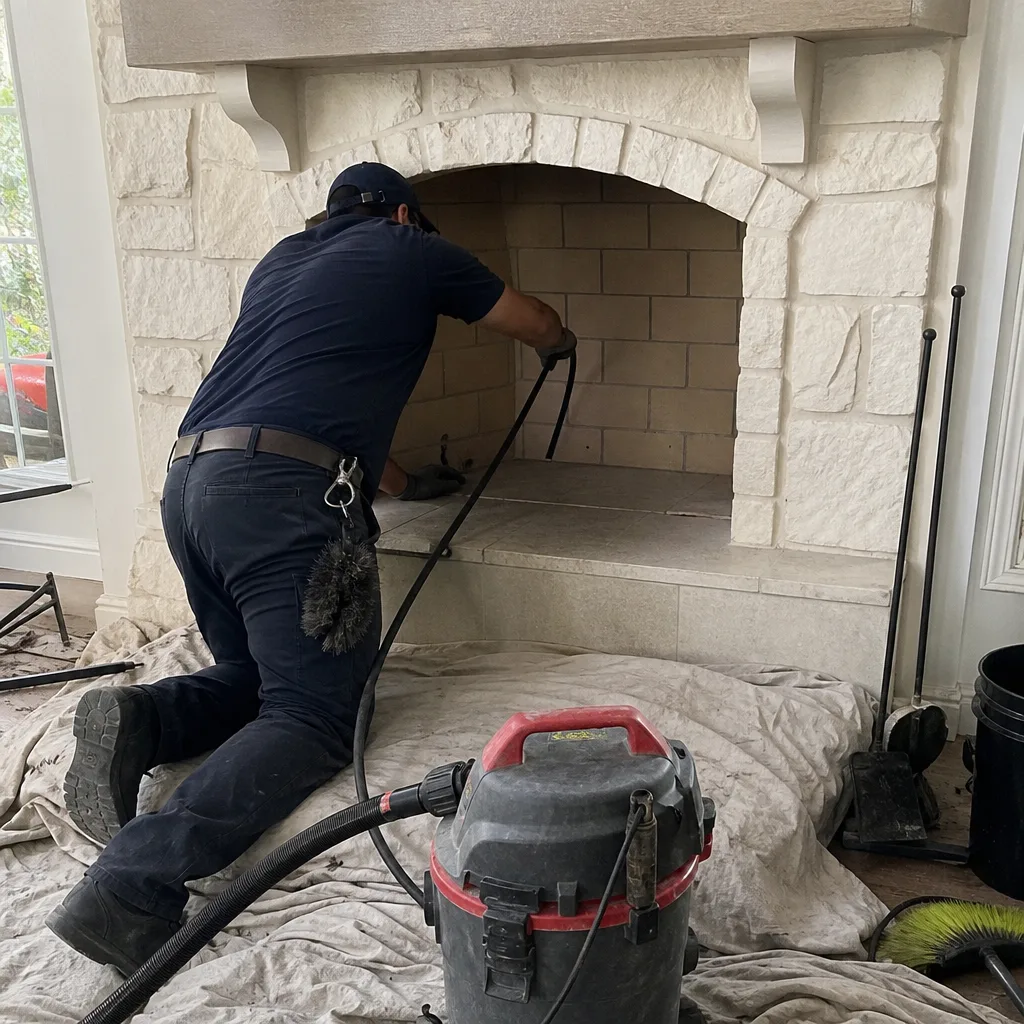 After
After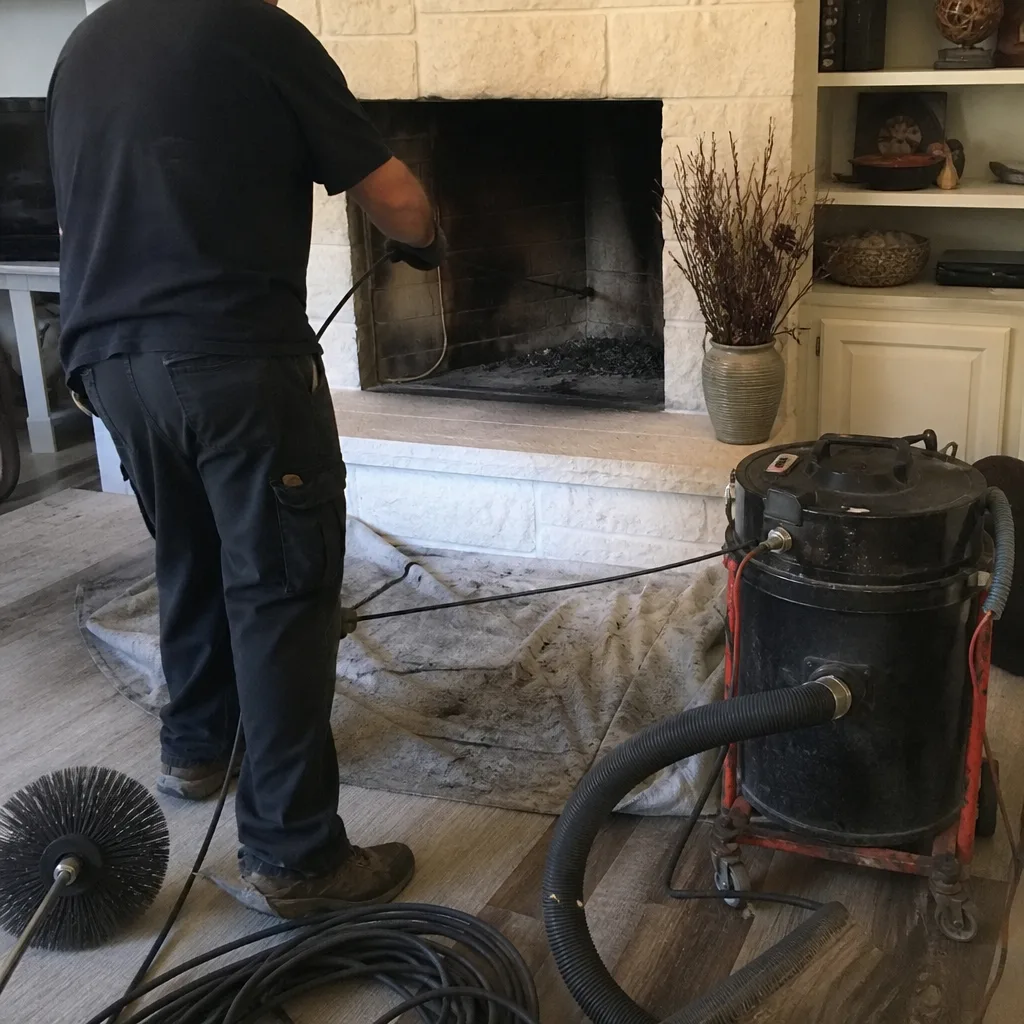 Before
 After
After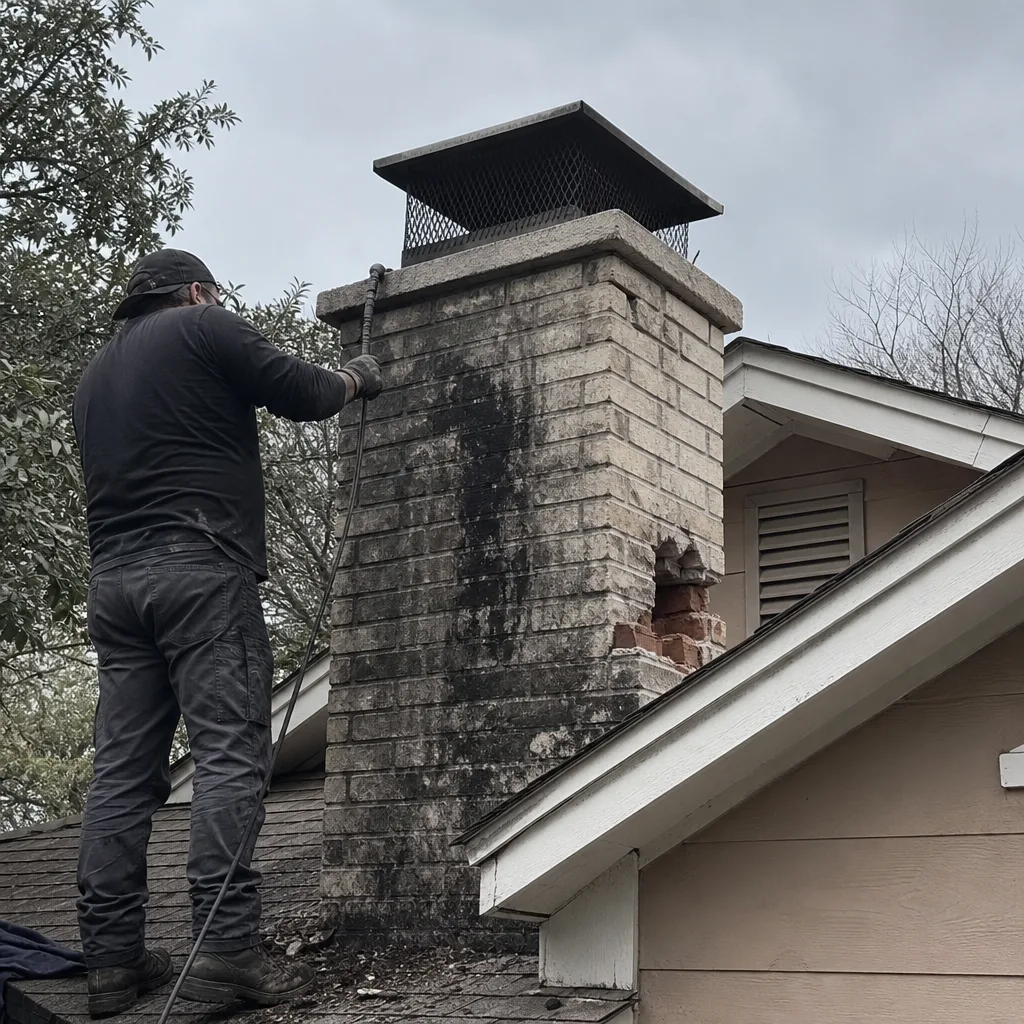 Before
 After
After