
Last updated October 15, 2026
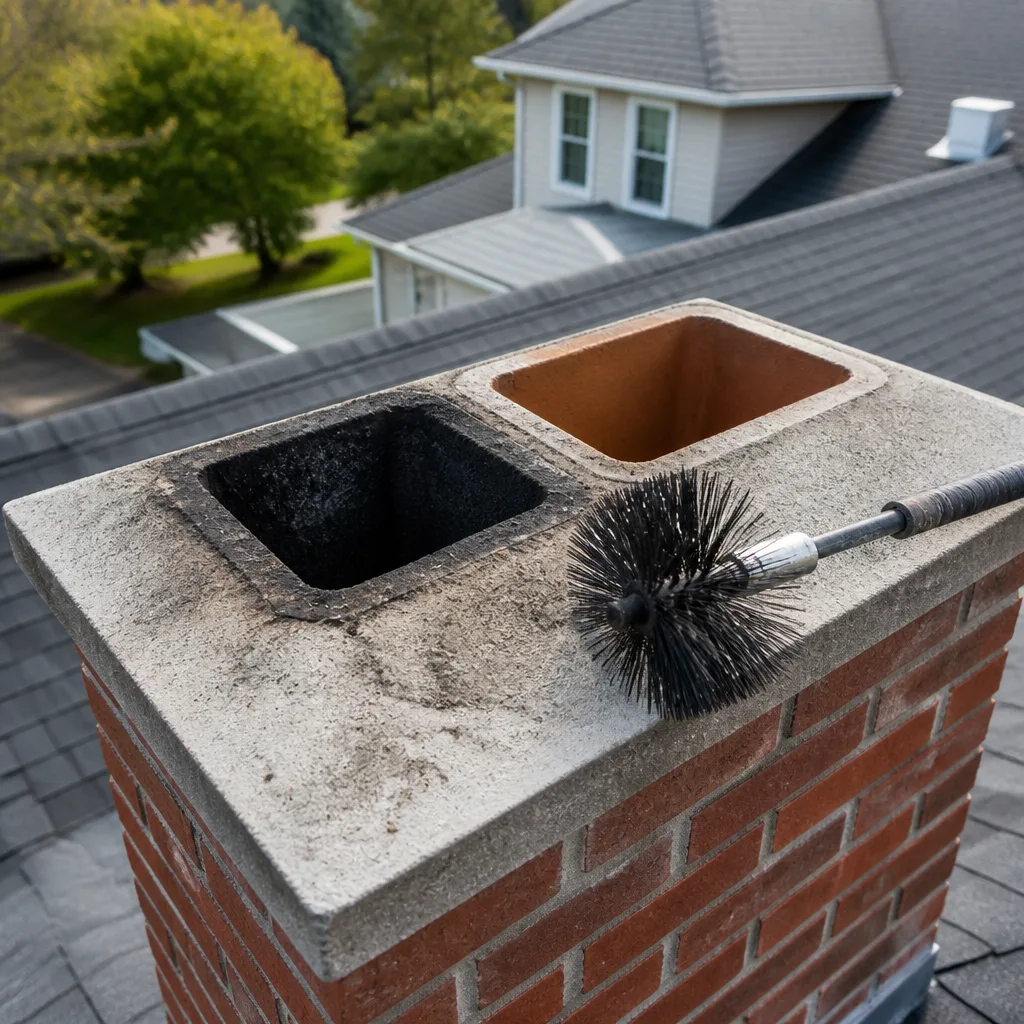 Sweep & inspection
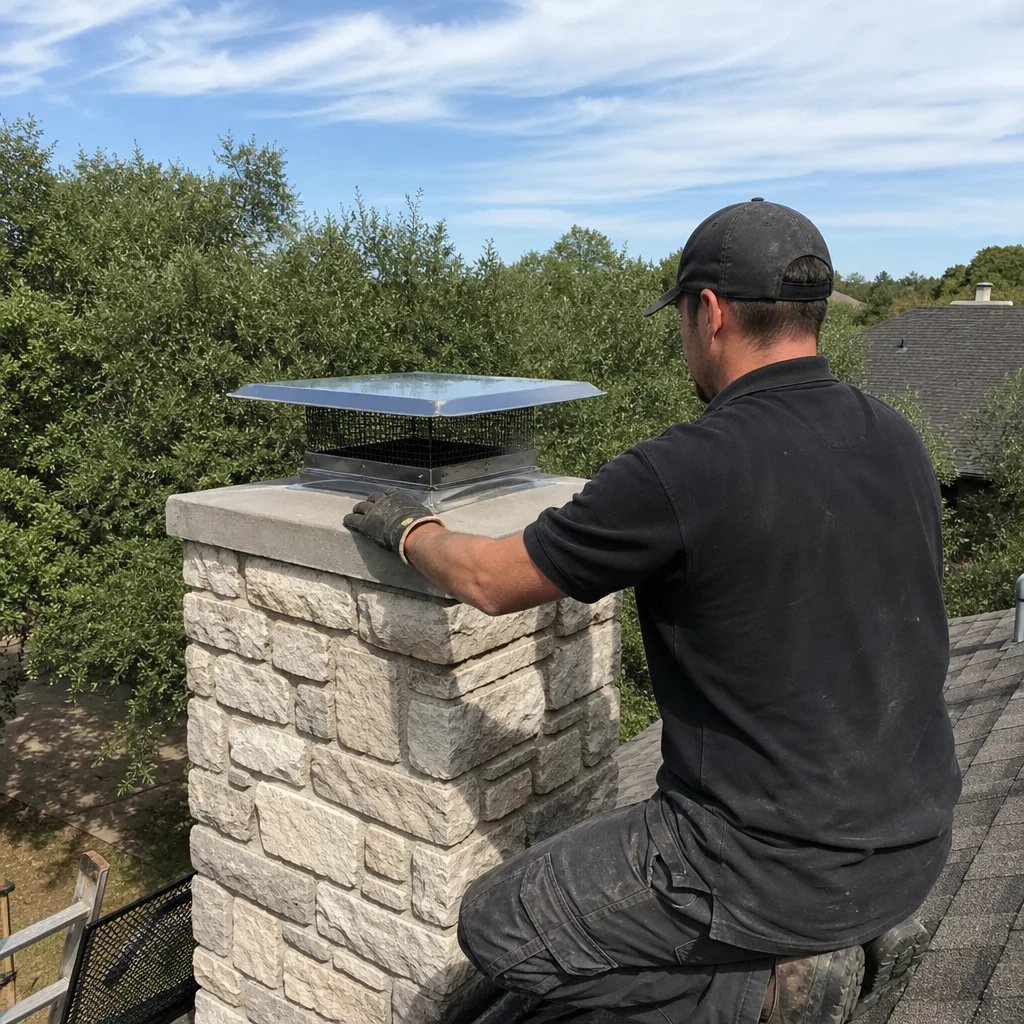
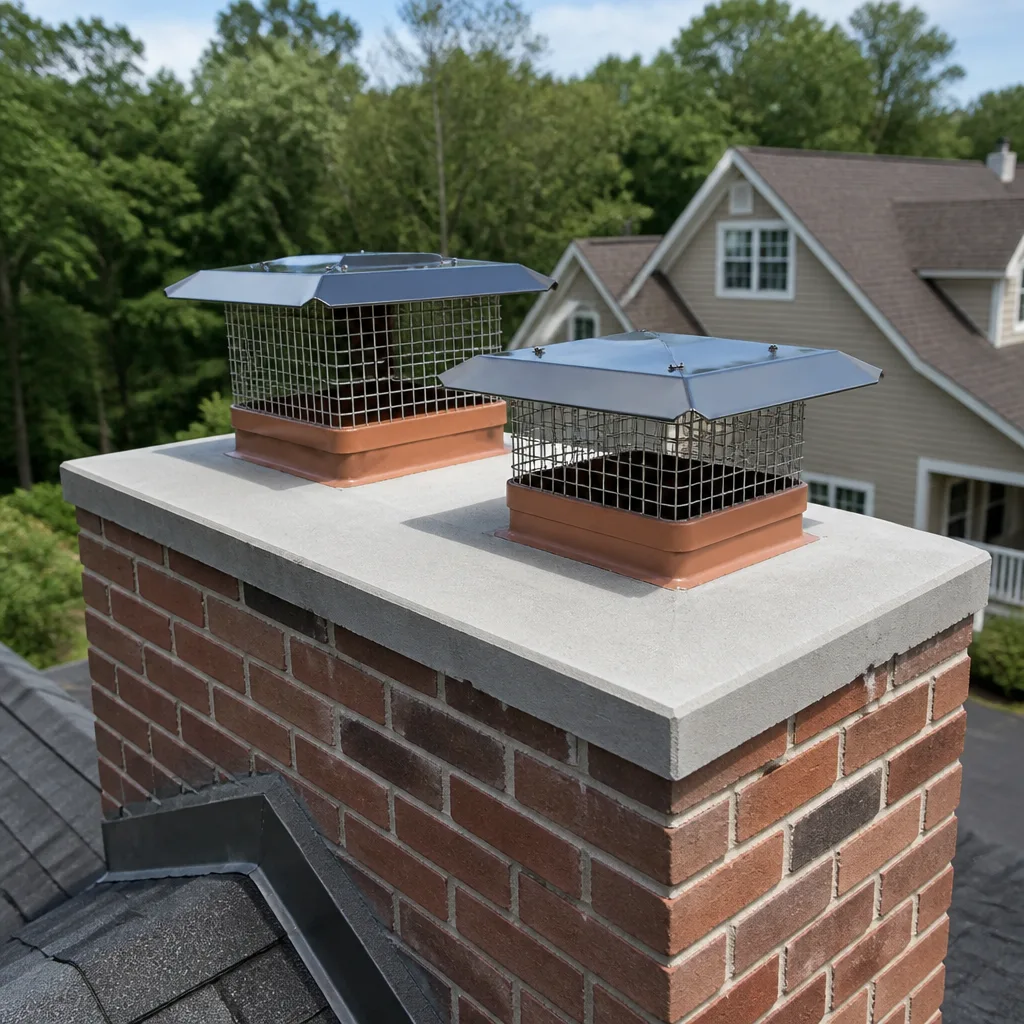 Caps & crowns
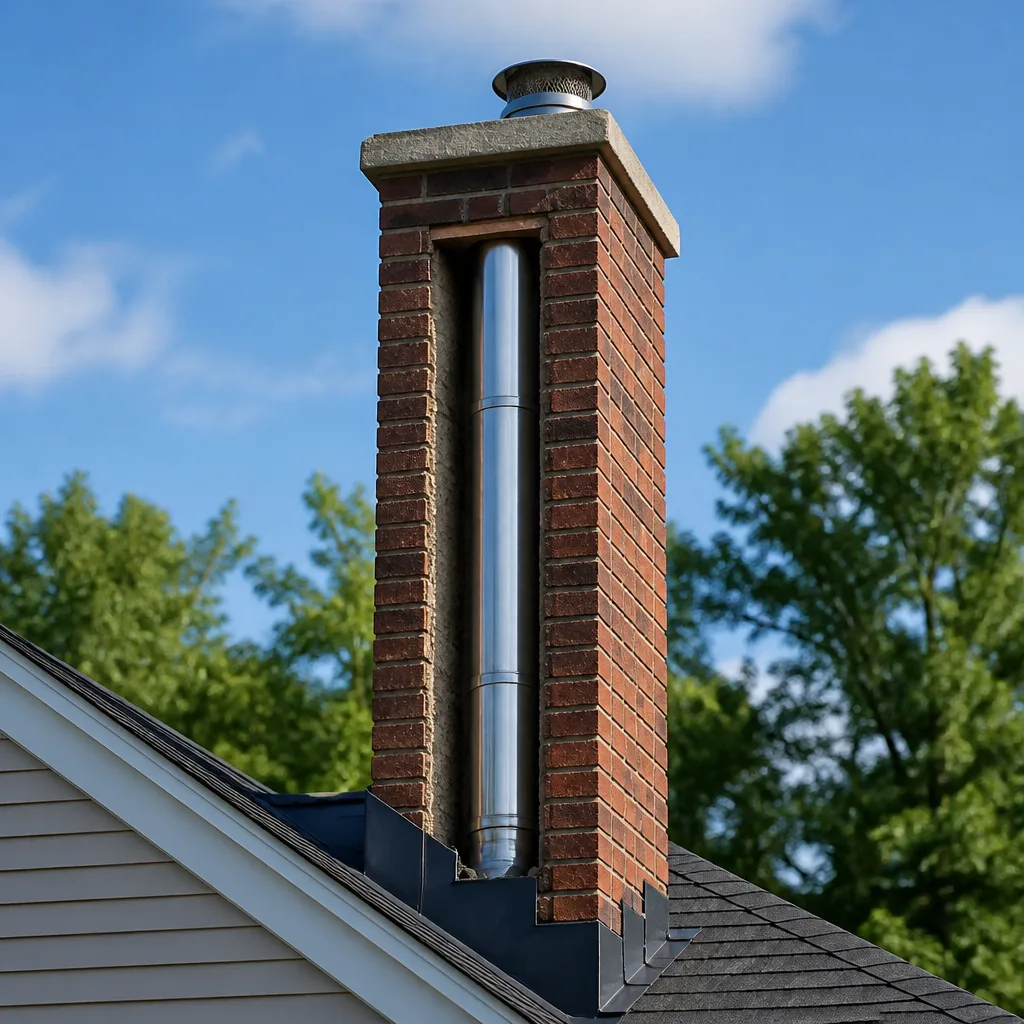 Flue relining
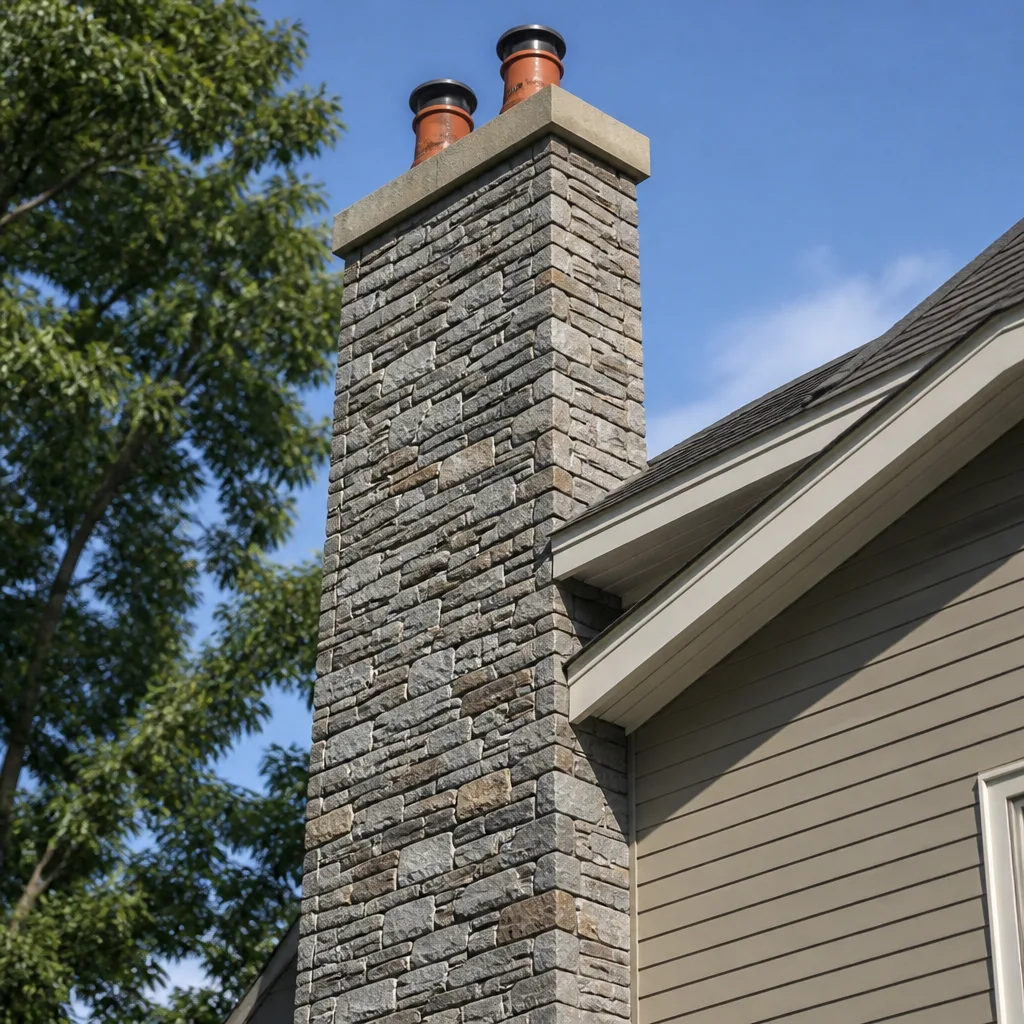 Masonry repair
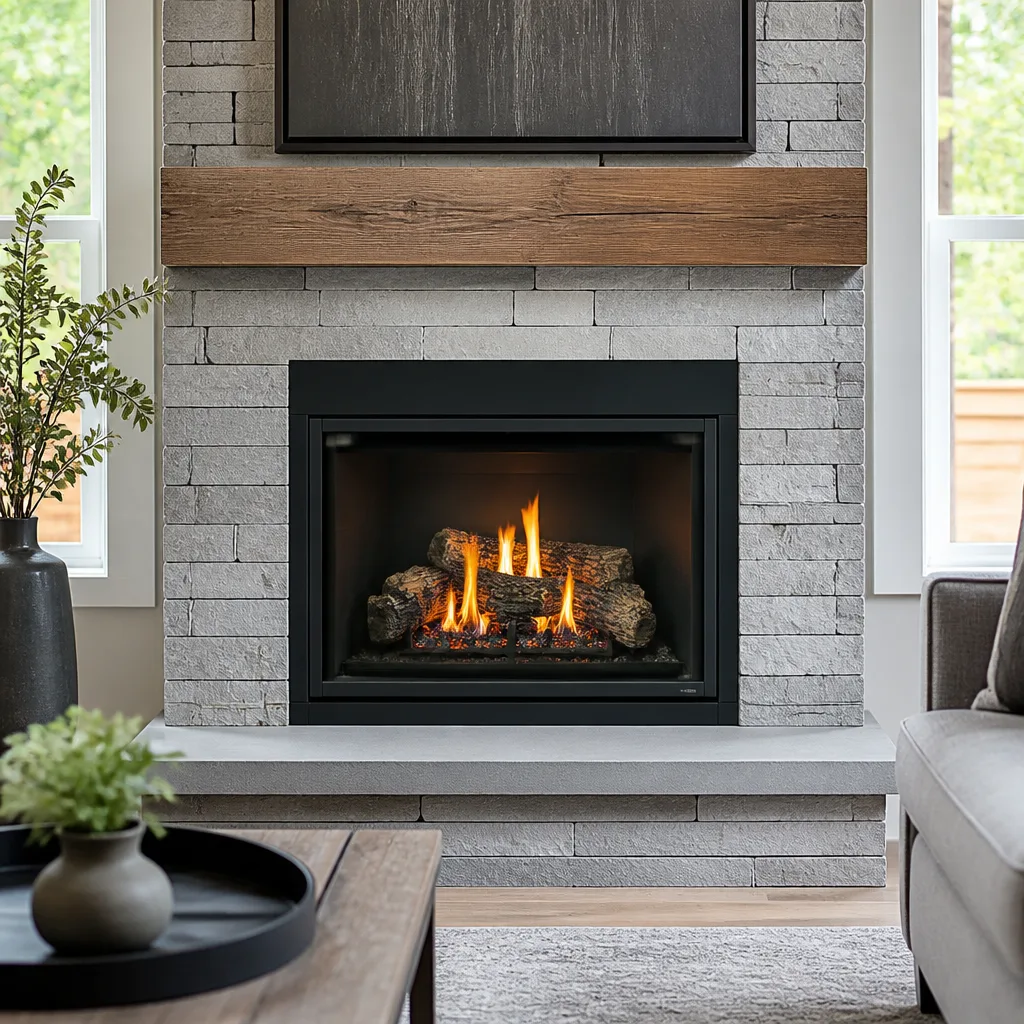 Gas fireplace service
Level 1 sweep and inspection to the NFPA 211 annual standard - flue, crown, cap, and flashing checked and photographed
Chimney sweep logs do not sweep chimneys. They loosen some creosote - which then falls where a brush and vacuum still have to collect it.
How to Hire a Chimney Cleaning Contractor in Austin: A Step-by-Step Guide
Here’s something most Austin homeowners don’t realize until it’s too late: Travis County has no licensing requirement specific to chimney sweeps. The person who shows up at your door tomorrow could have started their business this morning, and nothing in Texas law stops them from calling themselves a chimney professional. That’s not a knock on hardworking independent sweeps, it’s the reality of a trade where the barrier to entry is a ladder and a business card. This guide walks you through exactly how to separate a real chimney contractor from a seasonal operator in Austin, what questions to ask before anyone climbs on your roof, and what a transparent service experience should actually look like from booking to final photo. For more guides & resources, see our blog.
Styles & brands we work with
Quick Answer
To hire a chimney cleaning contractor in Austin, verify CSIA certification through the official lookup tool rather than trusting a website badge, ask for a written estimate that specifies liner inspection method and debris disposal, confirm whether the company actually performs repairs or only cleans, and choose a contractor who provides photo documentation and a written price before any work begins. In our 20-plus years serving Austin, we’ve seen that the most reliable predictor of a good chimney job is transparency: do you know who’s coming, when they’ll arrive, what they’ll check, and what it will cost before they ring the bell?
Table of Contents
- Step 1: Understand What Chimney Cleaning Actually Involves in Austin
- Step 2: Verify CSIA Certification Using the Official Lookup Tool
- Step 3: Ask for a Written Estimate Before You Book
- Step 4: Decide: Cleaning Company or Repair Company?
- Step 5: Evaluate Reviews for Chimney Companies Specifically
- Step 6: Know What a Transparent Service Experience Looks Like
- Common Mistakes to Avoid
- When to Call a Professional
- Frequently Asked Questions
- The Bottom Line
Step 1: Understand What Chimney Cleaning Actually Involves in Austin
A chimney cleaning, called a sweep in the trade, removes creosote (the flammable tar buildup that makes chimneys a fire risk) from the flue liner, smoke chamber, damper, and firebox. In Austin, our climate adds a wrinkle most national guides miss, which is why we put together Seasonal Chimney Cleaning Care for Austin: Year-Round Homeowner’s Guide - we don’t burn wood through six months of freezing winter like Minneapolis or Chicago. Instead, Austin chimneys face a different pattern. Long stretches of disuse in hot, humid summers allow creosote to harden into a glaze that’s harder to remove than the fluffy soot you get from daily winter fires. Then the first cold snap in November or December brings a sudden burst of fires, often with wood that’s been sitting in a humid garage or uncovered yard.
That cycle, long idle periods followed by heavy use, is exactly what produces the dangerous type of creosote buildup. A hardened glaze layer doesn’t brush off with a standard wire sweep. It often requires a rotary cleaning head or chemical treatment. So when you’re hiring in Austin, you want a contractor who understands that a chimney that burned fine last February may have a completely different creosote situation by the following October, not someone applying a one-size-fits-all sweep-and-go routine.
Here’s what a thorough chimney cleaning should include as a baseline:
- Flue inspection before and after cleaning, usually with a camera in any reputable Austin operation, so you can see what the tech saw
- Creosote removal from the full flue length, not just the top few feet where the brush reaches easily
- Smoke chamber cleaning, which is the angled section above the firebox that many low-bid sweeps skip entirely
- Firebox and damper cleaning, including checking that the damper opens and closes properly
- Debris containment inside your home, with drop cloths and a vacuum rated for fine particulates, not a shop vac that blows dust back into your living room
If a company’s entire service description is “we sweep your chimney,” ask what that actually includes. The answer tells you a lot about who you’re dealing with. For a deeper look at what a proper sweep covers, see our full guide to Chimney Sweep in Austin.
Step 2: Verify CSIA Certification Using the Official Lookup Tool
The Chimney Safety Institute of America (CSIA) is the gold standard credential in this trade, and it’s worth understanding what the certification actually means. A CSIA-certified sweep has passed a written exam covering fire codes, clearances, construction standards, and safety practices, and must recertify every three years through continuing education. That’s a real bar. Here’s the catch: plenty of operators in Austin put a CSIA logo on their website without ever earning it, and plenty of homeowners never think to check.
Verification takes about two minutes. Go to the CSIA website, click the “Find a Certified Professional” search tool, and type in the company name or the individual tech’s name. If they don’t appear in that database, they are not CSIA-certified, regardless of what their website or truck lettering says. This isn’t a case where the lookup tool might be outdated. CSIA updates it regularly, and if the cert has lapsed, the name drops off. When you call to book, ask for the tech’s CSIA number and then verify it yourself. A legitimate sweep will give you the number without hesitation. If you get a pause or a story about how “the database is behind,” you have your answer.
Here’s the step-by-step verification process we recommend:
- Ask the company for the CSIA certification number of the specific technician who will be doing the work, not just the company name
- Go to csia.org and open the certified professional search tool
- Enter the tech’s name or certification number and confirm it returns a match with an active status
- Check the certification date to make sure it hasn’t lapsed (CSIA requires recertification every three years)
- If they can’t produce a number or the lookup comes back empty, treat them as uncertified and move on
One more point that matters: CSIA certification is not the same as being licensed. Texas doesn’t require a specific chimney sweep license, which is why the CSIA credential carries real weight here. It’s the closest thing we have to a standard in a state that leaves the door wide open to anyone with a brush and a truck.
Step 3: Ask for a Written Estimate Before You Book
A verbal quote over the phone is a starting point, not a contract. A written estimate, emailed to you before the appointment, is a different document entirely. It tells you what’s included, what’s not, and gives you something to hold someone accountable to if the final bill doesn’t match the opening number. In Austin, where seasonal operators flood the market every fall with low verbal quotes and conveniently “find” problems once they’re on the roof, a written estimate is your best defense against the bait-and-switch.
What should a written estimate actually include? Here’s the minimum we consider non-negotiable:
- Scope of work: A line-by-line list of what’s included (full flue sweep, smoke chamber cleaning, damper inspection, etc.)
- Liner material inspected: Whether the quote assumes a clay tile liner, a stainless steel liner, or an unlined flue, and what type of cleaning method will be used
- Access method: Roof access, top-down cleaning, or basement/inside access, and whether any special equipment is needed for your roof pitch or chimney height
- Debris disposal: Explicitly stated that all creosote, soot, and debris will be removed from the property, not left in your yard or fireplace
- Additional inspection items: Whether the price includes a camera inspection, what the tech will check visually, and what’s optional at an additional cost
- Total price: A firm number, not a range, with any “additional fees” spelled out
What verbal quotes intentionally leave out, in our experience, is the stuff that costs real money: the smoke chamber, the chimney cap check, the flashing inspection, the camera scan. A verbal quote of “$99 for a chimney sweep” in Austin usually means $99 for running a brush up and down the flue and nothing else. That’s not a sweep, that’s a brush pass. When you get the written estimate, it should look like a scope of work, not a single line with a price. If you’re comparing quotes, compare the written scopes side by side, not the phone numbers.
Step 4: Decide: Cleaning Company or Repair Company?
This is the question almost no Austin homeowner asks, and it’s the one that determines whether you end up with a clean chimney or a high-pressure sales pitch. Some companies are cleaning operations. They sweep chimneys, do basic inspections, and refer out or subcontract any actual repair work. Other companies are full-service chimney contractors. They clean, inspect, and then have the capability, in-house, to rebuild a firebox, install a liner, replace a chimney cap, or repair flashing.
Why does this matter? Because if you hire a cleaning-only company and they find a cracked flue tile or a deteriorated liner, their business model pushes them in one of two directions. Either they tell you to find a repair contractor on your own (fine, but now you’re scheduling a second visit from a second company, which means a second arrival window and a second price negotiation), or they refer you to a partner company and collect a commission. In some cases, the cleaning company will offer to “take a look” at repairs they have no business touching. That’s how you end up with a chimney “repair” that fails a year later and no one to call about it because the cleaner is gone for the season.
A full-service Chimney Repair in Austin company, like Hadley Chimney Austin, does both under one roof. Our techs carry the equipment to clean your chimney, and if they find an issue, they’re trained to assess it, show you photo or video evidence of what they found, explain whether it’s urgent or can wait, and quote the repair using the same written-estimate process. You’re hiring one company with one point of accountability, not managing a handoff between two businesses.
Before you book, ask directly: “If you find a problem during the inspection, do you do the repair in-house or do you refer it out?” The answer tells you exactly what kind of company you’re dealing with.
Step 5: Evaluate Reviews for Chimney Companies Specifically
Online reviews for chimney companies in Austin follow patterns that are different from restaurants or retail. You’re not looking for a 4.8-star average with 2,000 reviews, because a chimney company that’s been operating honestly in one market for 20 years might have 300 reviews, not 3,000. What you’re looking for is specificity. A real review from a real customer describes what the tech did, what they found, and what it cost. A fake review says “great service, highly recommend” and nothing else.
Here’s how to read reviews like someone who’s seen the patterns:
- Look for documented outcomes: Real reviews mention specific details: “the tech showed me video of a crack in my flue tile and explained exactly what it meant.” Generic praise without a single specific detail is a red flag for purchased or solicited reviews.
- Check the review velocity: A chimney company that gets 40 reviews in October and zero from March through August is living on seasonal surge. That’s not inherently bad, but it’s worth asking why they have no track record of spring and summer repair work.
- Read the negative reviews carefully: One or two bad reviews out of several hundred is normal. But if the negative reviews share a common theme (final price didn’t match the quote, techs showed up late without notice, hard sells on expensive repairs), that’s a pattern, not an outlier.
- Look for photo documentation mentions: Customers who mention seeing before-and-after photos, camera footage, or written reports are customers of a company that documents its work. That’s what you want.
- Check the response to negative reviews: A company that responds defensively or not at all is a risk. A company that responds with a concrete offer to fix the situation has a process for accountability.
One warning that applies specifically to this trade: review platforms are full of chimney companies that have been operating for less than two years with five stars across the board. That’s not a better company, it’s a short track record. A chimney business that’s been in Austin for 20 years has made mistakes, learned from them, and stayed in business because the work holds up. When you see a company with 50 perfect reviews and no negative ones at all, ask yourself whether that’s plausible for any business doing complex, weather-dependent work on old houses. Often the answer is that the company is either new or aggressively filtering reviews.
Step 6: Know What a Transparent Service Experience Looks Like
This is where the rubber meets the roof. You’ve verified the certification, you’ve got a written estimate, you’ve decided on a full-service company, and the reviews check out. Now you need to know what transparency actually looks like on service day, because this is where the old-school chimney trade fails most often. Four-hour arrival windows. Techs who can’t be reached. Prices that inflate once someone is standing in your living room. Verbal explanations of problems with no visual evidence.
A transparent service experience in 2026 looks like this:
- Live arrival tracking: You get a window, and then you get a live ETA as the tech gets closer. Not “we’ll be there between 1 and 5.” More like “your tech is 20 minutes out.” This is standard for food delivery and rideshare. There’s no reason a $300 chimney service should operate with less visibility than a $15 burrito.
- Uniformed, identified tech: The person at your door is wearing a company uniform, has a photo ID, and has been background-checked. You know who’s in your home before you open the door.
- Written price confirmation before work begins: The tech walks the scope with you, confirms the price from your written estimate, and gets your sign-off before touching anything. If the scope changes, you see a revised written price before the new work starts, not after it’s done.
- Photo documentation: Before the tech starts, they document the condition of the chimney. When they finish, they show you the after photos. If they recommend a repair, you see the camera footage of the actual problem, not a stock photo of a cracked liner from a training manual.
- Digital invoicing: The bill arrives as a link you can pay from your phone. No paper invoice left on the counter with a “mail a check” note.
At Hadley Chimney Austin, we run every job under what we call the Relay Visibility Guarantee, as part of the Relay Home Co. family. That means live arrival tracking, before-and-after photo documentation, and a written price before work begins on every job, not just the big ones. Every repair carries a written guarantee, and we back it with a 365-Day Done Right Promise: if the repair fails within a year, we come back and fix it free. That’s the standard we think Austin homeowners should hold every chimney contractor to.
Common Mistakes to Avoid
- Hiring based on the lowest verbal quote. The $89 Austin chimney sweep special is almost always a loss leader designed to get someone on your roof, where the real quote happens. Compare written scopes, not phone numbers.
- Trusting a CSIA badge on a website without verifying it. We’ve covered this already, but it bears repeating because it’s the single most common shortcut Austin homeowners take. The lookup tool takes two minutes. Use it.
- Skipping the camera inspection to save money. A visual inspection from the roof can’t see a cracked tile in the middle of your flue. Without a camera scan, you’re paying for a cleaning and getting a guess. Every Austin chimney we inspect gets camera documentation, and you should expect the same from whoever you hire.
- Hiring a cleaner to diagnose a repair. If the company you hired can’t do the repair they’re recommending, they have a conflict of interest built into the recommendation. Either they’re recommending work they can’t verify the quality of, or they’re collecting a referral fee. Neither is a good reason to pull the trigger on a $3,000 liner job.
- Not asking about debris disposal upfront. Some sweeps in Austin leave the creosote and soot they pull out of your chimney in your yard or your fireplace. A written scope that says “debris removed and property left clean” costs you nothing to ask for and settles the question before work starts.
- Assuming all chimney companies in Austin are the same. The difference between a cleaning-only operator, a seasonal outfit that appears in October and vanishes by March, and a full-service company with a 20-year track record is the difference between a chimney that’s clean and a chimney that’s safe. Ask the questions. If the answers are vague, move on.
When to Call a Professional
Some things around the house are worth attempting yourself. Chimney cleaning is not one of them, and not because it’s complicated. It’s because the consequences of getting it wrong are a chimney fire that spreads into your attic or a blocked flue backing carbon monoxide into your home. Those aren’t hypothetical risks. They’re the two outcomes chimney sweeping exists to prevent, and diy attempts that miss creosote in the smoke chamber or fail to clear a partial blockage don’t prevent either one. If you’ve used your fireplace regularly over the last year, if you can see creosote buildup on the firebox walls, if you’ve noticed a smell coming from the chimney in humid weather, or if it’s simply been more than 12 months since your last sweep, schedule a professional. Hadley Chimney Austin offers free estimates in Austin, call (361) 603-5116 and we’ll get you on the calendar.
Frequently Asked Questions
A standard chimney sweep in Austin typically runs $200 to $400 depending on the chimney height, roof access, and creosote condition. See our Chimney Cleaning Cost Breakdown: The Austin Homeowner’s Reference for 2026 for full pricing details. Add a camera inspection and you’re looking at $150 to $350 more in most Austin-area companies. Be wary of quotes under $150, because in this market, a number that low almost always means a brush pass that skips the smoke chamber and damper. Call (361) 603-5116 for a free estimate with written scope, no phone-tag runaround.
The National Fire Protection Association recommends an annual inspection and a sweep whenever creosote buildup reaches 1/8 inch, which for most Austin homeowners who burn regularly through fall and winter means once per year. If you only burn occasionally, say 10 to 15 fires per season, you might stretch to every two years, but an annual inspection is still worth the money because it catches liner and flashing issues before they become expensive repairs.
Maybe, but only if the tech can show you camera footage of the actual damage. A cracked clay tile liner or a deteriorated stainless steel liner is a legitimate repair need, but it’s also a common upsell for seasonal operators in Austin. Get a second opinion from a full-service company that does repairs in-house, and require photo or video evidence before approving any liner work. At Hadley Chimney Austin, nothing gets recommended without camera evidence you can see for yourself.
A sweep removes creosote and soot from the flue, smoke chamber, and firebox. An inspection evaluates the structural and safety condition of the entire chimney system, including the liner, crown, flashing, cap, and masonry. In practice, any reputable Austin chimney company does both in the same visit, because cleaning a chimney without checking its condition is like changing oil without looking at the filter. The sweep is part of the inspection, not a substitute for it.
Creosote keeps building until it reaches a thickness where a hot fire can ignite it, and a chimney fire burns at temperatures that crack flue liners and can spread into the house framing. A partially blocked chimney pushes carbon monoxide back into the living space, which is odorless and potentially fatal. Those are the two paths, and neither is worth rolling the dice on to save $250 once a year.
Yes. Gas fireplaces don’t produce creosote, but they still need annual safety checks for carbon monoxide leaks, burner condition, and venting. If you’ve got a gas fireplace in Austin and haven’t had it looked at in a while, our guide to Gas Fireplace Repair in Austin walks through what a proper gas fireplace service includes and when to schedule it.
Absolutely, and for Austin homeowners, summer is actually a smart time to book. You avoid the fall rush, so scheduling is more flexible. The chimney has been sitting dry for months, which makes it easier to inspect the flue without the soot and creosote of heavy burning season, and you catch problems with months to spare before the first cold snap. Hadley Chimney Austin books Hadley Chimney Austin home service year-round, and we answer calls live 24/7, including a Tuesday at 2 a.m. if that’s when you remember it.
The Bottom Line
Hiring a chimney cleaning contractor in Austin comes down to filtering for transparency. Verify the CSIA certification on the official lookup tool, not the website badge. Demand a written estimate that spells out scope, liner material, access method, and debris disposal. Choose a full-service company that can back up a repair recommendation with camera footage and then actually do the repair. Read reviews for documented outcomes, not vague praise. And expect live arrival tracking, photo proof, and a written price before work starts. That’s the standard we’ve held at Hadley Chimney Austin since 2003, and it’s the standard Austin homeowners should accept as the baseline, not the exception.
Written by Cory Mitchell, Owner at Hadley Chimney Austin, serving Austin since 2003.
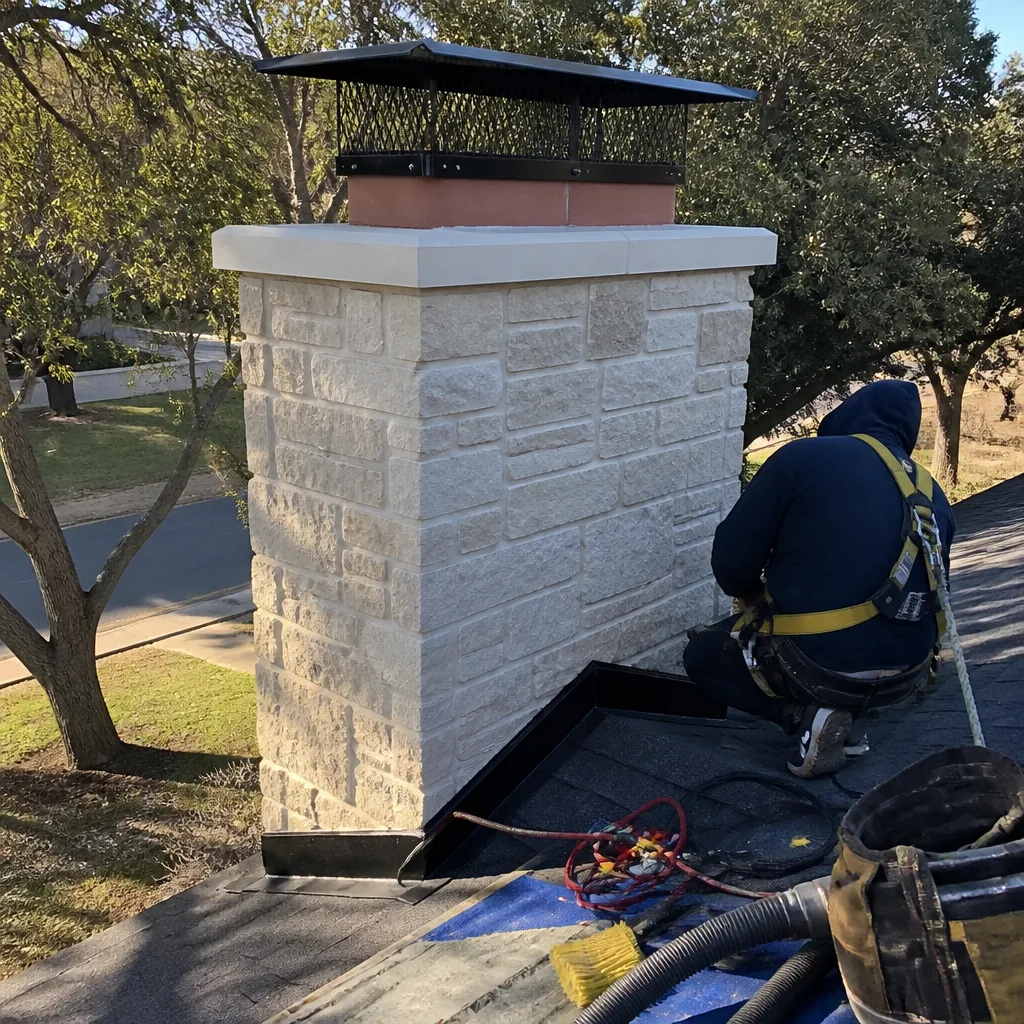
See the difference
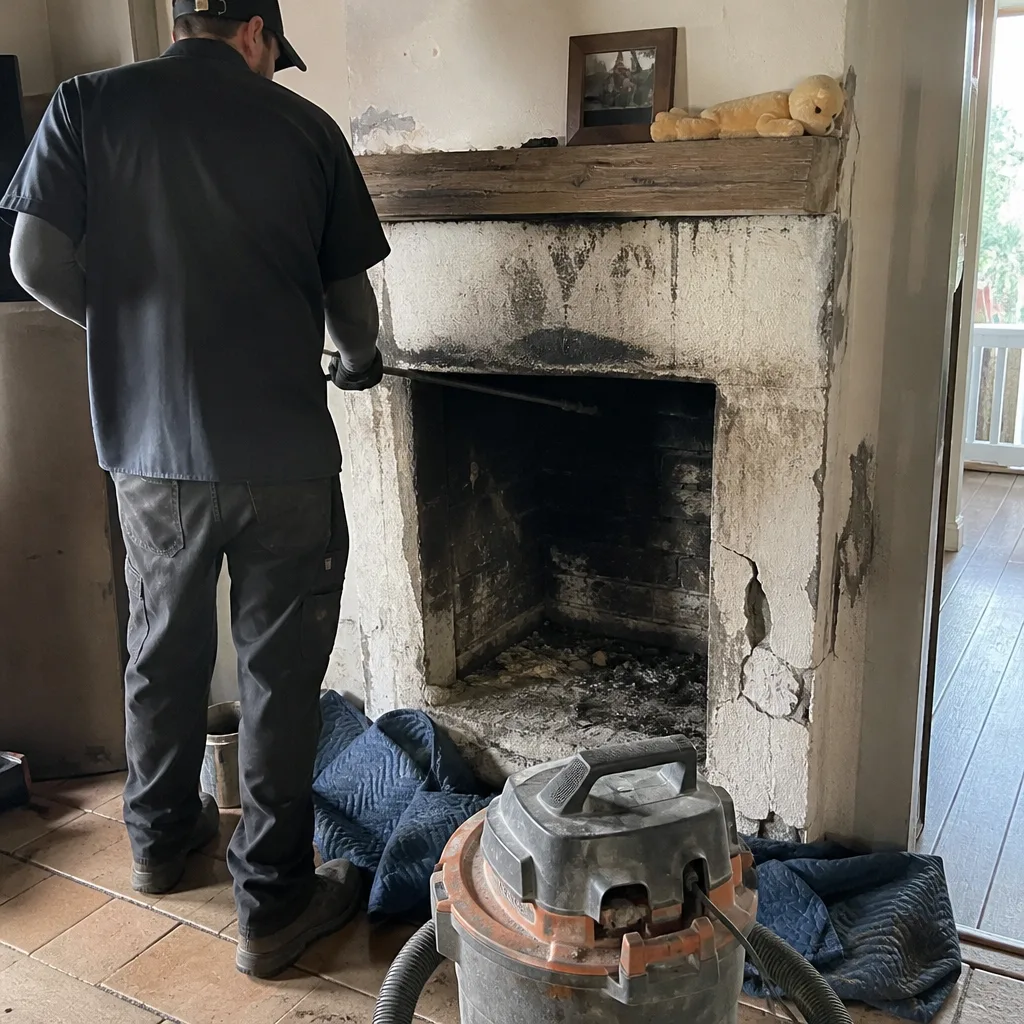 Before
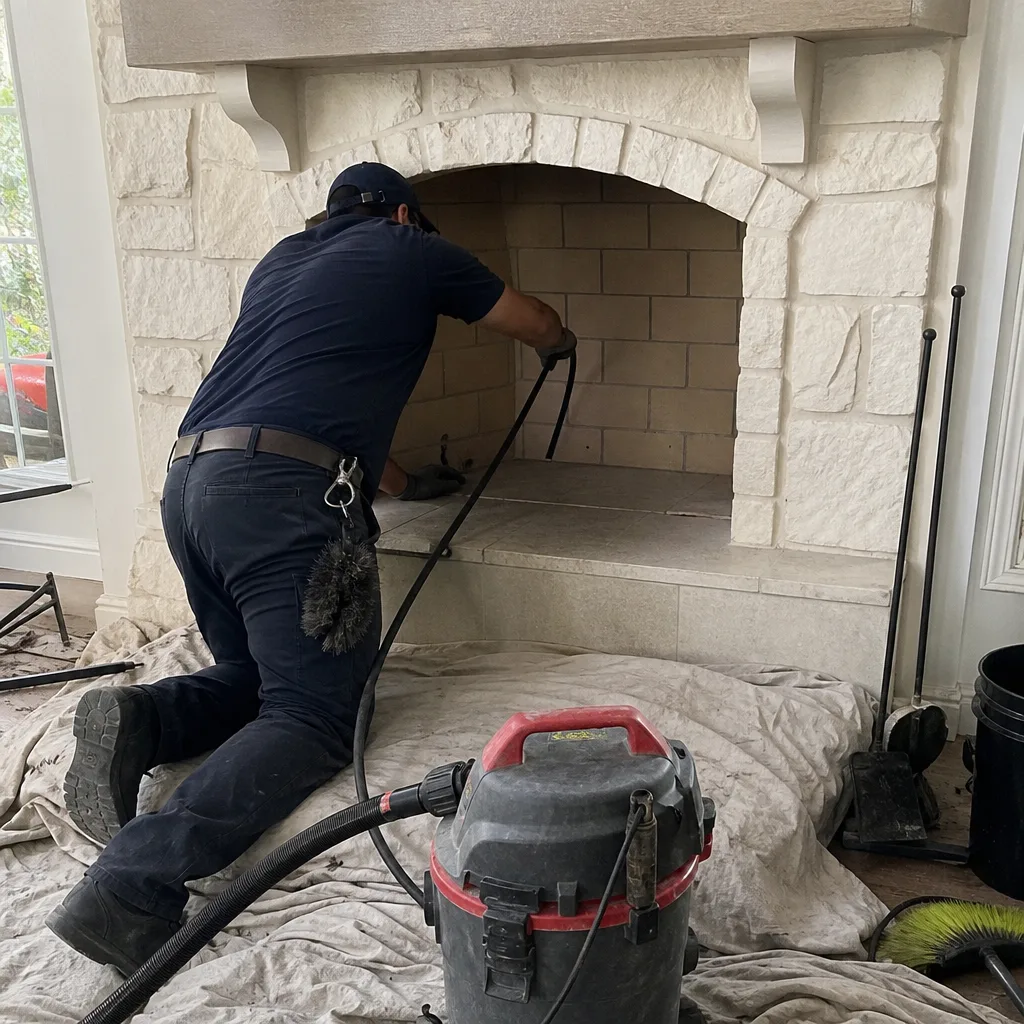 After
After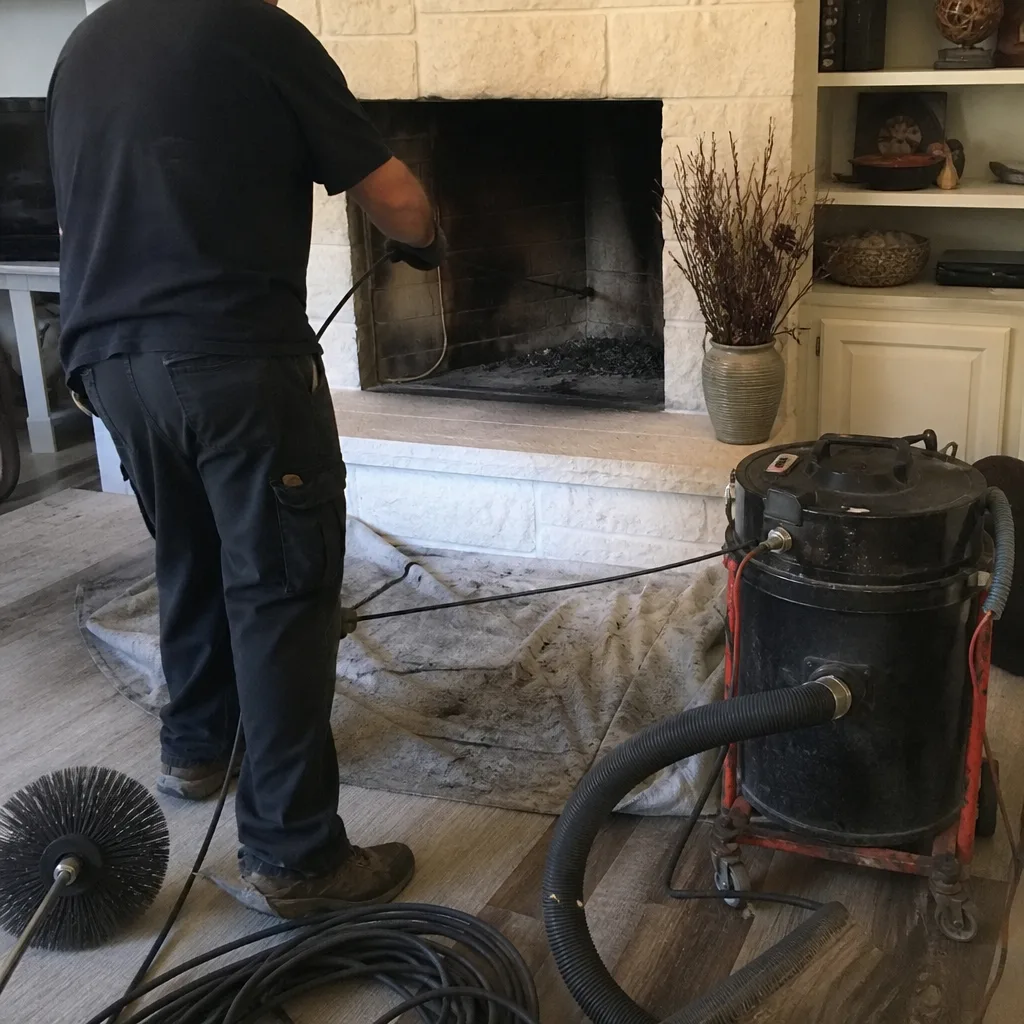 Before
 After
After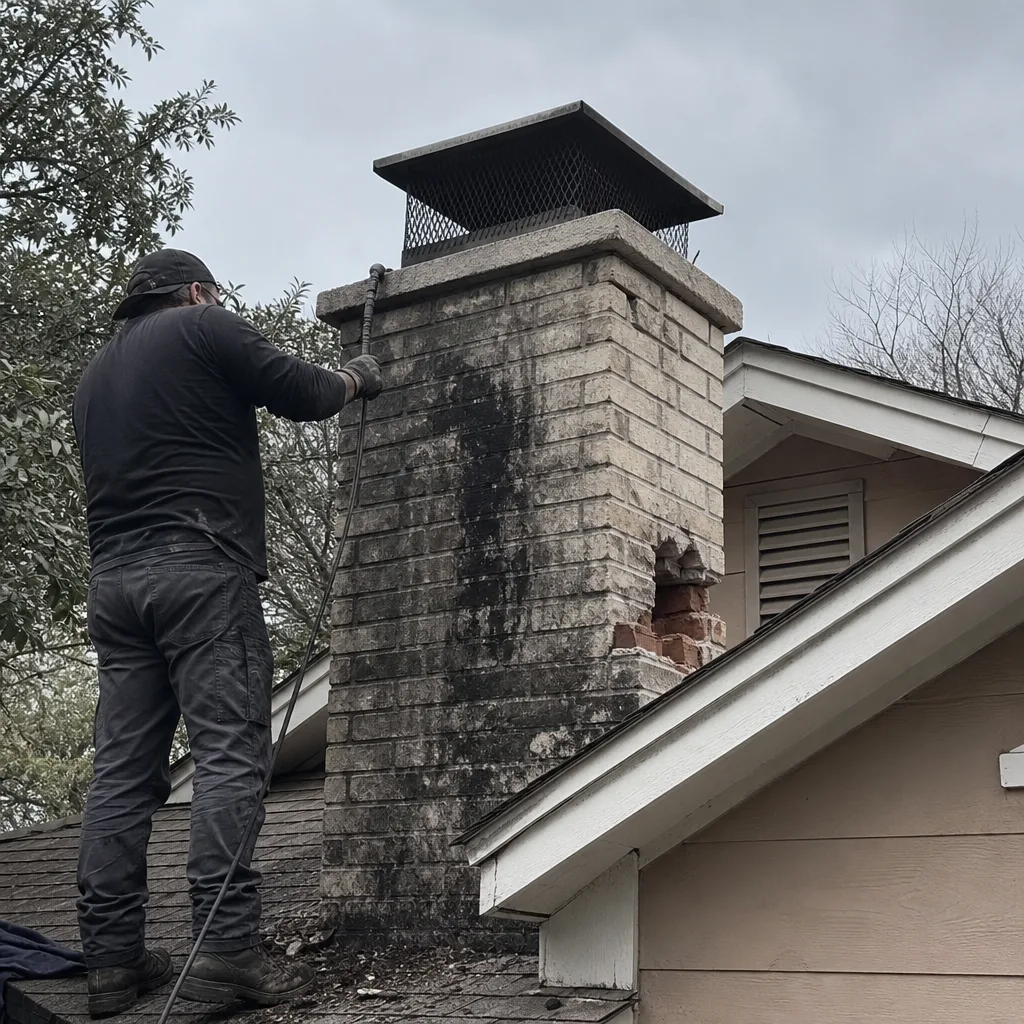 Before
 After
After