
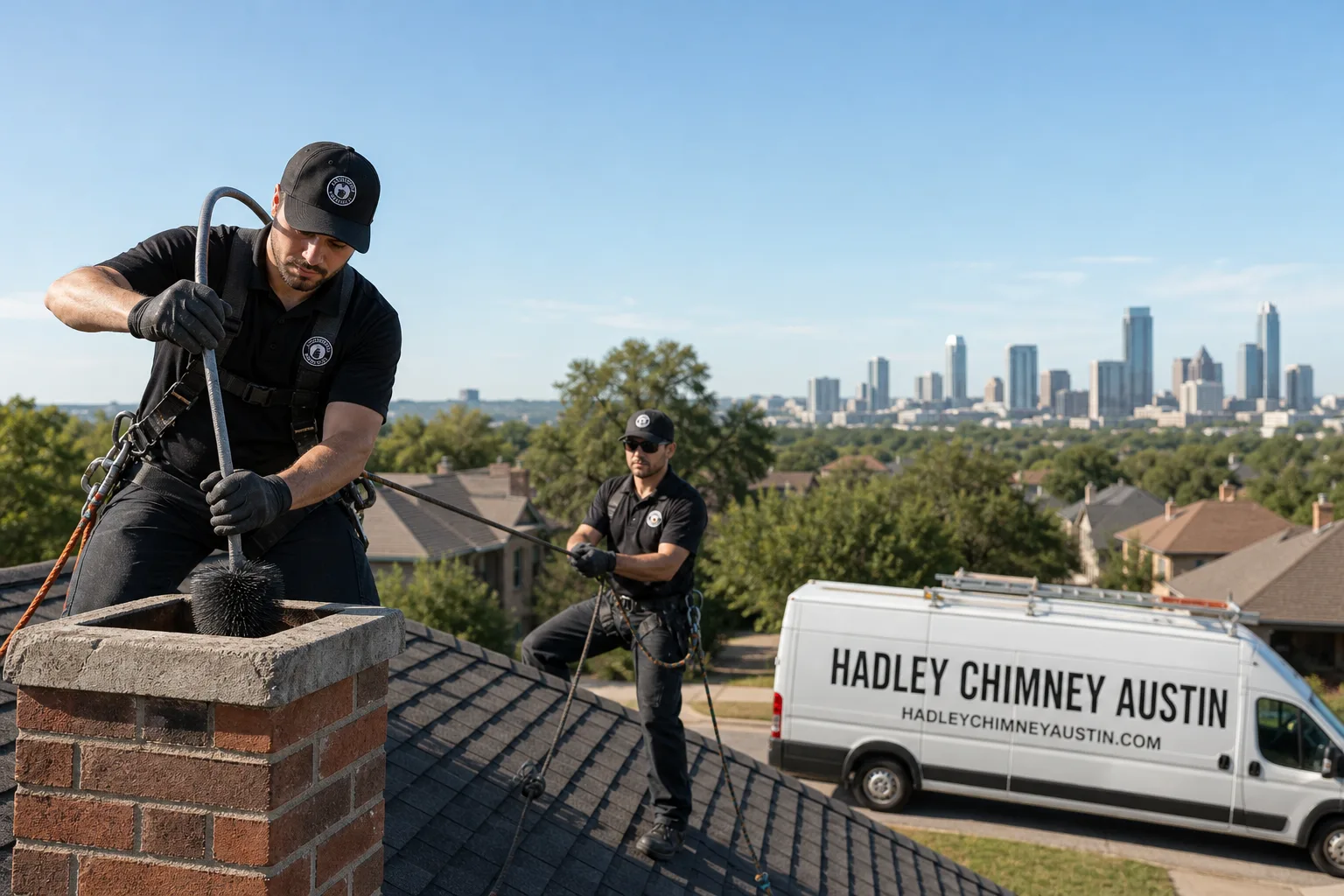
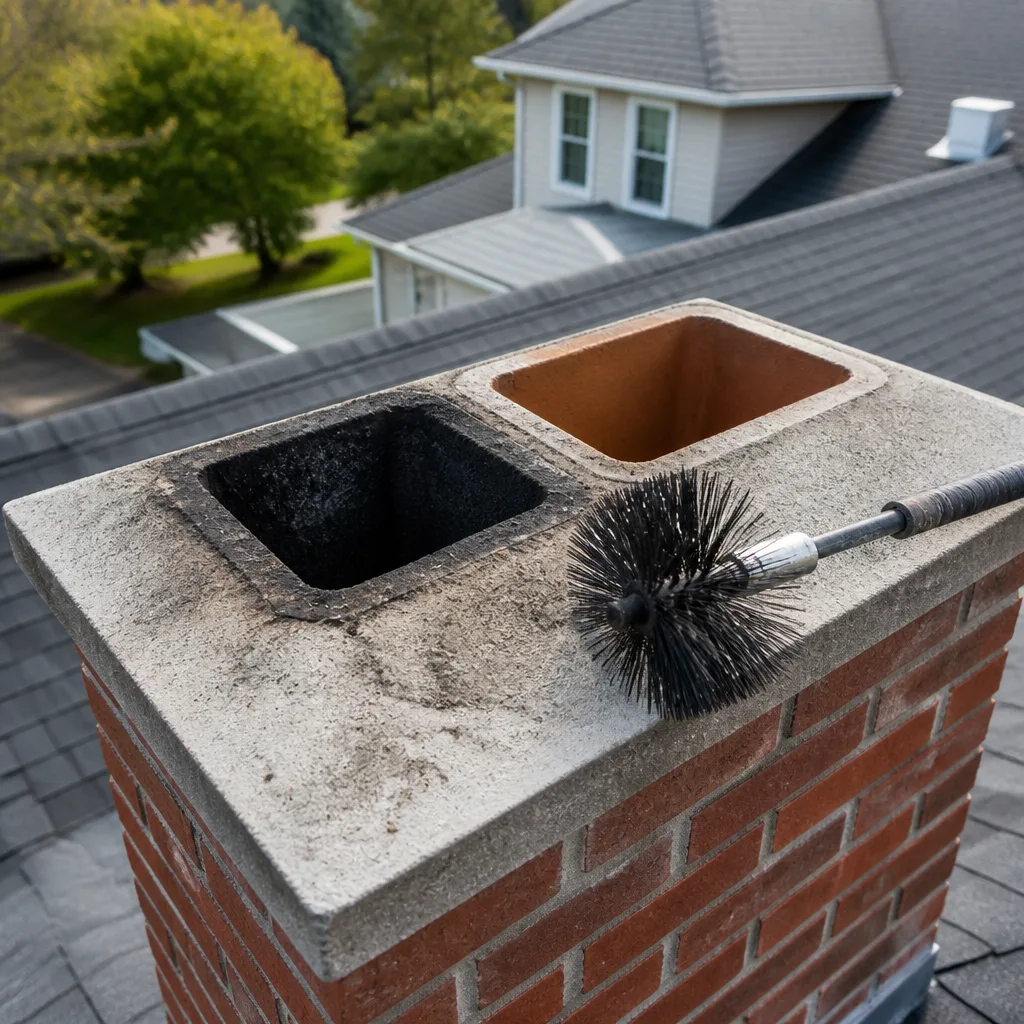
 Sweep & inspection
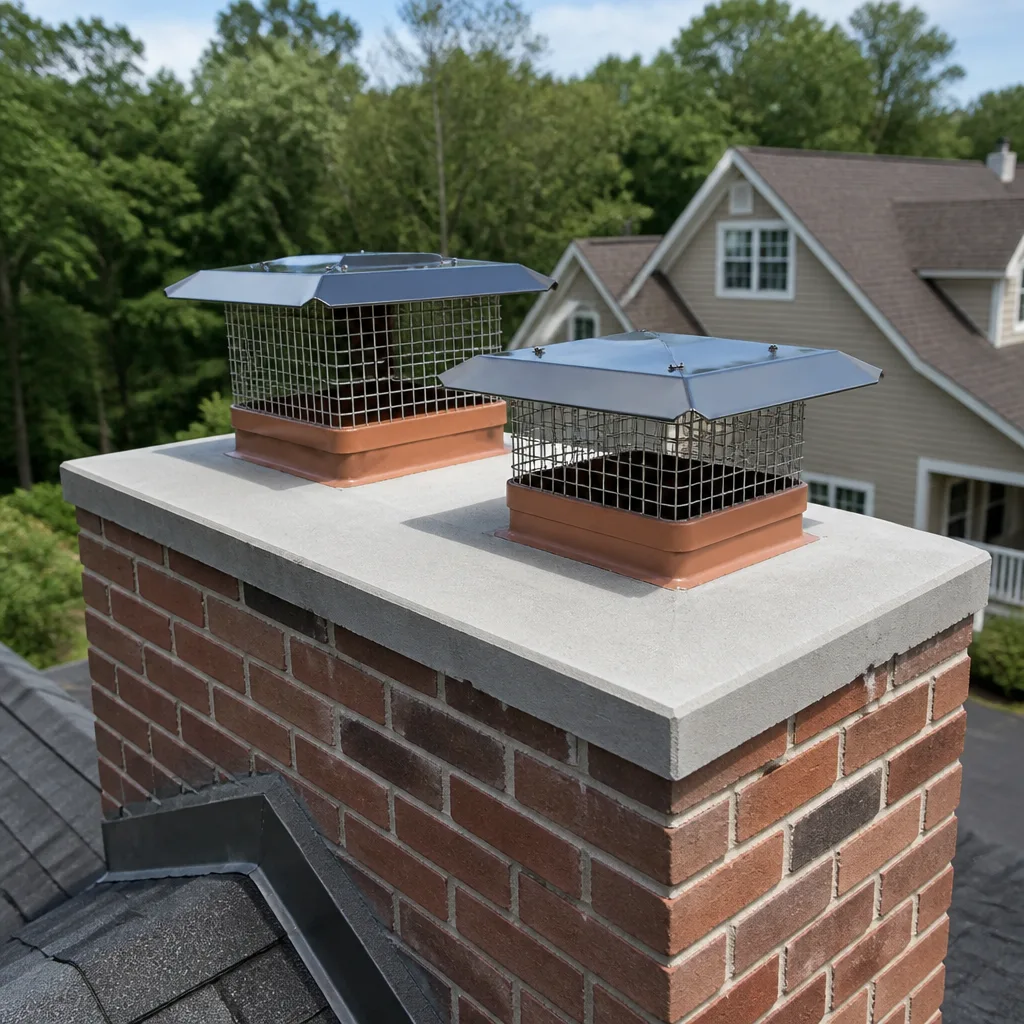 Caps & crowns
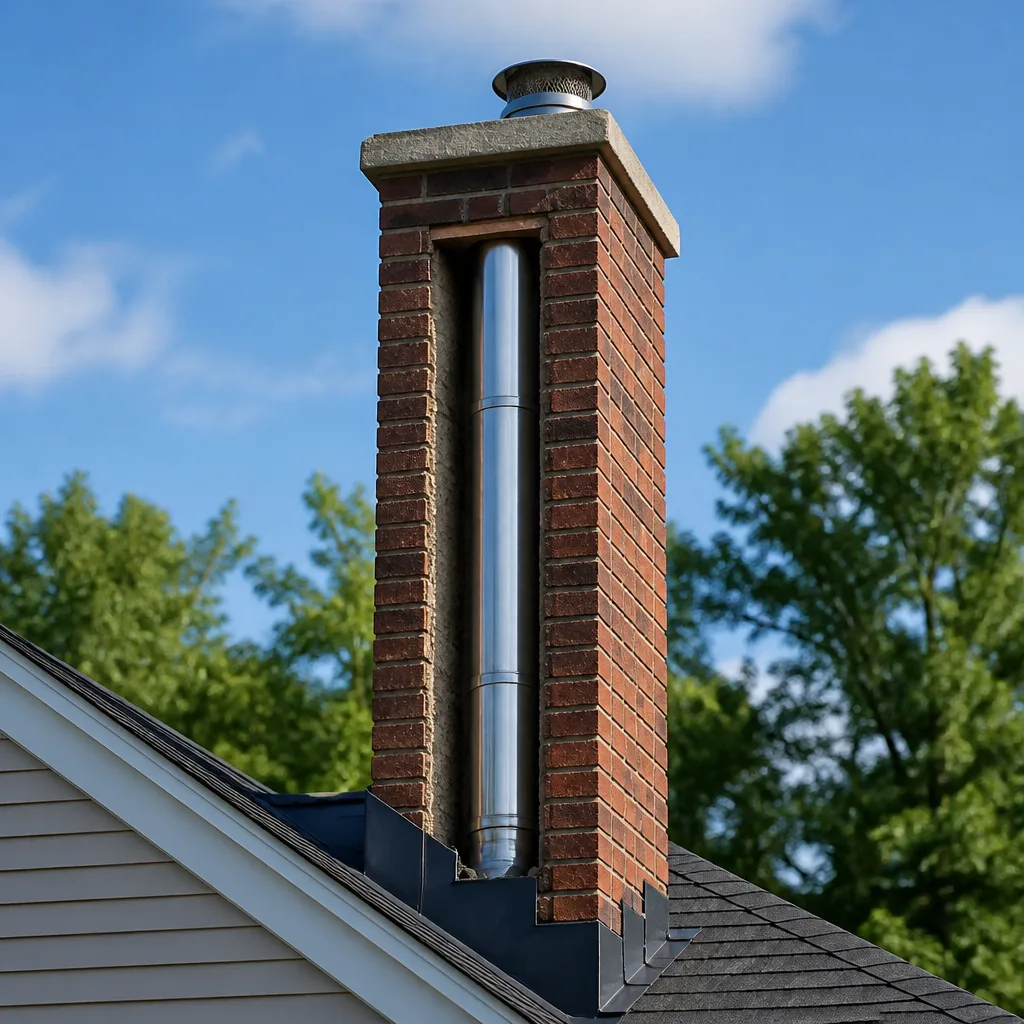 Flue relining
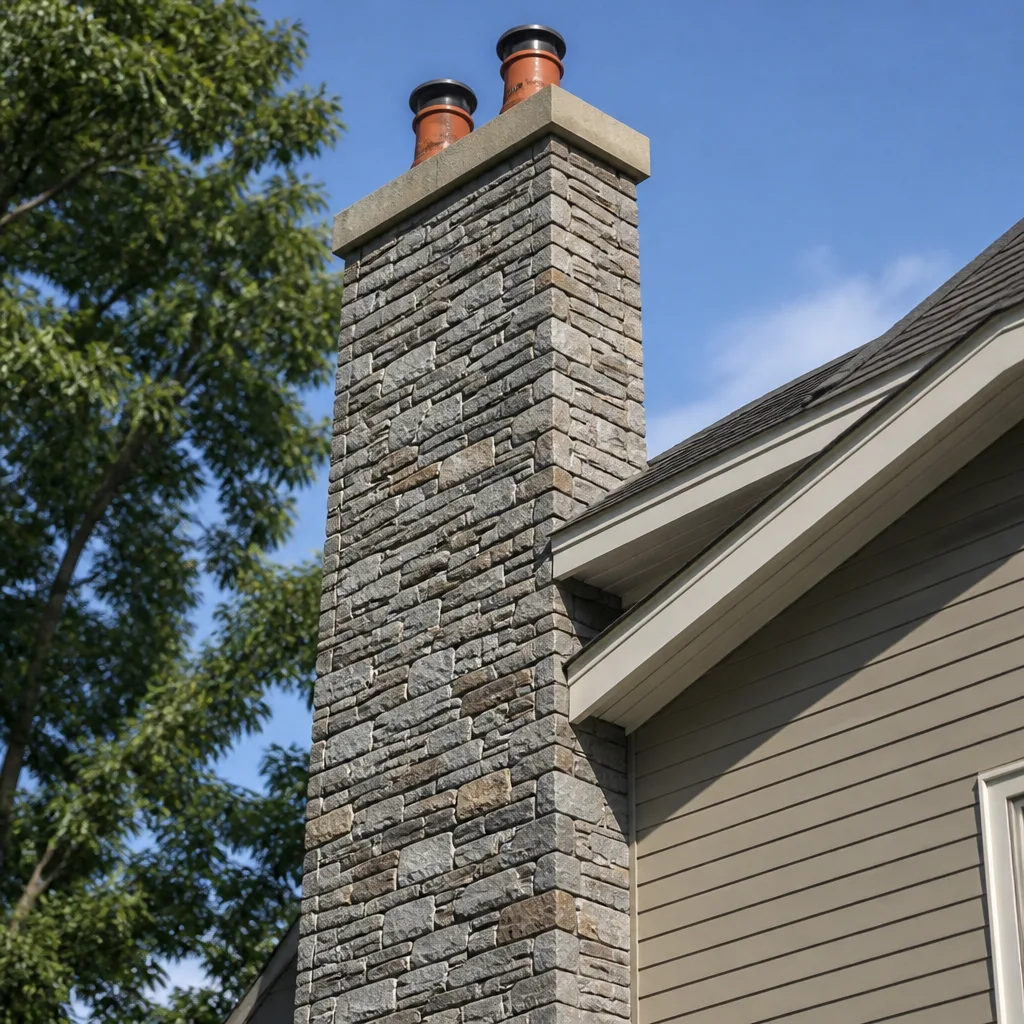 Masonry repair
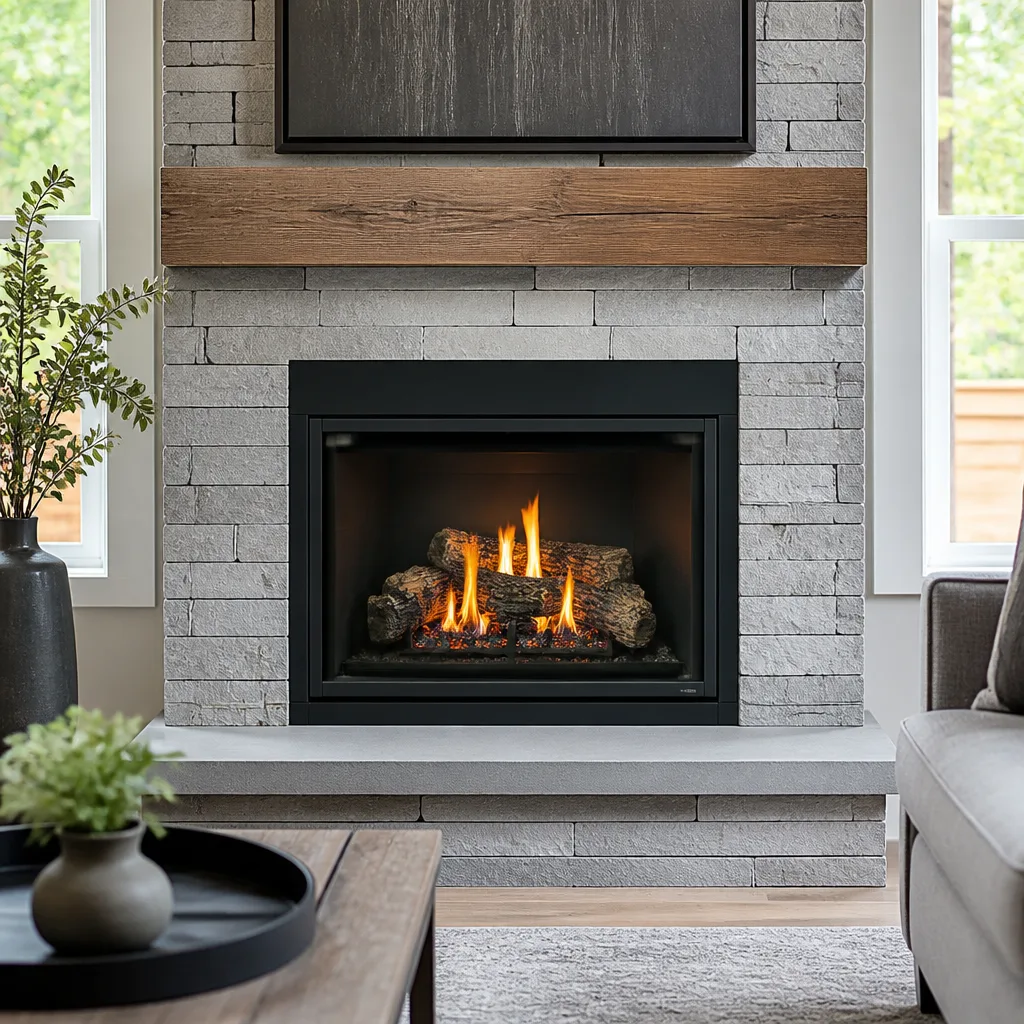 Gas fireplace service
Level 1 sweep and inspection to the NFPA 211 annual standard - flue, crown, cap, and flashing checked and photographed
Chimney sweep logs do not sweep chimneys. They loosen some creosote - which then falls where a brush and vacuum still have to collect it.
Styles & brands we work with
See the difference
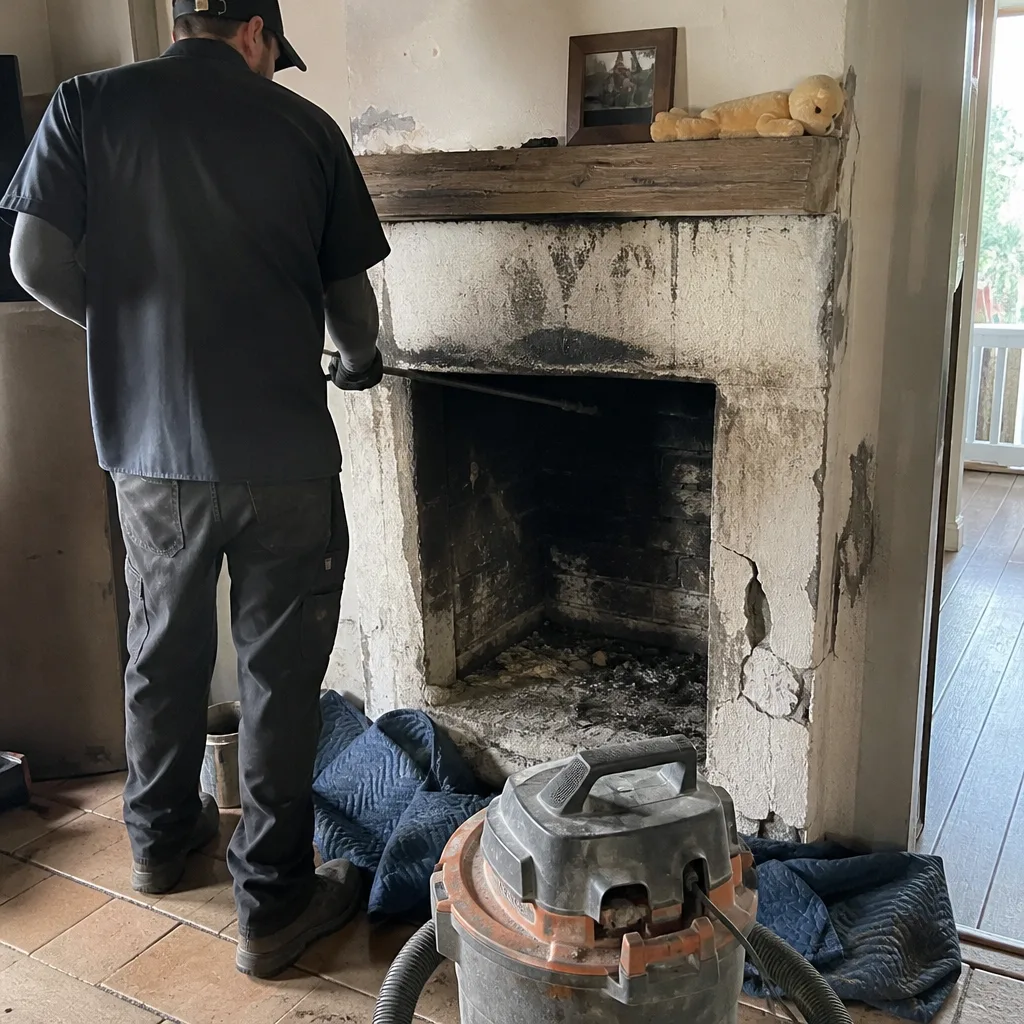 Before
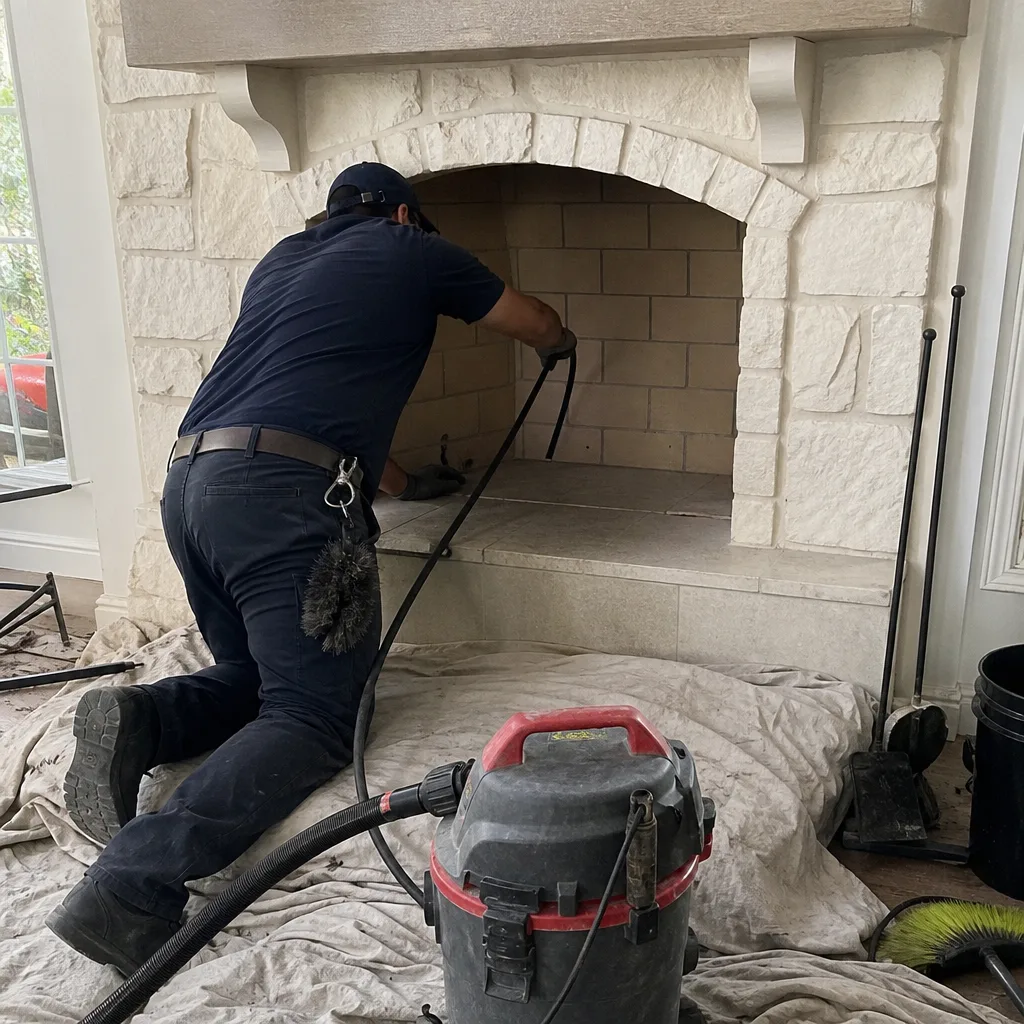 After
After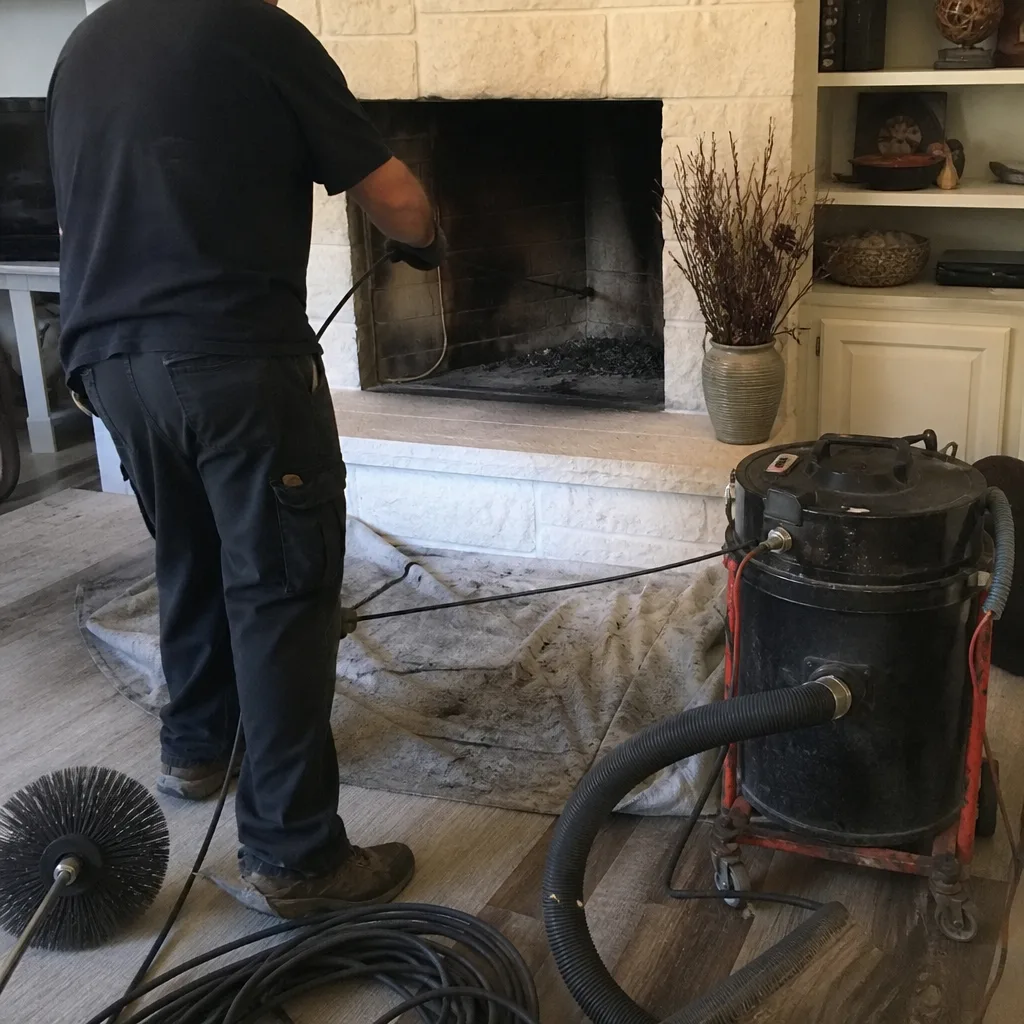 Before
 After
After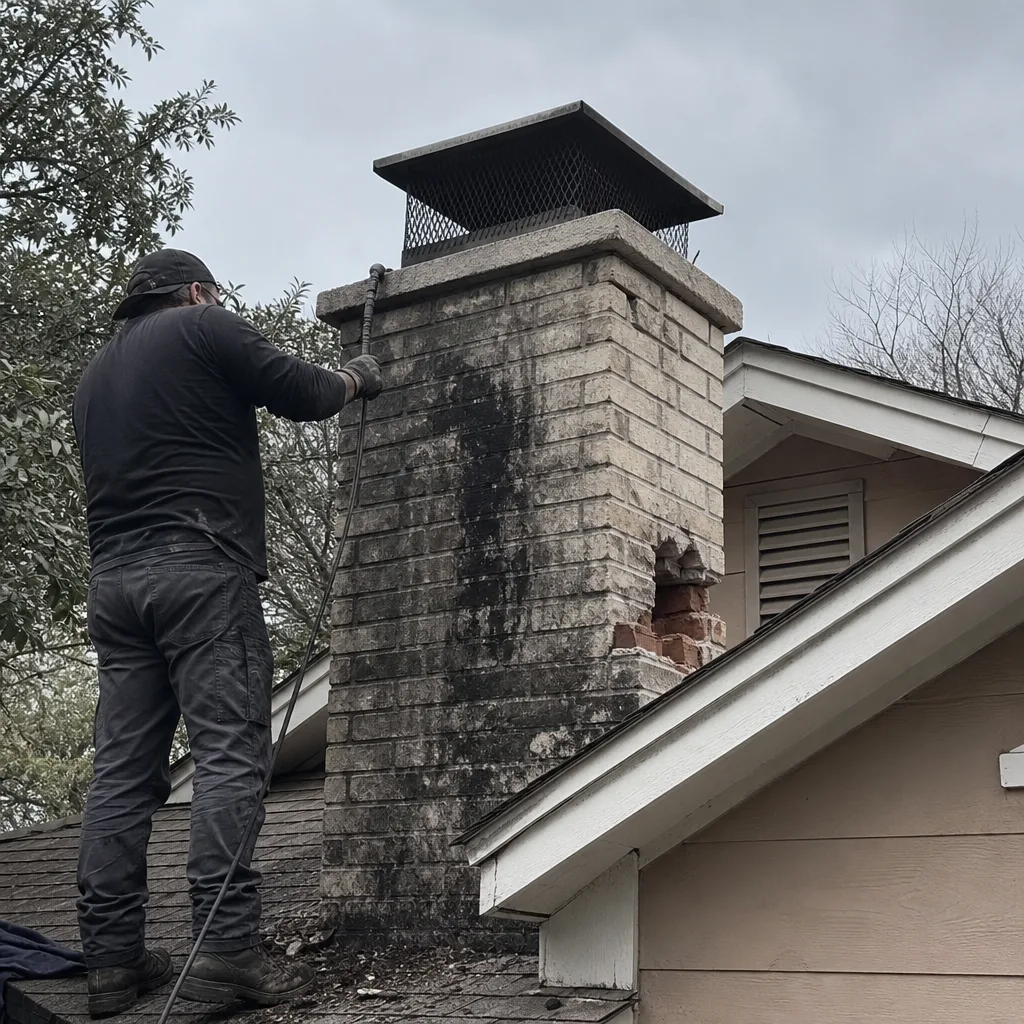 Before
 After
AfterHow Much Does Chimney Cap & Crown Cost in Austin?
Chimney cap and crown work in Austin typically costs $185 – $650 for a standard cap replacement and $800 – $2,400 for a full concrete crown rebuild. Most homeowners in Austin spend between $450 and $1,400 when both components need attention at the same time. The price depends on chimney access, material choice, and whether the existing crown has cracked badly enough to require full demolition rather than a reseal.
That range covers what we actually see across Austin neighborhoods, from older bungalows in Hyde Park to newer builds in Cedar Park and Round Rock. If your cap is rusted through or your crown has cracks you can slide a quarter into, you’re looking at the higher end. If the damage is surface-level and caught early, the lower end applies.
Key Takeaways
- Typical cap replacement: $185 – $650 installed in Austin
- Typical crown rebuild: $800 – $2,400 depending on chimney size and access
- Combined cap + crown work: $450 – $1,400 for most jobs
- Biggest cost drivers: roof pitch, chimney height, crown material, cap material
- Free estimates: Hadley Chimney Austin gives a written price before any work starts. Call (361) 603-5116.
Chimney Cap & Crown Cost Breakdown (2026)
Here’s the line-by-line pricing we’re seeing across the Austin metro in 2026, based on jobs in neighborhoods like Allandale, Mueller, Tarrytown, and Travis Heights. These ranges reflect both materials and labor.
| Service Item | Typical Austin Price Range | Notes |
|---|---|---|
| Standard galvanized chimney cap (single-flue) | $185 – $325 | Most common residential cap; 18 – 24 gauge steel |
| Stainless steel cap (single-flue) | $275 – $500 | Longer lifespan; resists Austin’s humid summers and seasonal rainfall |
| Copper chimney cap (single-flue) | $400 – $800+ | Aesthetic upgrade; popular in historic districts like Clarksville |
| Multi-flue cap (custom or oversized) | $350 – $800 | Required when two or more flues share one chimney mass |
| Crown reseal / patch (minor cracks) | $150 – $400 | Works only if the crown is structurally sound; stops water intrusion early |
| Concrete crown rebuild (standard chimney) | $800 – $1,600 | Full demo of old crown, new form and poured crown with drip edge |
| Concrete crown rebuild (large or steep-access chimney) | $1,600 – $2,400 | Higher roofs, multi-story homes, chimneys with restricted access |
| Crown coat (flexible waterproof membrane) | $350 – $650 | Applied over a sound crown to prevent future cracking |
| Cap + crown bundle (typical single-flue) | $450 – $1,400 | Most common combined job; labor efficiency lowers per-item cost |
These are line-item ranges for the Austin market as of 2026. Your exact price depends on the condition of your existing cap and crown, roof access difficulty, and chimney size. We give you a written number before anything gets touched.
What Affects Chimney Cap & Crown Pricing in Austin
Austin’s housing stock is not uniform. You’ve got 1940s bungalows in Brentwood with single-flue brick chimneys, 1990s tract homes in Round Rock with prefab chase covers, and newer custom builds in Westlake with stone chimneys that require custom flashing. Each one prices differently.
The Factors That Move the Number
- Roof pitch and access difficulty: Steep roofs like the ones you find in the hills around Lake Austin (think Mount Bonnell area) require safety harnesses, ridge-ladder setups, and sometimes two technicians instead of one. That adds $150 – $400 to a job compared to a low-slope roof on a single-story home in Crestview.
- Chimney height and chimney count: A two-story chimney on a home in Circle C Ranch takes longer to access than a single-story vent stack. More height means more ladder work, more setup time, and more risk management. Multi-flue chimneys also require larger caps, which push material costs up by $100 – $300.
- Cap material: Galvanized steel is the budget option. Stainless steel costs about 50% more but holds up better against the freeze-thaw cycles we get in Central Texas winters. Copper is the premium choice and runs 2 – 3x the cost of galvanized, but it won’t rust and looks sharp on older homes in Hyde Park or the historic district in Georgetown.
- Crown condition: If the crown has hairline cracks, a patch or crown coat ($150 – $650) usually handles it. If chunks are missing, the mortar is sandy, or you can see exposed aggregate, the crown has to come off entirely. A full rebuild requires building wooden forms, mixing concrete to the right slope, and installing a drip edge, which is why rebuilds start around $800.
- Crown material: Standard concrete is the most common and cheapest. Pre-cast concrete crowns cost slightly more but install faster. In some newer high-end builds around Lakeway we see cast stone crowns, which are priced as a custom feature and can push past $2,000 for the crown alone.
- Time of year: Chimney work in Austin spikes from September through December, when homeowners realize their chimney hasn’t been inspected since the last freeze. You won’t pay a dramatic premium during chimney season, but scheduling flexibility tightens up. Spring and summer bookings tend to be easier to schedule and occasionally save you $50 – $100 on standard cap swaps.
Chimney Cap vs. Crown: What Each One Does
These two parts sit at the top of your chimney, but they do completely different jobs. Confusing them is common, and the confusion matters because one is a $200 fix and the other is a $1,500 rebuild.
The Cap
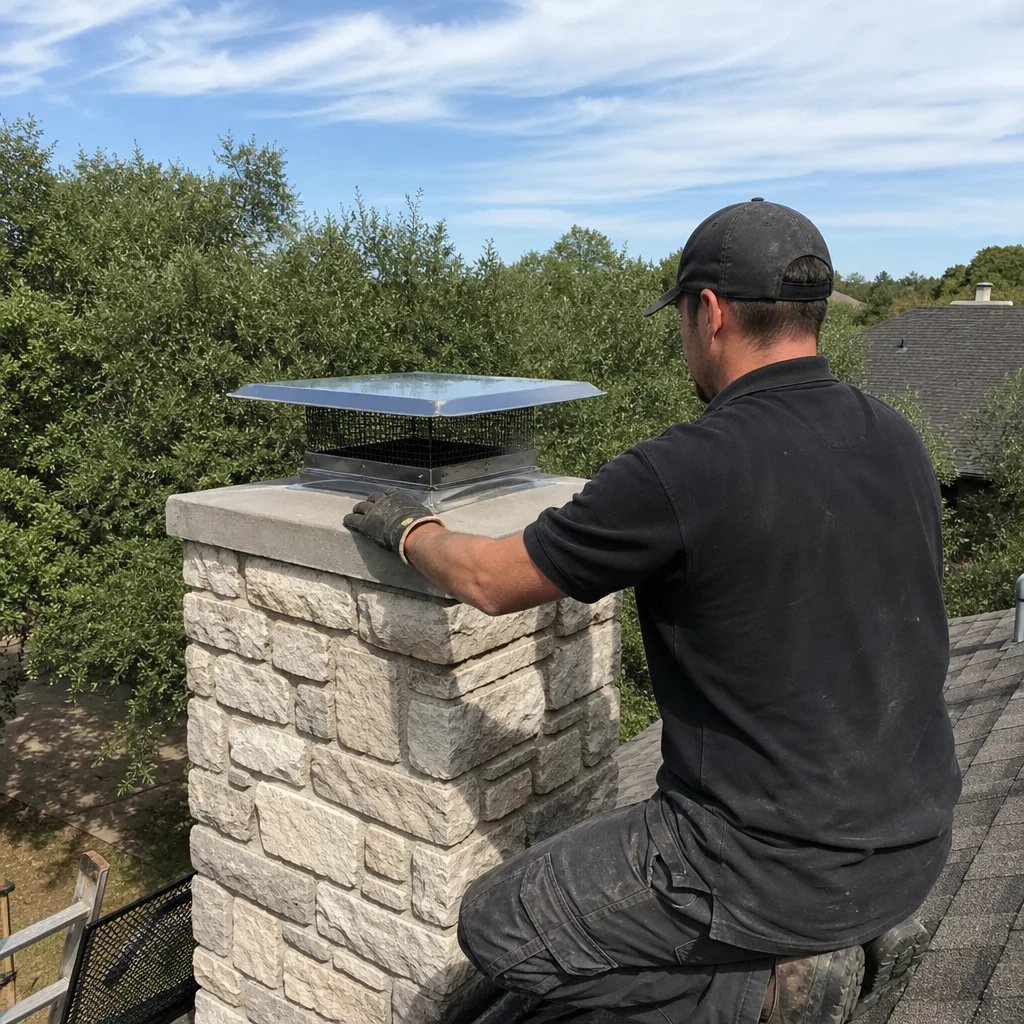
A chimney cap is the metal lid that sits over the flue opening. It keeps rain out, blocks birds and squirrels (Austin has a real squirrel problem in older oak-canopied neighborhoods like Rosedale and Bryker Woods), and prevents embers from escaping onto your roof. Most caps are galvanized or stainless steel mesh with a solid top. When a cap rusts out or a raccoon tears the mesh off, replacement is straightforward: remove the old cap, measure the flue tile, install the new cap with a secure mechanical fastening. Typical time on site: 30 – 60 minutes.
The Crown
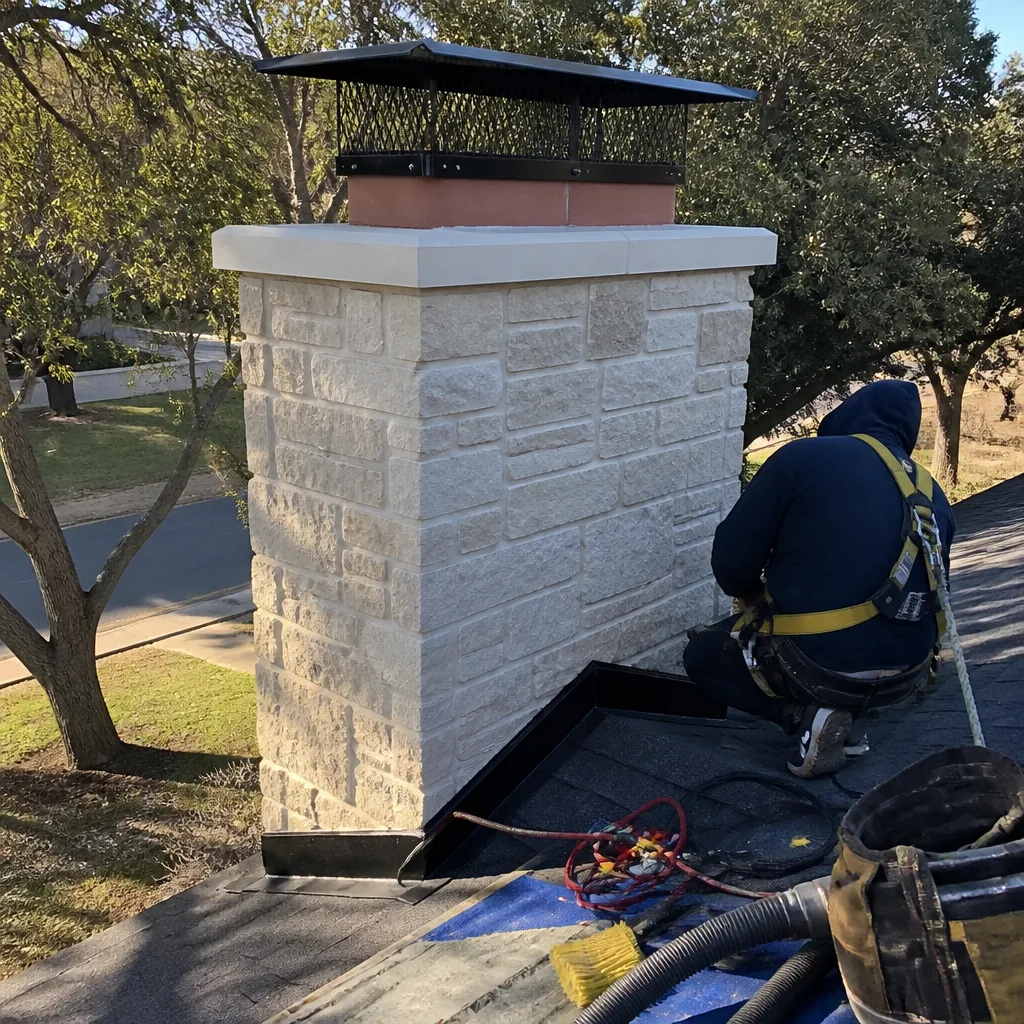
The crown is the concrete slab that covers the entire top of the chimney, spanning from the flue to the outside edge of the brick. Its job is to shed water away from the flue and the masonry below. A proper crown slopes slightly downward from the flue, extends beyond the brick edge, and has a drip edge so water doesn’t run down the chimney face. When crowns crack, water gets into the masonry, which causes the freeze-thaw damage we see after Austin cold snaps. Crown problems are slower to develop than cap problems, but they’re far more expensive to fix because the repair involves demolition, form work, and concrete finishing at height.
One thing we notice regularly with Austin homes built before 1980 is crowns made from regular mortar mix instead of a proper concrete mix. Mortar crowns absorb water and crack within a decade. If your home is in an older neighborhood like Allandale or North Loop, there’s a decent chance your crown was mortared, not poured, which means a rebuild may be in your future sooner than you’d like.
Signs You Need Cap or Crown Work Now
You don’t have to get on the roof to know something is wrong up top. Here’s what we tell Austin homeowners to look for before they ever call us.
- Water in the firebox after heavy rain: If you see water pooling at the bottom of your firebox or water stains on the damper, the cap or crown has failed and water is coming down the flue.
- Rust streaks on the chimney exterior: Those orange-brown streaks running down the brick or stone are usually from a corroding cap or a failing chase cover. You’ll see this a lot on homes in Millwood and other neighborhoods with original 1980s galvanized caps.
- Animal sounds from the chimney: Squirrels, raccoons, and chimney swifts (which are protected in Texas, so removal has specific rules) get in through damaged or missing caps.
- Visible crown cracks wider than ⅛ inch: If you can see the cracks from the ground with binoculars, they’re wide enough to let water in. In recent droughts, clay soil beneath Austin homes shifts, which can transfer movement up through the chimney and widen crown cracks.
- Efflorescence on the chimney brick: That white, chalky powder is salt being pushed out of the masonry as water evaporates. It means water is already inside the chimney structure and has been for a while.
- Spalling brick or falling mortar pieces: If you’re finding small brick fragments or mortar crumbs on your roof or near the chimney base, water has frozen and expanded inside the masonry, popping pieces off. This is the late-stage warning sign of crown failure.
Why Austin Weather Punishes Chimney Crowns
Austin is not a “chimney easy” market. The same freeze-thaw cycle that cracks North Texas roadways every winter does the same to concrete chimney crowns. When temperatures drop into the 20s overnight and climb back to the 50s by afternoon (a regular pattern in January and February), water absorbed into a cracked crown freezes, expands by about 9%, and widens the crack. Repeat that 40 times over a winter and a hairline crack becomes a structural failure.
Add Austin’s summer heat, which bakes exposed concrete at 140+ degrees on an August afternoon, and crowns go through serious expansion and contraction. Newer crowns that are poured with proper expansion joints and a flexible crown coat handle this well. Older mortar crowns don’t.
This is also why we recommend stainless steel caps over galvanized for Austin homes whenever the budget allows. Galvanized steel lasts 5 – 10 years in our humidity. Stainless runs $100 – $175 more on the cap but typically lasts 20+ years. It’s not an upsell; it’s arithmetic.
How to Save on Chimney Cap & Crown Work in Austin
We’re not interested in padding invoices. Here’s what actually saves you money on this type of work.
Bundle the Visit
If you need a chimney sweep and your cap or crown also needs work, book both visits for the same day. You’re already paying for the ladder setup and roof access. Adding a cap replacement to a sweep visit adds only the cap cost plus about 30 minutes of labor, not a full second dispatch fee. For a combined sweep and cap replacement, you’ll typically save $75 – $150 versus booking them separately.
Address Crown Cracks Before They Spall
A $200 – $400 crown coat or patch job takes under an hour and prevents water from getting deeper into the masonry. Ignore that hairline crack for two more winters and you’re paying $1,200 – $1,800 for a rebuild plus whatever masonry repairs have become necessary. The math on early intervention is obvious once you see it laid out.
Don’t Skip the Drip Edge
When a crown is rebuilt, a metal drip edge (a small lip under the crown’s outside edge) forces water to drip away from the chimney face instead of running down the brick. The drip edge costs $40 – $80 and is included in our standard rebuild. If you’re getting quotes from multiple companies, ask specifically whether the quote includes a drip edge and an expansion joint around the flue. A crown without a drip edge is a crown that will ruin the brick below it within five years.
Choose Galvanized Only if Budget Dictates
The cheapest long-term option is stainless steel. It costs more today but you’ll replace it half as often. If you’re selling your home within a few years, galvanized is fine. If you’re staying, spend the extra $100.
Get a Free, Written Estimate Before Committing
Hadley Chimney Austin gives you a written price before any work begins, with no door-knock surprise surcharges. You can see the exact number, know exactly what it covers, and decide on your own time. Call (361) 603-5116 and we’ll send a uniformed tech to your Austin home, check the cap and crown from the roof, and hand you a written number. No pressure, no vague verbal ranges.
What Happens When You Book a Cap & Crown Inspection with Hadley
Here’s the full process so you know what to expect, from the first call to the final photo.
- You call or book online. A live person answers, 24/7. You tell us what you’re seeing (water in the firebox, animal noises, visible cracks on the crown) and pick a time that works.
- A background-checked, uniformed tech arrives in a tracked window. You’ll see a live arrival time, not a four-hour guess. Like a rideshare driver, you’ll know exactly who is coming and when.
- The tech inspects the cap and crown from the roof. Photos are taken before, during, and after. You see everything we see. If the cap is rusted, the mesh is torn, or the crown is cracked, you’ll have those photos texted to you with a clear explanation of what each one shows.
- You get a written price. Before any work begins. Not a verbal range. A written number that covers the cap, the crown, or both, with materials specified (galvanized vs. stainless, patch vs. rebuild).
- Repair happens. Most cap replacements and crown patches happen the same day. Full crown rebuilds usually take a second visit because the concrete needs time to cure, but we’ll tell you that upfront and schedule it before we leave.
- Photos and digital invoice delivered. You can see what the final result looks like, pay from your phone with a link, and keep the written guarantee (365-Day Done Right Promise) for your records. If the repair fails within 365 days, we come back free.
This is the Relay Visibility Guarantee in action. It’s named after the standard we’re held to as part of the Relay Home Co. family. If we tell you something is broken, you see a photo of the broken thing. If we quote you a price, you see it in writing. If we fix it, you see the repair. No mystery work.
Should You Repair or Replace Your Chimney Cap?
Here’s a simple decision framework. If the cap has minor surface rust but the mesh is intact and the fasteners still hold, repair (rust treatment, paint, or re-secure) can buy you a couple more years for $75 – $150. If the mesh is torn, a corner is rusted through, or the cap is so corroded that you can flex it by hand, replacement is the answer. A replacement galvanized cap is $185 – $325. Trying to patch a rusted-through cap is throwing money at something that needs to go.
Same logic for crowns. Hairline cracks get patched or coated. Cracks wider than ⅛ inch, missing chunks, or a crown that sounds hollow when tapped (which is what we check during inspections) require a rebuild. A patch on a structurally failed crown is like a bandage on a broken bone. The underlying issue keeps spreading, and the water keeps getting in.
DIY Chimney Cap Replacement: What We Warn Austin Homeowners
Replacing a chimney cap sounds simple. Measure, order, install. But there are a few things that make it more dangerous than it looks from the ground.
First, you’re working at height, often on a sloped roof. Ladder setup on Austin’s varied roof pitches is a skill that takes years to develop, and a fall from even a single-story roof is genuinely dangerous. Second, chimney work often involves being on or near a flue opening. Flue tiles can be sharp, and older flues sometimes have loose material near the edge. Third, if you measure incorrectly, the cap won’t fit or won’t fasten securely, and you’ll pay to have it corrected anyway.
Safety note: Roof access and chimney crown work are high-risk activities. We recommend having a trained professional handle this work. Significant injury from falls or improper lift/ladder technique is a real risk even on modest single-story homes. If you’re determined to assess the situation yourself, use binoculars from the ground and take photos before contacting a chimney company. You should not be climbing on the roof without proper safety gear and training.
Why Austin Homeowners Choose Hadley for Cap & Crown Work
We’ve been at this since 2003, led by Cory Mitchell. That’s two decades of Austin chimney work, covering everything from historic fireplaces in Travis Heights to modern fireboxes in Avery Ranch. We’ve seen every crown failure mode this city produces, and we carry the materials that solve them correctly: DuraFlex flexible liner systems, HeatShield ceramic repair compound, and Copperfield chimney accessories, plus caps from trusted manufacturers like Gelco, Olympia Chimney, and Famco.
The 365-Day Done Right Promise backs every repair with a written guarantee. If the fix fails within a year, we return and make it right, free. Not a prorated warranty. No fine print. That’s the deal.
FAQs – Chimney Cap & Crown Cost in Austin
How much does chimney cap replacement cost in Austin?
Chimney cap replacement in Austin typically costs $185 – $650, with standard galvanized caps running $185 – $325 and stainless steel caps running $275 – $500 installed. Copper caps start around $400 and go up from there. Multi-flue caps for larger chimneys run $350 – $800. For an exact quote on your chimney, call (361) 603-5116 for a free estimate.
How much does it cost to rebuild a chimney crown in Austin?
A concrete chimney crown rebuild in Austin typically costs $800 – $2,400. Standard single-family homes with straightforward roof access usually fall between $800 and $1,600. Large chimneys, steep roof pitches, and multi-story homes push toward the $1,600 – $2,400 range. Crown resealing or patching for minor cracks is a cheaper alternative at $150 – $400 when the structure is still sound.
Is it cheaper to repair or replace a chimney crown?
Repairing a chimney crown is significantly cheaper, at $150 – $650 for a patch or crown coat, versus $800 – $2,400 for a full rebuild. However, repair only makes sense when the crown is structurally sound with minor hairline cracking. If the crown has large cracks, missing chunks, or is actively letting water into the masonry, a rebuild is the only fix that will last. Call (361) 603-5116 and we’ll assess which path is right for your chimney.
Can you fix a chimney cap and crown the same day?
Yes. Cap replacement ($185 – $650) and crown patching or coating ($150 – $650) are typically same-day jobs. A full crown rebuild ($800 – $2,400) usually requires a second visit because the concrete needs time to cure before final finishing. We’ll tell you the timeline before we start, so there’s no uncertainty.
How long do chimney caps and crowns last in Austin?
Galvanized chimney caps last 5 – 10 years in Austin’s humidity, stainless steel caps last 20+ years, and copper caps can last 30+ years. A properly poured concrete crown with a drip edge and a crown coat typically lasts 15 – 25 years. Older mortar-based crowns (common in pre-1980 Austin homes) last 5 – 10 years and are more prone to freeze-thaw cracking. Age, material, and prior maintenance all matter.
Do you offer free estimates for chimney cap and crown work in Austin?
Yes. Hadley Chimney Austin offers free estimates with a written price provided before any work starts. You’ll know the exact cost of cap replacement, crown repair, or crown rebuild before making any decisions. Call (361) 603-5116 to schedule a visit. A live person answers 24/7.
Get Your Austin Chimney Cap & Crown Priced Today
If you suspect cap or crown damage on your Austin chimney, don’t wait for the next freeze to find out. The sooner we inspect it, the more likely a $200 – $400 fix solves the problem before it becomes a $1,500 – $2,400 rebuild. Hadley Chimney Austin, led by Cory Mitchell and serving the Austin area since 2003, gives you a free inspection, a written price before any work starts, photo documentation so you can see exactly what we see, and a 365-day written guarantee on every repair. Learn more about our chimney cap and crown services in Austin or call (361) 603-5116 now. A real person answers, any hour, and we’ll get you scheduled in a window you can track, not guess at.
Written by Cory Mitchell, Owner at Hadley Chimney Austin, serving the Austin metro area since 2003.
Pricing reflects the Austin market as of 2026. Hadley Chimney Austin offers free estimates – call (361) 603-5116.
What Our Customers Say
"Fast, clean, and polite. Sweep took about an hour and the fireplace pulls well again."
- Helen Q."Gas fireplace wouldn't light. He replaced the thermocouple and cleaned the pilot. Works every time."
- Ivan M."Quote came in the app before they touched anything."
- Nora E.